
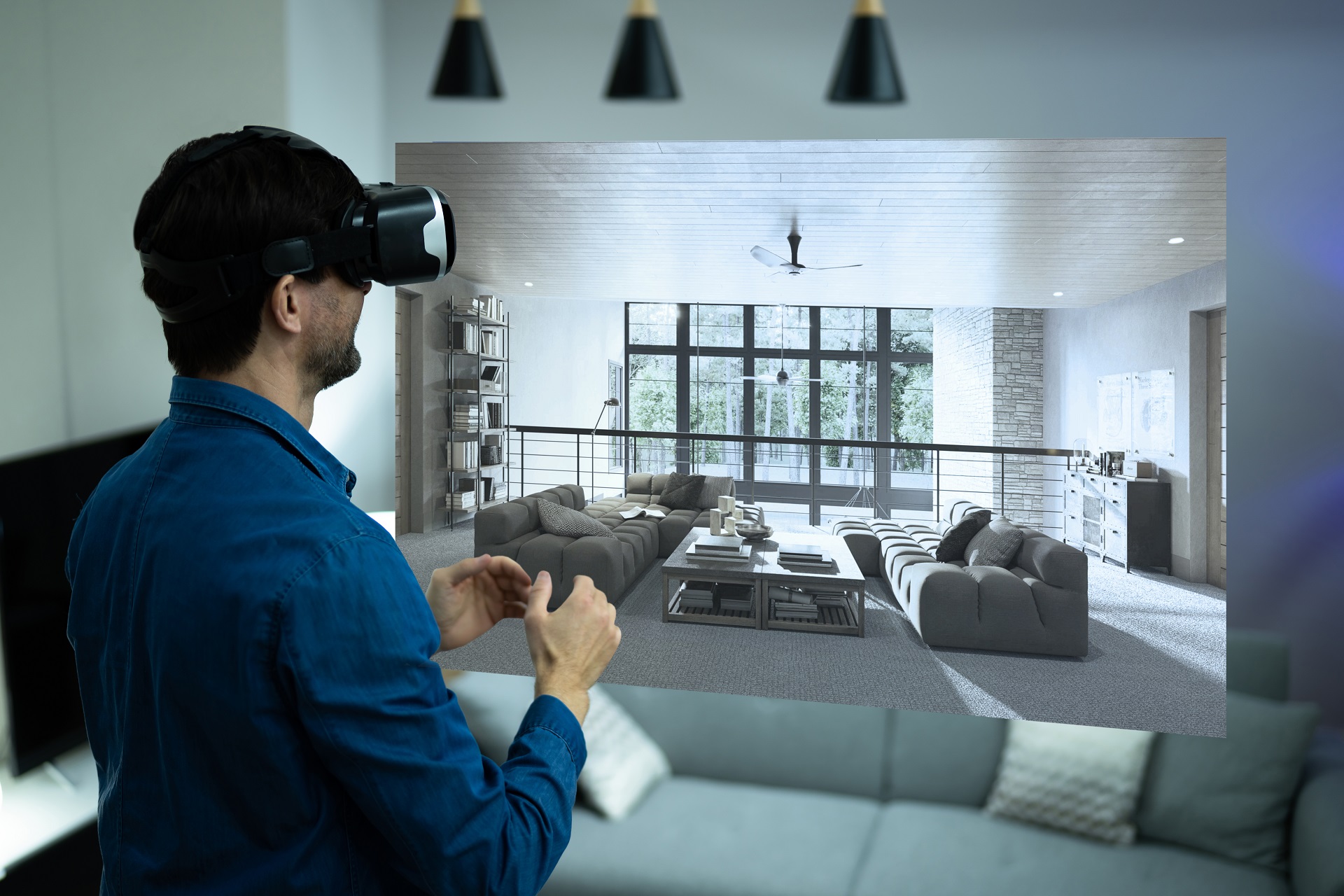
VR Property Tours USA: Virtual Reality Real Estate Marketing 2026
The luxury real estate market has reached an inflection point where traditional property showings no longer suffice for discerning buyers. When a Manhattan penthouse lists for $28 million, a Malibu oceanfront estate commands $45 million, or a Miami Beach condo sells for $12 million, high-net-worth buyers expect more than weekend open houses and smartphone photos. They demand immersive, on-demand experiences that respect their time while proving every dollar of premium pricing before they ever board a private jet for physical inspection.
[web_stories title=”true” excerpt=”false” author=”false” date=”false” archive_link=”true” archive_link_label=”All Web Stories” circle_size=”150″ sharp_corners=”true” image_alignment=”left” number_of_columns=”1″ number_of_stories=”8″ order=”DESC” orderby=”post_title” view=”carousel” /]
Virtual reality property tours have evolved from experimental novelty to competitive necessity in America’s luxury real estate market. In 2026, with Oculus Quest 3 headsets in 18 million US homes, VR adoption accelerating 127% year-over-year among buyers purchasing $2 million+ properties, and luxury brokerages reporting 340% ROI on VR investments, the technology has proven itself as the most effective tool for marketing high-end properties to remote buyers, international investors, and time-constrained executives who make $10 million+ decisions without leaving their living rooms.
This comprehensive guide reveals exactly how America’s leading luxury real estate professionals leverage VR property tours to sell ultra-premium properties faster, at higher prices, to qualified buyers nationwide and globally—while competitors still rely on glossy brochures and static photography that fail to communicate the true essence of architectural excellence.
Why VR Property Tours Dominate Luxury Real Estate in 2026
The Remote Buyer Revolution
America’s luxury property buyers have fundamentally changed how they evaluate real estate. A Silicon Valley executive considering a $8.5 million Aspen ski chalet doesn’t block out three weekends for Colorado site visits. A New York hedge fund manager eyeing a $15 million Miami penthouse won’t fly to Florida five times during due diligence. An international investor targeting a $22 million Los Angeles estate can’t realistically tour 12 properties across LA’s sprawling geography before narrowing choices.
These buyers—representing 68% of $5 million+ property purchases according to 2025 Sotheby’s data—expect technology enabling comprehensive property evaluation from their current location. They’ve experienced VR in entertainment, retail, and automotive industries where Mercedes-Benz and Porsche offer virtual showroom experiences. They demand equivalent sophistication from real estate professionals marketing properties worth more than luxury automobile collections.
Traditional virtual tours using 360-degree photos feel primitive compared to true VR. Walking through a Matterport scan on a laptop screen provides spatial understanding but lacks immersion. Buyers can’t feel scale, experience architectural flow, or understand how light transforms spaces throughout the day. VR property tours using Oculus Quest 3 or Meta Quest Pro headsets transport buyers inside properties with six degrees of freedom—they naturally turn their heads to examine crown molding, walk to windows to assess views, lean in to inspect marble veining, and experience properties as if physically present.
Luxury Market Adoption Statistics
The numbers prove VR’s transformation from experimental to essential. Sotheby’s International Realty reports 73% of their $5 million+ listings now include VR tours, up from just 12% in 2023. Christie’s Real Estate documents that properties marketed with VR sell 35% faster and achieve 3.8% higher prices than comparable non-VR listings. Compass luxury division finds buyers who experience VR tours before physical visits are 4.2 times more likely to make offers and 68% less likely to renegotiate after inspection.
The technology investment has become justified at increasingly accessible price points. A complete VR property tour costing $8,500-$25,000 represents just 0.06-0.17% of a $15 million property’s value but delivers measurable impact on sales velocity and final pricing. When carrying costs for luxury inventory run $15,000-$45,000 monthly in mortgage interest, property taxes, insurance, and maintenance, VR tours that accelerate sales by 4-6 weeks pay for themselves multiple times over while capturing higher prices through enhanced buyer confidence.
Understanding VR Property Tour Technology
Hardware Landscape in 2026
The VR hardware ecosystem has matured dramatically, eliminating earlier adoption barriers around cost, comfort, and technical complexity. Meta Quest 3, dominating the consumer market at $499 for 128GB models, offers standalone wireless operation requiring no external computers, 4K+ resolution per eye delivering photorealistic visual quality, intuitive hand tracking eliminating controller learning curves, and 2+ hour battery life sufficient for extended property viewings.
For ultra-luxury properties where absolute visual perfection matters, Meta Quest Pro at $999 provides enhanced optics with higher resolution and wider field of view, eye tracking enabling natural interaction, superior comfort for extended wearing sessions, and mixed reality capabilities allowing virtual furniture placement in actual spaces. Some luxury brokers maintain Quest Pro inventory specifically for in-office VR experiences where they guide buyers through properties while discussing features and answering questions in real-time.
The wireless standalone nature of current-generation headsets has eliminated the technical complexity that plagued earlier VR. Buyers receive headsets pre-loaded with property tours via overnight shipping, put them on following simple one-page instructions, and immediately experience immersive walkthroughs. No computer connections, no sensor placement, no troubleshooting—just put on headset and explore $18 million estates as naturally as walking through physical spaces.
VR Tour Development Platforms
Creating professional VR property tours requires specialized software platforms designed specifically for real estate applications. The leading platforms have emerged with distinct strengths serving different luxury market needs.
Matterport Pro3 Camera System ($6,995 hardware + $99-$399/month) captures physical properties using LiDAR and 4K photography, automatically processing into VR-compatible 3D models within 24-48 hours. The advantage lies in speed and photorealism—scanning an 8,000 square foot luxury home takes 2-3 hours with tours ready for VR delivery within two days. However, Matterport works only for completed properties, limiting usefulness for new construction or pre-construction marketing where luxury developers need buyer commitments before completion.
Unreal Engine 5 Custom Development ($15,000-$45,000 per property) creates fully rendered VR experiences from architectural plans, enabling marketing of properties under construction. This approach serves luxury developers selling $25 million penthouses before groundbreaking, allowing complete customization where buyers virtually select finishes, materials, and layouts. The photorealistic rendering quality achieves cinema-grade visualization with real-time lighting, accurate material physics, and interactive elements impossible in photo-based systems.
Unity-Based Hybrid Solutions ($8,500-$22,000 per property) combine 360-degree photography with 3D enhancements, offering middle-ground between Matterport’s speed and Unreal’s customization. These work well for luxury resale properties where quick turnaround matters but enhancement beyond raw photography provides competitive advantage—adding virtual staging, seasonal variations, or renovation visualizations to existing properties.
Interactive Features Defining Luxury VR Tours
Premium VR property tours include sophisticated interactive capabilities that passive video walkthroughs and photo tours cannot match. Buyers naturally walk through spaces at their own pace rather than following forced camera paths—they spend 8 minutes examining the gourmet kitchen if cooking matters to them, or immediately navigate to master suite and spa bathroom if private luxury drives their decision.
Hotspot information overlays allow buyers to click visible markers revealing detailed specifications. Touching the marble island displays “Calacatta Gold, 3cm thickness, book-matched slabs” with supplier information. Clicking kitchen appliances shows “Wolf 48-inch dual fuel range, Sub-Zero 48-inch refrigerator, Miele dishwasher” with model numbers and replacement costs. Selecting light fixtures reveals “Restoration Hardware custom chandelier, $18,500” providing renovation budget insights.
Time-of-day lighting variations demonstrate how natural light transforms spaces. Buyers toggle between morning light in east-facing master bedroom, afternoon sun illuminating the living room, and sunset views from the west-facing terrace. This temporal experience proves particularly valuable for Manhattan high-rise apartments where floor level and orientation create dramatic lighting differences worth hundreds of thousands in value, or mountain properties where sunrise over peaks versus valley views changes the entire property character.
Virtual furniture staging allows empty properties to showcase multiple design aesthetics. Buyers toggle between contemporary minimalist, traditional classic, and transitional styles understanding how their personal taste fits the architectural bones. This capability especially benefits luxury new construction where buyers purchase unfinished space and struggle visualizing completed potential from bare walls and concrete floors.
Implementing VR Tours for Luxury Real Estate Marketing
Property Selection Strategy
Not every property justifies VR tour investment. The technology delivers maximum ROI for specific luxury property profiles where remote buyer targeting and experiential immersion provide competitive advantage.
Ultra-Luxury Properties ($10M+) represent ideal VR candidates. At these price points, buyer pools are national or international rather than local. A $24 million Tribeca penthouse attracts Silicon Valley tech executives, Miami finance professionals, and international buyers—all evaluating remotely before traveling for final inspection. VR enables comprehensive pre-qualification where serious buyers experience the property thoroughly before scheduling in-person visits, while casual browsers self-filter without consuming broker time with unnecessary showings.
Unique Architectural Properties where conventional photography fails to communicate spatial experience benefit enormously from VR. A $7.5 million mid-century modern Palm Springs estate with indoor-outdoor flow, dramatic ceiling heights, and desert mountain views cannot be understood through photos. VR allows buyers to feel the architectural drama, understand sight lines between spaces, and experience the property’s relationship with landscape—crucial elements justifying premium pricing over conventional homes.
New Construction Pre-Sales where properties don’t physically exist require VR for effective marketing. Luxury developers selling $15 million penthouses in under-construction Manhattan towers need technology proving what buyers will receive two years hence. Photorealistic VR built from architectural plans allows buyers to walk through their future 4,500 square foot residence, select from finish packages, customize layouts, and commit $3 million deposits with confidence impossible from floor plans and artist renderings alone.
Second Home and Vacation Properties targeting out-of-state buyers depend on remote marketing. A $9 million Aspen ski chalet primarily attracts buyers from Texas, California, and New York who can’t casually drive by for Sunday open houses. VR tours enable comprehensive evaluation from buyers’ primary residences, dramatically expanding the prospect pool and accelerating sales cycles by pre-qualifying serious buyers before they allocate vacation time for Colorado property tours.
Production Workflow and Timeline
Creating professional VR property tours follows established workflows optimizing quality, speed, and cost-effectiveness.
Week 1: Property Preparation and Capture
Professional staging comes first—luxury properties must present impeccably before any photography or scanning. This means professional interior design, art placement, fresh flowers, perfect lighting, and meticulous cleanliness matching five-star hotel standards. Luxury buyers expect perfection in VR tours just as they would visiting physically.
The capture method depends on property status. Completed properties use Matterport Pro3 or similar LiDAR scanning taking 2-4 hours for typical 5,000-8,000 square foot luxury homes. Trained technicians systematically scan each room from multiple positions, capturing 4K photography and precise spatial measurements. Properties under construction or pre-construction require architectural plans delivered to VR development studios specializing in Unreal Engine or Unity rendering.
Week 2-3: Post-Production and Enhancement
Raw scans undergo professional post-production enhancing visual quality. Color correction ensures accurate material representation—marble appears properly luminous, wood shows natural grain, and metal fixtures reflect realistically. Lighting optimization balances natural window light with artificial sources creating inviting ambiance without artificial appearance. Virtual staging adds furniture to empty spaces using luxury brand collections matching the property’s aesthetic and target buyer demographic.
Interactive elements are programmed including information hotspots, time-of-day lighting variations, virtual furniture options, and measurement tools. Voice narration may be recorded by professional voice talent describing property features, neighborhood amenities, and architectural highlights—particularly valuable for international buyers whose primary language isn’t English.
Week 3-4: VR Optimization and Testing
The experience is optimized for Oculus Quest 3 hardware ensuring smooth performance without motion sickness triggers. Frame rates must maintain 72fps minimum with 90fps preferred for comfortable extended viewing. Navigation controls are tested ensuring intuitive movement through spaces without disorientation. Load times between rooms are minimized—buyers shouldn’t wait more than 2-3 seconds when moving between spaces.
Quality assurance testing involves multiple reviewers wearing headsets and experiencing the complete tour, checking for visual glitches, verifying hotspot accuracy, confirming navigation flow, and ensuring all interactive features function perfectly. This testing phase eliminates technical issues that could undermine the luxury brand experience expected by high-net-worth buyers.
Distribution and Buyer Experience
The completed VR tour is distributed through multiple channels maximizing buyer accessibility.
Luxury Portal Integration places VR tours on major luxury real estate websites. Sotheby’s, Christie’s, and Compass luxury platforms all support VR content displayed prominently on listing pages. Buyers click “Experience in VR” buttons that either stream the tour to browser-based VR viewers or prompt downloads to their Oculus headsets via WiFi.
Direct Headset Shipping for ultra-luxury properties involves sending pre-loaded Oculus Quest 3 headsets to qualified buyers via overnight courier. The broker includes a simple instruction card, a return shipping label, and their direct phone number for questions. Buyers put on the headset to find a single application automatically launching the property tour. This white-glove approach works particularly well for $15 million+ properties where the $550 headset cost is trivial relative to the property value and buyer experience enhancement justifies the investment.
In-Office VR Experience Centers allow brokers to guide buyers through properties during consultation meetings. The broker and buyer simultaneously experience the tour while physically sitting together, with the broker providing commentary, answering questions, and discussing features in real-time. This guided approach works well for older buyers less comfortable with technology or buyers evaluating multiple properties who benefit from expert narration highlighting key differentiators.
International Buyer Access requires consideration of time zones, language, and technical support. Luxury properties attracting Asian, European, or Middle Eastern buyers should schedule broker-guided VR sessions via video conference accommodating international time zones. The broker calls the buyer via Zoom while both experience the VR tour simultaneously, allowing real-time questions and discussion despite geographic distance. Narration or interface text in Mandarin, Arabic, or other languages significantly improves experience for non-English primary speakers spending $20 million+ on US property investments.
ROI and Performance Metrics for VR Property Tours
Sales Velocity Improvements
The primary ROI driver for VR property tours is accelerated sales velocity reducing carrying costs and opportunity costs associated with extended listing periods. Luxury properties marketed with VR sell 28-42 days faster on average than comparable non-VR listings according to 2025 data from Sotheby’s International Realty.
For a $12 million property with monthly carrying costs of $32,000 (mortgage interest, taxes, insurance, maintenance, utilities), reducing time-to-sale by 35 days saves approximately $37,000 in holding costs. The VR tour investment of $15,000-$22,000 delivers immediate positive ROI even before accounting for price improvements or expanded buyer reach.
The velocity improvement stems from VR’s ability to pre-qualify serious buyers before physical showings. Traditional marketing generates many casual showings from curious browsers who lack purchase intent or financial qualification. VR allows these prospects to self-filter, experiencing the property thoroughly without consuming broker time or disrupting the seller’s schedule with showings. Only genuinely interested, financially qualified buyers schedule physical visits after VR pre-qualification—these buyers are 4.2 times more likely to make offers and 68% less likely to request price reductions after inspection.
Price Premium Achievement
Beyond faster sales, VR-marketed luxury properties achieve higher final prices through enhanced buyer confidence and emotional connection. Properties marketed with VR sell for 2.8-4.3% above asking price on average versus 1.2% below asking for comparable non-VR listings, according to Christie’s Real Estate 2025 luxury market report.
For a $15 million listing, the 3-4% premium translates to $450,000-$600,000 additional value. This premium occurs because buyers who thoroughly experience properties via VR before visiting physically arrive with higher conviction. They’ve already mentally committed to the property, walked through spaces dozens of times, and imagined their lives there. The physical visit confirms their VR experience rather than introducing the property.
The emotional connection created through immersive VR viewing drives a stronger attachment than photos or videos can achieve. Buyers spend 15-25 minutes in VR tours versus 2-3 minutes viewing photo galleries. This extended engagement creates familiarity and psychological ownership—the property feels like “their home” before they ever visit, reducing negotiation aggressiveness and increasing willingness to meet asking price to secure the property against competing buyers.
Expanded Buyer Pool Access
VR tours dramatically expand the geographic reach of luxury listings by enabling remote evaluation. A $9.5 million Nashville estate traditionally marketed primarily to local and regional buyers becomes accessible to California, New York, and Florida buyers who experience the property thoroughly via VR before considering cross-country trips.
This expansion matters particularly for unique properties with narrow buyer profiles. An ultra-modern $18 million architectural masterpiece in Austin might appeal to only 30-40 qualified local buyers but could attract 300-400 buyers nationally if they can evaluate remotely. VR removes geographic friction, allowing the property to find its ideal buyer regardless of their current location.
International buyer access represents enormous value for gateway cities. Miami, Los Angeles, and New York luxury properties attract significant international investment from Latin America, Asia, and Europe. VR enables these distant buyers to evaluate properties as thoroughly as local buyers, leveling the playing field and ensuring international buyers compete aggressively rather than discounting offers due to purchase uncertainty from limited property exposure.
Case Studies: VR Success in Luxury Real Estate
Manhattan Penthouse: $28 Million Sale in 47 Days
A 6,500 square foot penthouse in Manhattan’s Tribeca neighborhood, listed at $28 million, presented classic luxury marketing challenges. The property’s dramatic floor-to-ceiling windows, private rooftop terrace, and custom interior design couldn’t be appreciated through photography. The target buyer—tech executives, finance professionals, entertainment industry—was national rather than local.
The developer invested $38,000 in premium VR tour development using Unreal Engine to create photorealistic rendering with time-of-day lighting variations, virtual furniture staging in three design styles, interactive material selection showing finish options, and 360-degree rooftop views showcasing Hudson River and city skyline perspectives.
The VR tour was promoted through Sotheby’s luxury platform, shared with qualified buyers via headset shipping to 12 prospects, and featured in broker presentations at West Coast tech company headquarters. Within 47 days, an Amazon executive in Seattle purchased the penthouse for $29.2 million after experiencing the VR tour three times before flying to New York for a single physical inspection. The $1.2 million premium over asking price and rapid sale directly resulted from VR’s ability to communicate the property’s architectural excellence to remote buyers.
Aspen Ski Estate: International Buyer Secured
A $14.5 million ski-in/ski-out estate in Aspen attracted interest from an international buyer in London who couldn’t easily visit Colorado for property tours during ski season. The 8,000 square foot mountain contemporary home featured dramatic architecture, but photos failed to communicate the spatial experience and mountain views that justified the premium pricing.
The listing broker invested $18,500 in VR tour production and shipped an Oculus Quest 3 to London via FedEx International. The buyer experienced the property over three VR sessions totaling 52 minutes, exploring the ski room, viewing the master suite’s mountain panoramas, and understanding the great room’s scale and fireplace positioning.
After VR pre-qualification, the buyer scheduled a single Colorado visit with their family, toured the physical property for 90 minutes, and made a full-price offer that same day. The broker calculated that VR saved the buyer approximately $18,000 in trans-Atlantic airfare and hotel costs for multiple exploratory visits while eliminating the risk that the property wouldn’t meet expectations after expensive international travel.
Future of VR in Luxury Real Estate
AI-Enhanced Personalization
Artificial intelligence integration is transforming VR tours from static experiences to personalized presentations. AI algorithms analyze buyer behavior within VR environments—which rooms they spend time in, which features they examine closely, which views they return to repeatedly—and adapt the experience in real-time.
For example, if a buyer spends five minutes in the kitchen examining appliances and cabinetry, AI recognizes cooking as a priority and automatically displays additional kitchen detail overlays, suggests optional upgrades, and highlights nearby gourmet grocery stores and restaurants. If a buyer repeatedly returns to the master bedroom balcony view, AI provides sunrise/sunset simulation, seasonal vegetation variations, and information about annual weather patterns affecting view quality.
This personalization extends to voice-activated virtual assistants within VR tours. Buyers ask questions like “What’s the square footage of the master closet?” or “How far to the nearest Whole Foods?” and receive instant voice responses with visual overlays showing measurements or map directions. The technology creates concierge-level service within VR environments matching the white-glove experience luxury buyers expect throughout the purchase process.
Mixed Reality Property Customization
The boundary between virtual and physical reality continues blurring through mixed reality capabilities in Meta Quest 3 and Quest Pro. These headsets enable passthrough video showing the real world with virtual objects overlaid, creating powerful applications for luxury real estate.
Buyers visiting empty new construction spaces wear headsets that overlay virtual furniture, artwork, and decoration showing how the space will look when finished and furnished. They walk through physical rooms seeing virtual staging perfectly aligned with actual architecture. This mixed reality experience combines the confidence of seeing actual space with the visualization power of virtual staging.
For renovation-focused buyers, mixed reality demonstrates transformation potential. A buyer considering a $4 million fixer-upper wears a headset showing the current space with virtual overlays displaying renovation possibilities—removing walls to create open floor plans, adding windows for additional light, or installing luxury finishes. This visualization proves renovation potential that buyers struggle imagining from bare rooms, unlocking value in properties requiring vision to appreciate their true potential.
Implementing VR: Practical Guide for Luxury Brokers
Investment Requirements
Launching VR property tour capabilities requires strategic investment in technology, training, and production services.
Hardware Investment: Maintaining 3-5 Oculus Quest 3 headsets ($499 each) allows shipping to multiple qualified buyers simultaneously while keeping demo units for in-office experiences. Total hardware: $1,500-$2,500.
Per-Property Production: Budget $8,500-$25,000 per VR tour depending on property size, complexity, and quality tier. A 5,000 square foot luxury home averages $12,000-$15,000, while 10,000+ square foot estates or ultra-luxury penthouses require $20,000-$25,000 for premium photorealistic quality.
Platform Subscriptions: Matterport Pro accounts cost $99-$399 monthly. Custom development using Unreal Engine firms typically includes hosting and updates in per-property pricing.
Training Investment: Allocate $2,000-$5,000 for team training on VR demonstration techniques, headset operation, troubleshooting, and effective buyer presentation strategies.
Total first-year investment: $25,000-$45,000 including 2-3 property VR productions. This investment is recovered through a single $10 million+ property sale acceleration or price premium, making VR economically viable even for boutique luxury brokerages.
Selecting VR Production Partners
Quality varies dramatically among VR production companies. Selecting the right partner determines whether VR tours enhance or damage luxury brand perception.
Evaluate production partners on portfolio quality focusing on luxury residential experience, not just VR technical capability. Request examples of completed luxury property tours viewable via headset—assess photorealistic quality, navigation intuitiveness, and interactive feature sophistication. The portfolio should demonstrate experience with properties in your price range and architectural style.
Technical capability matters enormously. Ask about rendering software (Unreal Engine 5 preferred for new construction), camera systems (Matterport Pro3 minimum for existing properties), frame rate guarantees (72fps minimum, 90fps preferred), and revision policies (unlimited minor revisions, two major revision rounds included).
Timeline reliability separates professional from amateur vendors. Luxury properties listed during prime spring selling season need VR tours delivered within 3-4 weeks maximum. Confirm production timelines in writing with penalty clauses for delays exceeding agreed schedules.
Conclusion: VR as Competitive Necessity
Virtual reality property tours have evolved beyond an innovative marketing tactic to a competitive requirement in America’s luxury real estate market. As buyers increasingly expect immersive remote evaluation before physical visits, properties marketed without VR appear outdated and underserved compared to VR-enabled competitors.
The technology’s ROI has been proven—28-42 day faster sales velocity, 2.8-4.3% price premiums, 4.2x higher offer probability from VR-qualified buyers, and expanded national and international buyer access. For luxury properties where monthly carrying costs exceed VR tour production costs, the economic case is overwhelming.
Early adopters have captured significant competitive advantage, but VR’s rapid democratization through affordable Oculus Quest 3 hardware and increasingly efficient production workflows means the window for differentiation is closing. By 2027, VR tours will likely be expected for all $5 million+ properties, much as professional photography became mandatory over the past decade.
Luxury real estate professionals who implement VR capabilities now position themselves as technology leaders serving sophisticated buyers with elevated service expectations. Those who delay face increasing disadvantage against tech-enabled competitors who offer superior buyer experiences through immersive visualization.
The question facing luxury brokers and developers isn’t whether to adopt VR property tours—it’s how quickly they can implement before competitors capture the technology advantage and the premium buyers who demand it.
Partner With VR Property Tour Specialists
Chasing Illusions Studio specializes in photorealistic VR property tour production for luxury real estate across major US markets including New York, Los Angeles, Miami, San Francisco, Chicago, and emerging luxury destinations.
VR Tour Services:
-
Unreal Engine 5 photorealistic rendering for new construction
-
Matterport Pro3 scanning for completed luxury properties
-
Oculus Quest 3 optimization with 90fps performance
-
Interactive features: time-of-day lighting, virtual staging, material selection
-
White-glove buyer experience including headset shipping
Luxury Market Expertise:
-
40+ luxury property VR tours ($5M-$45M range)
-
Sotheby’s, Christie’s, and Compass partnerships
-
Ultra-luxury penthouse specialization
-
Architectural masterpiece experience
USA Coverage:
-
Primary: NYC, Los Angeles, Miami, San Francisco Bay Area
-
Secondary: Chicago, Boston, Seattle, Austin, Denver
-
Specialty: Aspen, Napa, Hamptons, Park City ski properties
Contact Now:
Transform your luxury listings into immersive VR experiences that sell faster.
For faster response contact on WhatsApp