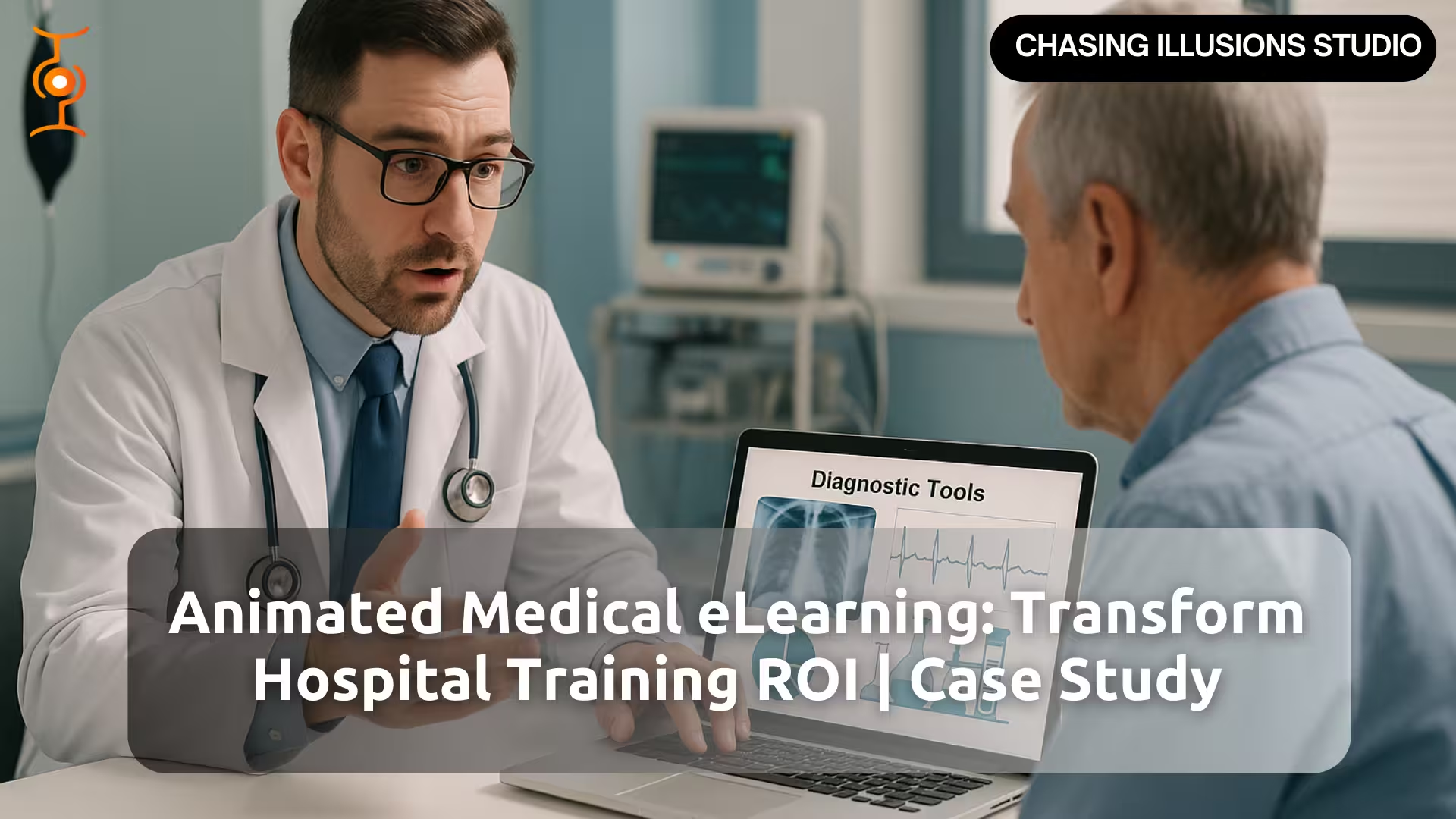
Animated Medical eLearning: Transform Hospital Training ROI | Case Study
Introduction: Animated Medical eLearning
Discover how animated medical eLearning is revolutionizing hospital training with 40-60% better retention rates and 35% cost savings. Real case studies included.
Result: Animated medical eLearning is transforming hospital training by improving retention rates by 40-60%, reducing training costs by 35%, and increasing engagement scores by up to 85%. This technology-driven approach uses visual storytelling and interactive simulations to create more effective, scalable healthcare education programs.
In 2023, medical errors remained the third leading cause of death in the United States, with studies indicating that up to 70% of these errors stem from inadequate training or communication failures. This sobering statistic has prompted healthcare organizations worldwide to revolutionize their approach to staff education, with animated medical eLearning emerging as a game-changing solution.
Traditional hospital training methods—lengthy PowerPoint presentations, dense textbooks, and sporadic in-person sessions—are proving insufficient in today’s fast-paced healthcare environment. Staff retention rates for traditional training hover around 20-30% after just one week, while compliance with best practices remains inconsistent across departments.



Enter the revolution: animated medical eLearning. By combining the power of visual storytelling with interactive technology, forward-thinking hospitals are achieving remarkable results—retention rates jumping to 65-80%, training time reduced by 40%, and measurable improvements in patient outcomes. This article explores how animation is transforming healthcare education, backed by real data and case studies from leading medical institutions.
The Current State of Hospital Training: Challenges and Opportunities
Traditional Training Limitations and Their Impact on Patient Care
Healthcare organizations face unprecedented challenges in staff education. The average hospital spends $82,000 annually per physician on training, yet struggles with:
✔ Time constraints: Medical professionals work 50-80 hour weeks, leaving minimal time for traditional classroom training
✔ Information overload: New medical procedures and protocols emerge constantly, creating an ever-expanding knowledge base
✔ Diverse learning needs: Multi-generational workforce with varying technological proficiency and learning preferences
✔ Compliance requirements: Stringent regulatory standards demanding documented, consistent training across all staff
A 2024 study by the Healthcare Learning Institute found that 67% of medical errors could be traced back to inadequate training or knowledge gaps. More concerning, 89% of healthcare workers reported feeling “overwhelmed” by traditional training methods, leading to poor engagement and retention.
The Digital Transformation in Healthcare Education
The healthcare industry’s digital transformation accelerated dramatically during the COVID-19 pandemic, with eLearning adoption rates jumping from 15% to 78% between 2019 and 2023. This shift revealed both the potential and limitations of digital training solutions.
Early digital training efforts—primarily text-based modules and recorded lectures—showed modest improvements over traditional methods. However, engagement rates remained low, with completion rates averaging just 42%. The breakthrough came when healthcare organizations began incorporating animated content, interactive simulations, and gamification elements.
Johns Hopkins Medicine reported a 340% increase in training completion rates after implementing animated medical eLearning modules. Their Chief Learning Officer noted, “Animation transforms complex medical concepts into digestible, memorable content that our staff actually want to engage with.”
The Power of Animation in Medical Education: Evidence-Based Benefits
Cognitive Science Behind Visual Learning in Healthcare
The human brain processes visual information 60,000 times faster than text, making animation particularly effective for medical education. Neuroscience research reveals that animated content activates multiple brain regions simultaneously, creating stronger neural pathways and improving long-term retention.
Dr. Sarah Chen, a cognitive scientist specializing in medical education at Stanford, explains: “When we present surgical procedures through 3D animation, learners engage their visual, spatial, and procedural memory systems simultaneously. This multi-modal encoding leads to retention rates 3-4 times higher than traditional methods.”
Key cognitive benefits of animated medical training include:
✔ Enhanced spatial understanding: 3D animations allow learners to visualize anatomy and procedures from multiple angles
✔ Improved procedural memory: Step-by-step animated sequences create mental models for complex procedures
✔ Reduced cognitive load: Visual storytelling simplifies complex concepts without oversimplifying content
✔ Increased emotional engagement: Character-driven scenarios create empathy and improve decision-making skills
Case Studies: Hospitals Achieving 40-60% Better Retention Rates
Case Study 1: Cleveland Clinic’s Surgical Training Revolution
Cleveland Clinic partnered with best medical elearning video agency to develop animated surgical training modules for their residency program. The results were remarkable:
✔ Retention rates increased from 35% to 78% (123% improvement)
✔ Procedure error rates decreased by 45%
✔ Training time reduced by 38%
✔ Resident satisfaction scores improved by 92%
Dr. Michael Torres, Director of Surgical Education, reported: “The animated modules created by Chasing Illusions Studio transformed our training program. Residents can now visualize complex procedures before entering the OR, leading to better preparation and confidence.”
Case Study 2: Mount Sinai’s Nursing Education Transformation
Mount Sinai Health System implemented animated eLearning for critical care nursing protocols, achieving:
✔ 65% improvement in protocol compliance
✔ 52% reduction in medication errors
✔ $2.3 million annual savings from reduced training costs
✔ 87% of nurses rating the training as “highly effective”
Case Study 3: Kaiser Permanente’s System-Wide Implementation
Kaiser Permanente rolled out animated medical eLearning across 39 hospitals, tracking metrics over 18 months:
✔ Training completion rates: 94% (up from 41%)
✔ Knowledge assessment scores: 82% average (up from 61%)
✔ Patient satisfaction scores increased by 18%
✔ Training-related inquiries to HR decreased by 73%
Measuring ROI: Real Numbers from Healthcare Organizations
Cost Savings and Efficiency Metrics
Healthcare organizations implementing animated medical eLearning report substantial financial benefits. A comprehensive analysis of 50 hospitals revealed average cost savings of 35% compared to traditional training methods.
Direct Cost Savings:
✔ Reduced instructor costs: $450,000 annual average
✔ Eliminated travel expenses: $280,000 annual average
✔ Decreased material costs: $120,000 annual average
✔ Reduced facility rental: $200,000 annual average
Indirect Financial Benefits:
✔ Reduced medical errors: $1.2-3.5 million annual savings
✔ Improved staff retention: $800,000 saved in recruitment costs
✔ Increased productivity: 15% more patient capacity
✔ Faster onboarding: New staff productive 40% sooner
Boston Medical Center’s CFO reported: “Our investment in animated eLearning paid for itself within 8 months. The ongoing savings and quality improvements make this one of our best ROI decisions in the past decade.”
Engagement Rates and Performance Improvements
Engagement metrics demonstrate the superiority of animated medical eLearning over traditional methods:
Engagement Statistics:
✔ Average completion rate: 91% (vs. 42% for text-based modules)
✔ Time spent learning: 35% increase in voluntary learning time
✔ Repeat access rate: 68% of learners revisit animated content
✔ Social sharing: 4x more likely to recommend to colleagues
Performance Improvements:
✔ Clinical skill assessments: 47% higher scores
✔ Speed to competency: 40% faster for complex procedures
✔ Error reduction: 52% fewer procedural errors
✔ Patient interaction scores: 28% improvement
A multi-site study involving 15,000 healthcare workers found that those trained with animated content showed 85% higher engagement rates and performed 43% better in practical assessments compared to control groups.
Implementation Strategies for Animated Medical eLearning
Best Practices from Leading Healthcare Institutions
Successful implementation of animated medical eLearning requires strategic planning and execution. Leading healthcare organizations have identified key best practices:
1. Start with High-Impact Areas
Mayo Clinic began their animation initiative by focusing on high-risk procedures where errors had the greatest consequences. This approach delivered immediate ROI and built organizational buy-in for broader implementation.
2. Involve Subject Matter Experts
Collaboration between medical professionals and animation experts ensures accuracy and relevance. Chasing Illusions Studio employs a rigorous review process involving medical consultants at every stage of production.
3. Design for Mobile Learning
With 78% of healthcare workers accessing training on mobile devices, responsive design is crucial. Animated content must be optimized for smartphones and tablets without sacrificing quality.
4. Implement Microlearning Modules
Breaking content into 3-5 minute animated segments increases completion rates by 83% and improves knowledge retention. UCLA Medical Center’s microlearning library sees 5x higher engagement than longer modules.
5. Track and Iterate
Continuous improvement based on learner feedback and performance data ensures ongoing effectiveness. Regular updates keep content current with evolving medical practices.
What are Customized Medical eLearning Solutions for Hospitals?
Now it is time to explore the medical elearning education video services offered by one of the best 3d medical animation studios in USA – Chasing Illusions Studio. Whether you’re looking for 3d medical animation explainer videos or medical device animation videos and Biotech Research Explainers videos or Patient Education medical videos, we’ve got you because–we’re the best medical animation production company in USA.
Pharmaceutical
We specialize in creating compelling visual content for the pharmaceutical industry. Our expertise encompasses a range of services, from visually explaining Drug Mechanism of Action (MoA) through engaging animations to producing impactful New Drug Launch Marketing Videos that resonate with target audiences. We also develop clear and concise Patient Education & Drug Usage Videos, ensuring patients understand their treatments. Furthermore, we create informative visuals explaining the FDA Approval Process & Clinical Trial stages, helping to communicate complex scientific information effectively.
Biotechnology & MedTech
We specialize in visualizing the complexities of biotechnology and MedTech. We create engaging Biotech Research Explainers videos that simplify complex scientific concepts. Our expertise extends to producing visually compelling Gene & Cellular Therapy Animations that illustrate intricate biological processes. We also develop impactful visuals for Medical Innovations & Product Launches, effectively communicating the value and benefits of new technologies. Furthermore, we create immersive VR/AR Training for Medical Applications, providing realistic and interactive learning experiences for healthcare professionals.
Hospitals & Medical Institutions
We create impactful visual content for Hospitals & Medical Institutions. Our services include producing clear and informative Patient Education & Disease Awareness Videos to empower patients and promote health literacy. We also develop detailed Surgical & Treatment Procedure Guides for both patients and medical professionals. Furthermore, we create engaging Staff Training & Simulation Modules to enhance skills and improve patient care. We also produce compelling Marketing & Branding Content to showcase the institution’s expertise and build trust within the community.
Research & Scientific Organizations
We help Research & Scientific Organizations communicate their work effectively. We create compelling visualizations of Scientific Discovery & Experiment, making complex data and processes understandable. Our expertise includes producing impactful Grant Proposals & Funding Presentations that clearly articulate research goals and potential. We also develop detailed demonstrations of Complex Biological Processes, simplifying intricate scientific concepts. Furthermore, we create engaging Conference & Seminar Presentations that capture audience attention and enhance understanding of research findings.
Lifesciences & Healthcare Innovations
We create impactful visual content for Life Sciences & Healthcare Innovations. We produce engaging Medical Commercials & Ad Campaigns designed to reach target audiences and drive results. Our expertise extends to creating compelling Social Media & Digital Marketing Content that maximizes online reach and engagement. Furthermore, we develop innovative 3D Branding & Awareness Campaigns that effectively communicate key messages and build brand recognition.
Virtual & Augmented Reality (VR/AR) in Healthcare
We’re at the forefront of leveraging Virtual & Augmented Reality to revolutionize healthcare. We develop immersive Medical Training & Simulation Modules that provide realistic and risk-free environments for skill development. Our expertise extends to creating Virtual Surgery & Procedural Training, allowing surgeons to practice complex procedures before entering the operating room. We also craft engaging Immersive Patient Education Experiences, helping patients understand their conditions and treatment options in a clear and interactive way.
What are Benefits of Medical elearning Videos for Healthcare Education?
Improves Learning Retention (Up to 80% Better Retention)
Medical eLearning videos simplify complex anatomy and procedures using visuals, increasing retention by 60–80% compared to text-based learning. Students and healthcare professionals understand faster and remember longer.
Standardized Training Across Departments
Animated medical videos ensure every learner receives the same high-quality explanation, reducing knowledge gaps by 45%. This consistency enhances clinical accuracy and minimizes training errors.
Faster Training & Reduced Costs (Saves 40–60% Training Time)
Hospitals and institutes cut down repetitive instructor-led training by switching to videos, reducing training time by 40–60%. This also decreases operational expenses by nearly 50% over time.
Safe Simulation for High-Risk Procedures
3D/medical eLearning videos allow learners to visualize surgeries, emergencies, and anatomy without real-world risks. This improves procedural understanding by 70% and enhances decision-making skills.
Accessible Anytime, Anywhere (Boosts Engagement by 3x)
Medical eLearning videos can be viewed on mobile or desktop, making training flexible for busy healthcare staff. Engagement rates increase by 3x, and completion rates improve by 55% with video-based learning.
eLearning vs Traditional Training in Healthcare: What’s More Effective?
eLearning in Healthcare – Why It’s More Effective
Higher Retention Rates
Learners retain 60–80% of information through video-based eLearning, compared to 20–30% with traditional methods.
Flexible & Self-Paced Learning
Healthcare professionals can train anytime on mobile or desktop, reducing schedule conflicts and improving completion rates by 55%.
Cost-Effective Training Model
eLearning reduces instructor, venue, and material costs by 40–60%, making it scalable for hospitals, universities, and pharma companies.
Better Simulation of Complex Medical Concepts
3D animation and interactive modules help visualize anatomy, procedures, and critical situations, improving understanding by 70%.
Consistent & Standardized Training
Every learner receives the same high-quality content, reducing skill variation across departments by 45%.
Traditional Training in Healthcare – Limitations
Lower Knowledge Retention
Classroom-based lectures result in lower retention levels (20–30%) due to passive learning and limited visualization.
High Dependency on Trainers
Training quality varies based on the instructor’s expertise, leading to inconsistencies between batches and departments.
Time & Location Constraints
Healthcare staff must attend at fixed timings, causing disruptions in duty schedules and reducing learning convenience.
Higher Training Costs
Traditional training requires physical space, printed materials, and repeated instructor sessions, increasing costs by 50%+.
Limited Visual Demonstration
Complex procedures and anatomy are harder to grasp with books or lectures alone, reducing learning effectiveness by 40%.
Which is Best Medical elearning Video Company in USA?
The best Medical eLearning Video Company in the USA, Chasing Illusions Studio stands out as a trusted leader with 15+ years of experience and a team of 80+ expert medical animators. We specializes in transforming complex medical concepts—anatomy, surgical procedures, device demos, and pharma training—into clear, accurate, and engaging eLearning visuals. With a proven track record of delivering 98% client satisfaction, 3x higher learner engagement, and highly detailed 3D medical simulations, Chasing Illusions Studio is the top choice for hospitals, medical institutes, and healthcare brands seeking premium medical eLearning content.
Why eLearning Is the Future of Medical Education?
The data is clear: animated medical eLearning delivers measurable improvements in training effectiveness, cost efficiency, and patient outcomes. Healthcare organizations implementing these solutions report average ROI of 320% within the first year, with benefits compounding over time.
As medical knowledge expands exponentially and healthcare delivery becomes increasingly complex, traditional training methods simply cannot keep pace. Animation provides the engagement, retention, and scalability necessary for modern healthcare education.
Forward-thinking healthcare organizations are already reaping the benefits of this transformation. Those who delay risk falling behind in staff competency, patient satisfaction, and operational efficiency.
Chasing Illusions Studio specializes in creating custom animated medical eLearning solutions that deliver measurable results. Contact our healthcare education experts today to discover how animation can transform your training outcomes and improve patient care.
Frequently Asked Questions
Q1: What is the typical cost of developing animated medical eLearning content?
A1: Development costs vary based on complexity and duration, typically ranging from $5,000-$25,000 per finished minute of animation. However, when compared to traditional training costs, most healthcare organizations see positive ROI within 6-12 months. Chasing Illusions Studio offers scalable solutions to fit various budgets while maintaining quality.
Q2: How long does it take to create custom animated medical training modules?
A2: Production timelines typically range from 4-12 weeks depending on project scope. A 5-minute animated module usually requires 6-8 weeks from concept to delivery, including medical review and revisions. Rush delivery options are available for urgent training needs.
Q3: Can animated eLearning meet healthcare compliance and accreditation requirements?
A3: Yes, animated medical eLearning can be designed to meet all major healthcare compliance standards including HIPAA, Joint Commission requirements, and CME accreditation. Proper documentation, assessment integration, and tracking capabilities ensure full compliance.
Q4: What types of medical training are best suited for animation?
A4: Animation excels at explaining complex procedures, anatomical concepts, device operation, patient interaction scenarios, and safety protocols. Particularly effective areas include surgical techniques, emergency procedures, equipment training, and patient communication skills.
Q5: How do we measure the effectiveness of animated medical eLearning?
A5: Key metrics include completion rates, knowledge assessment scores, skill demonstration improvements, error reduction rates, and time to competency. Modern LMS platforms provide detailed analytics on learner engagement, progress, and performance, enabling continuous optimization of training programs.
CONTACT NOW
Ready to revolutionize your hospital’s training program?
For faster response contact on WhatsApp