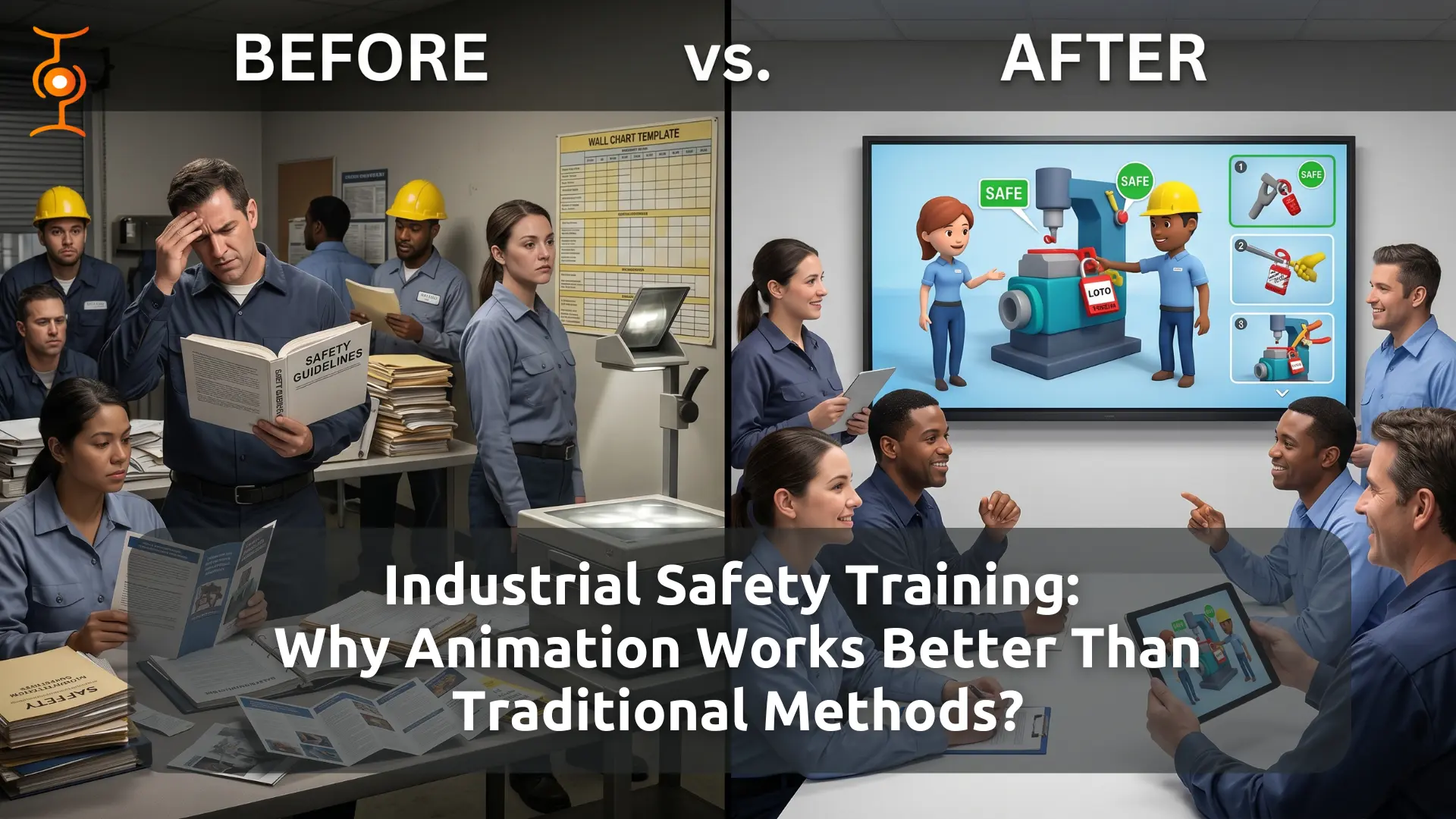
Imagine a fire alarm sounding in a busy manufacturing facility. Some employees immediately head towards the nearest exit, while others stop to investigate the smoke. A few are unsure where the assembly point is or whom they should report to. In an emergency, this confusion can put lives at risk.
A Fire Safety Training Video helps employees understand how to recognize workplace fire hazards, follow prevention procedures, respond to fire alarms, and evacuate safely. By combining visual demonstrations, workplace-specific scenarios, and clear instructions, organizations can make fire safety education easier to understand and more consistent across departments. However, video training should complement practical fire drills, supervised demonstrations, and an organization's established emergency action plan.
For EHS managers, safety officers, HR teams, and business owners, the objective is not simply to show employees what causes fires. It is to help them understand what actions they should take before, during, and after a fire emergency.
Why Is Fire Safety Training Important in Every Workplace?
Workplace fires can start because of electrical faults, overheating equipment, improper storage of combustible materials, cooking activities, chemical reactions, or unsafe working practices.
The risks vary depending on the workplace. An office may have electrical equipment and overloaded power outlets, while a manufacturing plant may handle flammable liquids, combustible dust, industrial machinery, and heat-producing processes.
Without appropriate fire safety training, employees may not recognize these hazards or understand how to respond when an emergency occurs.
Effective workplace fire safety training helps employees understand three essential areas:
1. Recognizing and Preventing Fire Hazards
Employees should understand the potential ignition sources and combustible materials in their working environment.
Training should explain:
Common workplace fire hazards and their warning signs.
Safe use of electrical equipment and machinery.
Proper storage and handling of flammable materials.
Good housekeeping practices to prevent combustible waste accumulation.
Procedures for reporting damaged equipment or unsafe conditions.
The importance of keeping emergency exits and access routes clear.
For example, warehouse employees should understand why storing combustible materials near electrical panels or heat-producing equipment creates additional fire risks.
2. Understanding Emergency Procedures
Knowing that a fire can occur is different from knowing what to do when one actually happens.
Employees should be familiar with:
How to activate the fire alarm or report an emergency.
What different alarm signals mean.
Which evacuation routes they should follow.
Where emergency exits and assembly points are located.
Whom to contact during an emergency.
How employee accountability is managed after evacuation.
3. Understanding Individual Responsibilities
Not every employee has the same responsibility during a fire emergency.
General employees may be required to raise the alarm, evacuate, and report to an assembly point. Designated fire wardens may have additional responsibilities, such as assisting with evacuation and reporting missing occupants, as defined by the workplace emergency plan.
Only appropriately designated and trained personnel should undertake additional emergency response duties.
Fire safety education helps establish these responsibilities before an emergency occurs, reducing uncertainty and supporting a more organized response.
Why Every Workplace Needs a Fire Safety Training Video?
Traditional classroom sessions and safety presentations provide useful information. However, explaining an emergency procedure verbally does not always help employees understand how it works in their actual workplace.
A Fire Safety Training Video provides visual explanations of hazards, safety equipment, warning signals, and emergency procedures. Employees can see how different situations develop and understand the appropriate response through structured demonstrations.
Here are some important benefits.
1. Consistent Fire Safety Instructions for All Employees
In organizations with multiple departments, shifts, or locations, delivering identical safety instructions can be challenging.
Video-based training provides a standardized learning resource that employees can access during onboarding and refresher sessions.
It also reduces the possibility of important safety information being communicated differently across departments.
2. Visual Explanation of Workplace Fire Hazards
Some fire hazards are difficult to explain through written instructions alone.
For example, an animated sequence can demonstrate how an electrical fault may ignite nearby combustible materials or how improperly stored flammable substances can increase fire risk.
Visual explanations help employees understand the relationship between unsafe practices and potential fire incidents.
3. Easier Demonstration of Emergency Procedures
Videos can demonstrate the correct sequence of actions during an emergency.
For example, employees can watch a simulated fire alarm scenario showing how to recognize the warning, stop work when appropriate, follow the designated evacuation route, avoid elevators where required by the emergency plan, and report to the assembly point.
This makes complex procedures easier to follow and discuss during practical training.
4. Better Employee Onboarding and Refresher Training
New employees may be unfamiliar with workplace fire hazards, emergency exits, and reporting procedures.
A structured fire safety induction video helps introduce these essential topics before employees begin their regular responsibilities.
The same material can also support refresher training when procedures change or when employees need to revisit important safety information.
5. Scalable Training Across Multiple Locations
Organizations operating factories, warehouses, offices, and construction sites often have different fire risks and emergency arrangements.
A centralized training framework can maintain consistent core safety principles while incorporating location-specific modules for individual facilities.
This makes it easier for organizations to distribute updated training content without depending entirely on repeated classroom presentations.
6. Repeatable Explanations of Critical Safety Practices
Employees may need to revisit certain procedures to reinforce their understanding.
A video provides a repeatable explanation of fire prevention practices, alarm procedures, equipment awareness, and evacuation responsibilities.
However, repeated viewing should not be treated as proof of practical competency. Employees must also demonstrate their understanding through appropriate assessments, drills, and supervised activities.
What Should a Workplace Fire Safety Training Video Include?
An effective fire safety training video should cover the information employees need to recognize hazards and respond appropriately to emergencies.
The exact content should be based on the workplace fire risk assessment, emergency action plan, building layout, equipment, and applicable safety requirements.
The following topics provide a practical foundation.
1. Common Workplace Fire Hazards
Begin by introducing the fire hazards employees may encounter in their working environment.
These may include:
Electrical faults and damaged wiring.
Overheated machinery and equipment.
Improper storage of flammable liquids.
Combustible dust and waste accumulation.
Unsafe cooking or heating equipment.
Smoking near combustible materials.
Hot work activities, such as welding and cutting.
Use actual workplace photographs, equipment demonstrations, or animation to show where these hazards may occur.
2. Fire Prevention Practices
Explain the everyday actions employees should follow to reduce the likelihood of workplace fires.
Include:
Inspecting electrical equipment and reporting faults.
Keeping combustible materials away from ignition sources.
Following approved procedures for handling flammable substances.
Maintaining good housekeeping.
Ensuring that designated fire doors and emergency exits remain unobstructed.
Following hot work permit procedures where applicable.
Reporting unsafe conditions to supervisors or safety personnel.
The objective is to connect routine workplace activities with practical fire prevention measures.
3. Fire Alarm and Emergency Reporting Procedures
Employees should know how to recognize a fire emergency and report it without unnecessary delay.
A training video should demonstrate:
How to activate the workplace fire alarm.
The designated emergency reporting method.
Whom employees should notify.
Relevant internal emergency contact information.
How emergency instructions are communicated.
What to do when smoke or fire is discovered.
The video should use the organization's actual alarm signals and reporting procedures rather than generic examples.
4. Emergency Evacuation Routes and Exit Procedures
Evacuation is one of the most important subjects in workplace fire safety training.
Use floor plans, animated maps, or walkthrough footage to explain:
Primary and alternative evacuation routes.
Emergency exits and staircases.
Locations of emergency exit signs.
Areas employees should avoid.
Designated assembly points.
Procedures for accounting for employees and visitors.
For larger facilities, a 3D walkthrough or animated floor plan can help employees understand the building layout and identify evacuation routes more easily.
5. Employee Roles and Emergency Responsibilities
Clearly explain what different employees are expected to do during a fire emergency.
For example:
Personnel | Typical responsibilities |
|---|---|
General employees | Raise the alarm, evacuate, and report to the assembly point |
Fire wardens | Assist with evacuation and communicate relevant information according to the emergency plan |
Emergency response team | Perform specifically assigned duties within their training and authorization |
Supervisors | Support accountability and report relevant information to emergency coordinators |
Facility management | Maintain emergency arrangements and coordinate appropriate resources |
Actual responsibilities must follow the organization's approved emergency action plan.
6. Fire Extinguisher Awareness and Safe-Use Guidance
Employees should understand the purpose of workplace fire extinguishers and the importance of selecting equipment appropriate for the type of fire.
The video can introduce:
Different types of fire extinguishers.
Fire classifications and their corresponding extinguishing agents.
Extinguisher labels and operating instructions.
Potential hazards associated with incorrect extinguisher selection.
The PASS method: Pull, Aim, Squeeze, Sweep, where applicable to the extinguisher and local training guidance.
Important: Extinguisher use should only be attempted by appropriately trained and authorized personnel when it is safe to do so, the fire is at an early stage, and the workplace emergency procedures permit it. Employees should never delay evacuation or put themselves at risk to fight a fire.
If evacuation is the required response, employees must evacuate.
7. Assisting Others During Evacuation
Training should also explain how employees should respond when someone needs additional assistance.
Relevant topics include:
Procedures for assisting people with mobility limitations.
Designated assistance arrangements.
Accessible evacuation routes or refuge arrangements, where applicable.
Reporting the location of anyone requiring assistance.
Avoiding unauthorized rescue attempts in hazardous areas.
The objective is to ensure that evacuation arrangements account for everyone who may be present in the workplace.
How to Make an Effective Fire Safety Training Video?
Creating a useful fire safety video requires more than recording someone explaining safety rules.
The production process should combine workplace research, technical accuracy, instructional design, and clear visual communication.
Here is a practical step-by-step approach.
Step 1: Identify Workplace-Specific Fire Hazards
Start by understanding the organization's actual working environment.
Review the fire risk assessment, emergency procedures, building layout, equipment, and materials handled at the facility.
Identify the major hazards associated with the workplace.
For example:
Offices: Electrical equipment, charging devices, and kitchen appliances.
Manufacturing plants: Machinery, electrical systems, hot work, and combustible materials.
Warehouses: Packaging materials, storage arrangements, and material-handling equipment.
Construction sites: Temporary electrical installations, welding, fuel storage, and hot work.
This information establishes what the training video should cover.
Step 2: Define the Training Audience and Learning Objectives
Different employees need different levels of fire safety knowledge.
A general employee induction video may focus on hazard recognition, alarm reporting, and evacuation procedures.
A fire warden training module may require additional information about evacuation coordination and accountability.
Define specific learning objectives before beginning production.
For example, after completing the training, employees should be able to:
Identify common fire hazards in their work area.
Explain how to report a fire.
Identify their designated evacuation route.
Locate their assembly point.
Understand their responsibilities during an emergency.
These objectives will guide the script and assessment questions.
Step 3: Consult Fire Safety Professionals and Subject-Matter Experts
Fire safety content must be technically accurate.
Involve relevant professionals, such as EHS managers, fire safety officers, facility managers, fire protection engineers, or other qualified subject-matter experts.
They should verify:
Fire prevention procedures.
Emergency reporting instructions.
Evacuation arrangements.
Equipment descriptions.
Fire extinguisher guidance.
Employee responsibilities.
Applicable regulatory requirements.
This review is essential because incorrect safety instructions could create confusion or encourage unsafe actions.
Step 4: Develop an Accurate Script and Storyboard
Once the training objectives and technical information are established, develop a structured script.
The script should use simple language, short explanations, and realistic workplace scenarios.
Next, create a storyboard showing how each topic will appear visually.
For example:
Training topic | Suggested visual |
|---|---|
Electrical fire hazards | Damaged electrical cable and an overheating equipment scenario |
Flammable material storage | Visual demonstration of safe and unsafe storage arrangements |
Fire alarm procedures | Employee activating the designated alarm |
Evacuation procedures | Animated workplace floor plan showing approved escape routes |
Fire extinguisher awareness | Close-up demonstration of extinguisher components and labels |
Assembly point | Employees gathering at the designated location |
A storyboard helps the safety team review the planned demonstrations before animation or filming begins.
Step 5: Choose the Appropriate Video Production Method
The visual format should depend on the complexity of the training subject, workplace environment, and learning objectives.
Live-action video
Use this format when actual workplace equipment, safety signage, evacuation routes, and employee demonstrations need to be shown.
2D animation
Useful for explaining fire prevention rules, safety instructions, emergency sequences, and employee responsibilities through simple illustrations and motion graphics.
3D animation
Suitable for visualizing complex industrial environments, equipment-related fire hazards, fire development scenarios, and facility layouts that are difficult to capture through conventional filming.
Combined video production
A combination of live-action footage, 2D graphics, and 3D animation can provide a comprehensive learning experience.
For example, actual factory footage can introduce the working environment, while 3D animation demonstrates a concealed electrical hazard or explains a complex equipment-related fire scenario.
Step 6: Visualize Workplace Scenarios and Emergency Procedures
Use realistic scenarios to connect safety instructions with actual workplace situations.
For example, a manufacturing facility training video could demonstrate:
An employee identifying smoke near electrical equipment.
The employee activating the designated fire alarm.
Workers responding to the warning signal.
Employees following the approved evacuation route.
Fire wardens performing their assigned duties.
Employees gathering at the assembly point.
The sequence should reflect the organization's actual emergency procedures. Avoid presenting simulated actions as instructions if they conflict with the approved response plan.
Step 7: Review Technical and Safety Accuracy
Before final production approval, conduct a detailed review with the responsible safety personnel.
Verify:
Correct equipment and fire safety terminology.
Accurate emergency contact information.
Current evacuation routes and assembly points.
Appropriate extinguisher information.
Correct employee responsibilities.
Accessibility and language requirements.
Consistency with applicable local fire safety regulations.
Any outdated or incorrect information should be corrected before the video is distributed.
Step 8: Test the Video with Representative Employees
Share the draft with employees who represent the intended training audience.
Ask whether they can understand the safety instructions, recognize the hazards, and identify the actions expected of them.
Use their feedback to improve unclear explanations, visuals, narration, or terminology.
You can also include short knowledge-check questions to identify areas requiring further explanation.
Step 9: Distribute the Video Through Appropriate Training Channels
Once approved, integrate the video into the organization's safety training program.
Suitable distribution methods include:
Learning Management Systems (LMS).
Employee onboarding programs.
EHS training portals.
Internal communication platforms.
Department-specific safety meetings.
Refresher training sessions.
Keep training records and update the content whenever workplace hazards, equipment, emergency procedures, or building arrangements change.
Which Topics Are Best Explained Through Fire Safety Animation?
Some fire safety concepts are difficult to demonstrate through ordinary workplace footage.
For example, showing how an electrical fault develops, how combustible materials contribute to fire spread, or how smoke affects visibility may require visual explanations that cannot be safely recreated in a real environment.
A Fire Safety Animation Video can make these processes easier to understand through controlled visual demonstrations.
Here are some subjects particularly suited to animation.
1. How Fires Start and Spread
Animation can illustrate the relationship between ignition sources, combustible materials, and oxygen, showing how a fire can develop under different conditions.
This is useful for explaining fire prevention principles and why controlling ignition sources and combustible materials matters.
2. Electrical and Equipment-Related Fire Hazards
3D animation can show internal electrical components, overheating equipment, damaged wiring, and potential ignition scenarios.
These visualizations can help employees understand hazards that are normally hidden inside machinery or electrical systems.
3. Flammable Material and Combustible Dust Risks
Animated demonstrations can explain how improper handling, storage, or accumulation of combustible materials may increase fire risks.
Industrial facilities can use these visuals to support training related to chemical storage, dust management, and housekeeping procedures.
4. Fire Extinguisher Operation
Animation can show extinguisher components, operating mechanisms, and the correct application principles for different extinguisher types.
It can also illustrate why using the wrong extinguishing agent may be dangerous.
However, animation should support—not replace—practical extinguisher training when required.
5. Smoke Movement and Evacuation Challenges
3D visualization can illustrate how smoke may affect visibility and movement through a building.
This helps explain why employees should follow designated evacuation procedures rather than improvising routes during an emergency.
6. Emergency Exit and Evacuation Procedures
Animated building layouts can highlight approved escape routes, emergency exits, staircases, and assembly points.
This is particularly helpful in large facilities where employees may work in different departments or on multiple floors.
When should organizations choose animation?
Animation is particularly useful when a demonstration would be difficult, unsafe, expensive, or visually unclear to reproduce in a real workplace.
It allows training teams to explain complex processes through controlled visual scenarios while keeping the focus on the correct safety message.
Fire Safety Training Video Examples for Different Workplaces
A single generic training video may introduce basic fire safety awareness, but it cannot adequately address every workplace's specific hazards and emergency arrangements.
Training should reflect the environment in which employees actually work.
The following examples illustrate how organizations can tailor their video content.
1. Offices and Commercial Buildings
Focus: Office Fire Safety Training Video
Relevant topics include:
Electrical equipment and charging hazards.
Safe use of office kitchen appliances.
Emergency alarm procedures.
Staircase and emergency exit locations.
Evacuation arrangements for visitors.
Assembly point procedures.
2. Manufacturing Plants and Factories
Focus: Industrial Fire Safety Training
Manufacturing environments may involve machinery, electrical systems, hot work, chemicals, and combustible materials.
Training should address:
Machinery-related fire hazards.
Electrical safety procedures.
Flammable material handling.
Hot work precautions.
Emergency shutdown responsibilities, where applicable.
Industrial evacuation procedures.
3D animation can be particularly useful for explaining internal machinery hazards and industrial fire scenarios.
3. Warehouses and Logistics Facilities
Focus: Warehouse Fire Prevention Training
Training topics may include:
Safe storage of combustible packaging.
Electrical equipment and charging stations.
Clear access to emergency exits.
Material-handling equipment hazards.
Fire detection and alarm procedures.
Evacuation routes through storage areas.
4. Construction Sites
Focus: Construction Site Fire Safety Video
Construction sites frequently change as projects progress.
Relevant training subjects include:
Welding and cutting hazards.
Temporary electrical installations.
Fuel and flammable material storage.
Hot work permit procedures.
Site-specific emergency access and evacuation arrangements.
Fire reporting procedures.
Training content should be updated when site layouts, temporary structures, or emergency arrangements change.
5. Hospitals and Healthcare Facilities
Focus: Healthcare Fire Safety Training Video
Healthcare environments require special consideration because patients may have limited mobility or require assistance during evacuation.
Training can cover:
Fire alarm and reporting procedures.
Department-specific emergency arrangements.
Patient evacuation responsibilities.
Safe movement of patients and visitors.
Coordination with designated emergency personnel.
Procedures for areas containing specialized equipment or hazardous materials.
6. Hotels and Hospitality Businesses
Focus: Hotel Fire Safety Training
Hotels must consider employees, guests, contractors, and visitors who may be unfamiliar with the building.
Training should address:
Kitchen and laundry fire hazards.
Guest evacuation arrangements.
Emergency exits and staircases.
Fire alarm communication.
Employee responsibilities.
Assistance for guests requiring additional support.
In every case, training should be reviewed against the facility's current fire risk assessment and approved emergency arrangements.
Fire Safety Training Video vs. Traditional Training
Both video-based and instructor-led training have important roles in workplace fire safety education.
The most effective approach combines visual learning with practical instruction.
Training factor | Video-based training | Instructor-led training |
|---|---|---|
Information delivery | Standardized visual explanations | Direct explanation and discussion |
Accessibility | Can be accessed repeatedly | Depends on scheduled sessions |
Demonstrations | Useful for animated and recorded scenarios | Useful for physical demonstrations |
Employee interaction | Usually requires additional activities | Allows immediate questions and discussion |
Practical experience | Limited without supplementary activities | Can include supervised practical exercises |
Multi-location delivery | Easier to distribute consistently | Requires coordination across locations |
Competency assessment | Supports knowledge checks | Supports observation and practical assessment |
Why Should Organizations Combine Both Methods?
Video training can introduce important concepts before employees participate in practical activities.
For example:
Employees watch a fire safety induction video.
An instructor explains workplace-specific procedures.
Employees participate in a supervised fire drill.
Designated personnel receive relevant practical equipment training.
Safety managers evaluate understanding and identify knowledge gaps.
This blended approach helps connect theoretical knowledge with practical emergency preparedness.
A video cannot replace a fire drill. Watching an evacuation demonstration does not establish that employees can follow the actual evacuation route, respond correctly to alarms, or perform their assigned responsibilities under real conditions.
Common Mistakes to Avoid When Creating Fire Safety Videos
Even professionally produced training videos can be ineffective if their content does not reflect actual workplace requirements.
Avoid the following mistakes.
1. Using Generic Content Without Workplace Context
A video explaining general fire prevention principles may not tell employees where to evacuate or whom to contact.
Include actual workplace layouts, hazards, equipment, and emergency arrangements.
2. Showing Outdated Emergency Information
Incorrect exit routes, emergency telephone numbers, or assembly point locations can create confusion.
Review the video whenever relevant workplace procedures or building arrangements change.
3. Overloading the Video with Technical Information
Using too much technical terminology can make safety instructions difficult to understand.
Prioritize essential information and explain complex concepts through clear visuals and practical examples.
4. Demonstrating Unsafe Fire Extinguisher Use
Incorrect demonstrations can encourage dangerous behavior.
Have qualified safety professionals verify the equipment, operating instructions, fire classifications, and circumstances in which extinguisher use is appropriate.
5. Ignoring Accessibility and Language Requirements
Employees may have different language preferences, literacy levels, or accessibility needs.
Use clear narration, readable captions, appropriate translations, and accessible visual design.
6. Excluding Safety Professionals from Content Review
Video production teams may understand visual communication, but they should not independently determine technical fire safety procedures.
Involve qualified subject-matter experts throughout the content development and approval process.
7. Treating Video Completion as Proof of Competence
A completed training module does not automatically demonstrate that an employee can respond correctly during an emergency.
Use knowledge assessments, practical demonstrations, drills, and competency checks to evaluate actual understanding.
How to Measure the Effectiveness of Fire Safety Video Training?
Organizations should evaluate whether employees understand and can apply the information provided in their training.
Video views and completion rates are useful administrative indicators, but they do not independently measure emergency preparedness.
Consider the following evaluation methods.
1. Knowledge Assessments
Use short quizzes after training to assess employee understanding.
Questions can cover:
Workplace fire hazards.
Fire alarm procedures.
Evacuation routes.
Assembly points.
Emergency responsibilities.
Fire extinguisher awareness.
2. Employee Feedback
Collect feedback about the clarity, relevance, and usefulness of the training material.
Ask employees whether they understand the emergency procedures and whether any instructions require further explanation.
3. Fire Drill Observations
Observe employee responses during practical evacuation exercises.
Evaluate:
Recognition of alarm signals.
Use of designated evacuation routes.
Compliance with evacuation instructions.
Arrival at assembly points.
Employee accountability procedures.
Performance of designated emergency personnel.
Drills should be planned and conducted according to applicable requirements and workplace risk considerations.
4. Training Completion and Participation
Monitor whether employees have completed the required training.
Maintain records of onboarding, refresher sessions, assessments, and additional training for designated emergency personnel.
5. Identification of Knowledge Gaps
Use assessment results, employee feedback, and drill observations to identify areas requiring improvement.
For example, if employees repeatedly use an incorrect evacuation route during drills, the organization may need to improve its signage, training visuals, or communication procedures.
6. Regular Training Content Reviews
Review training material whenever there are significant changes to:
Workplace layouts.
Machinery or equipment.
Fire hazards.
Emergency contact details.
Evacuation procedures.
Employee responsibilities.
Applicable safety requirements.
An effective evaluation process focuses on improving employee understanding and emergency readiness, rather than simply increasing training completion rates.
Frequently Asked Questions About Fire Safety Training Videos
1. Why is fire safety video training important?
Fire safety video training helps employees recognize workplace fire hazards, understand prevention practices, identify emergency equipment, and learn the appropriate response to fire alarms and evacuation instructions. It provides consistent visual explanations that can support employee induction and refresher training.
2. What should a fire safety training video include?
A workplace fire safety training video should include common fire hazards, prevention procedures, alarm and reporting instructions, evacuation routes, emergency exits, assembly points, employee responsibilities, and relevant fire extinguisher awareness. Its content should reflect the organization's actual emergency plan.
3. How long should a workplace fire safety video be?
There is no universal required duration. A focused awareness or induction video may take approximately 5–10 minutes, while a more detailed industrial safety training module may require 10–20 minutes or multiple shorter modules.
The duration should depend on the learning objectives, complexity of the workplace hazards, and amount of information employees need to understand.
4. Can animated videos explain fire evacuation procedures?
Yes. 2D and 3D animation can illustrate building layouts, evacuation routes, emergency exits, alarm procedures, and employee responsibilities. Animated floor plans and walkthroughs can make complex building arrangements easier to understand. However, employees should also become familiar with the actual workplace and participate in practical evacuation drills.
5. Can fire safety videos replace practical fire drills?
No. Videos provide theoretical instruction and visual demonstrations, whereas fire drills allow employees to practise evacuation procedures and demonstrate their understanding in a controlled exercise.
Both should be included in an effective workplace emergency preparedness program.
6. How often should employees receive fire safety refresher training?
The frequency depends on applicable regulations, workplace risks, and organizational procedures. Training should be reviewed when employees join, when their responsibilities change, and when emergency arrangements or workplace hazards are updated.
For example, US OSHA regulations require annual education on extinguisher-use principles where employers provide extinguishers for employee use, with additional training for employees designated to use firefighting equipment. This is a specific US requirement, not a universal refresher schedule.
Organizations should also conduct fire drills at the frequency required by their applicable local regulations.
7. Who should review a workplace fire safety training video?
The video should be reviewed by qualified fire safety professionals and relevant workplace representatives, such as EHS managers, fire safety officers, facility managers, and emergency response coordinators.
Their review should confirm that the safety instructions, equipment demonstrations, evacuation routes, and employee responsibilities accurately reflect the approved workplace procedures.
Conclusion:
A fire emergency can develop quickly, and employees may have very little time to understand what is happening and decide what to do.
That is why effective workplace fire safety education should go beyond explaining general safety rules. Employees need to recognize the hazards around them, understand their emergency responsibilities, and become familiar with the procedures they are expected to follow.
A well-planned Fire Safety Training Video makes these instructions easier to communicate through visual demonstrations, realistic workplace scenarios, and clear explanations. When supported by practical drills, supervised training, and regular content reviews, it becomes a valuable part of an organization's wider fire prevention and emergency preparedness program.
For organizations looking to develop engaging safety education, Chasing Illusions Studio provides 2D and 3D animation and video production services for industrial safety, workplace training, and employee education. Its visual production capabilities can help translate complex safety procedures into clear, structured training content developed around your organization's requirements.
Explore Safety and Training Animation Services to learn how visual storytelling can support your workplace safety training initiatives.
Chasing Illusions Studio
Premium animation & video production studio based in Delhi, India. Specialising in 3D animation, medical visualisation, architectural walkthroughs, and CGI.