Chasing Illusions produced a 5-minute-57-second 3D medical animation for general surgeon Dr. Subhasish Sarkar (Eskag Sanjeevani Hospital, Kolkata) explaining a device-based erectile dysfunction (ED) treatment. The video breaks down the device's components, the surgical shunt procedure that implants it, and how it restores blood flow — in visuals accurate enough for surgical training and clear enough for patient education. It was built to serve two audiences at once: medical learners who need anatomical precision, and patients who need a respectful, non-clinical explanation of a sensitive procedure.
This case study covers a 3D medical animation Chasing Illusions produced for Dr. Subhasish Sarkar, a general surgeon, to explain a device-based treatment for erectile dysfunction. The goal was a single video that could do double duty: train surgeons and medical students on the procedure, and help patients understand their treatment options without clinical jargon or discomfort.
Client Video: Erectile Dysfunction Treatment — 3D Medical Animation
Highlights:
Prevalence of ED: Nearly 20% of men experience erectile dysfunction.
Current Treatment Options: Available treatments may have life-threatening side effects and do not mimic natural erection processes.
Innovative Device: Introduction of a new device that provides ED treatment without adverse side effects.
Surgical Procedure: Involves creating an artificial shunt for effective treatment.
User-friendly Operation: Device activated via remote or Bluetooth for convenience.
Safety Features: Offers controlled blood flow and reduces risks associated with traditional treatments.
Applicable for Specific Patients: Suitable for individuals with spinal cord injuries or neurodegenerative diseases.
Summary:
Credit: Chasing Illusions
Why Does Erectile Dysfunction Treatment Need 3D Animation?
Erectile dysfunction is common enough, and sensitive enough, that plain text or 2D diagrams struggle to do it justice. A peer-reviewed NHANES-based study in The American Journal of Medicine (Selvin, Burnett & Platz, 2007) found ED prevalence at 18.4% among US men aged 20 and older — roughly 18 million men.
Existing treatments — oral medications, injectable therapies, and implantable devices — each carry a real range of side effects, from mild to high. That's the case for a new device-based approach, and it's also exactly the kind of nuance that's hard to explain with words alone. A 3D animation can show blood flow, anatomy, and device mechanics simultaneously — which is why Dr. Sarkar chose this format over a written explainer or slide deck.
Who Was the Client?
Field | Detail |
|---|---|
Name | |
Role | General Surgeon |
Education | MBBS, MS |
Affiliation | Eskag Sanjeevani Hospital (Baranagar, Kolkata); also linked with Sagore Dutta Hospital |
Experience | 10+ years |
Specialty focus | Hernia repair, appendectomy, gallbladder surgery, minimally invasive techniques |
Industry | Healthcare |
Dr. Sarkar's day-to-day work centers on general and minimally invasive surgery, with a stated focus on faster patient recovery and structured post-operative follow-up. The ED treatment video was a departure from his usual case load — a highly sensitive, single-topic explainer rather than a general surgical overview.
Why Choose Us?
Dr. Subhasish Sarkar chose the Chasing Illusions (one of the best medical animation agencies) for the Erectile Dysfunction video because of the past 3d medical animation videos for various medical companies like Practo, Max Healthcare, Smith & Nephew, Novartis, etc. Apart from this, we as a medical animation company specialize in creating 3d medical explainer videos for sensitive medical topics with accuracy, clarity, and professionalism. Which is highly accurate for professional healthcare, medical institutes, patient education, etc.
In this context, our Erectile Dysfunction Treatment video deals with the issue of sexual disorder of erectile dysfunction in men. Our animations simplify complex biological processes and treatment mechanisms, making them easy to understand for both patients and healthcare providers. We help medical brands educate, engage, and build trust with their audience.
With the help of this video, Dr. Sarkar can simplify the complex subject of erectile dysfunction with high-quality visuals and a respectful tone, he can enhance medical presentations, boost surgeon training programs, and improve patient understanding in a compelling and easily digestible format.
What Problem Was Dr. Sarkar Trying to Solve?
Two challenges, specifically:
Finding a studio that could handle a sensitive topic accurately. Dr. Sarkar needed a partner capable of presenting ED — a condition many patients are reluctant to even discuss — with both scientific precision and visual tact.
Serving two audiences with one video. The animation had to work as a training tool for surgeons and medical learners (requiring anatomical correctness) and as a patient-education tool (requiring plain-language clarity) — without compromising either.
How Did Chasing Illusions Produce the Animation?
Credit: Chasing Illusions
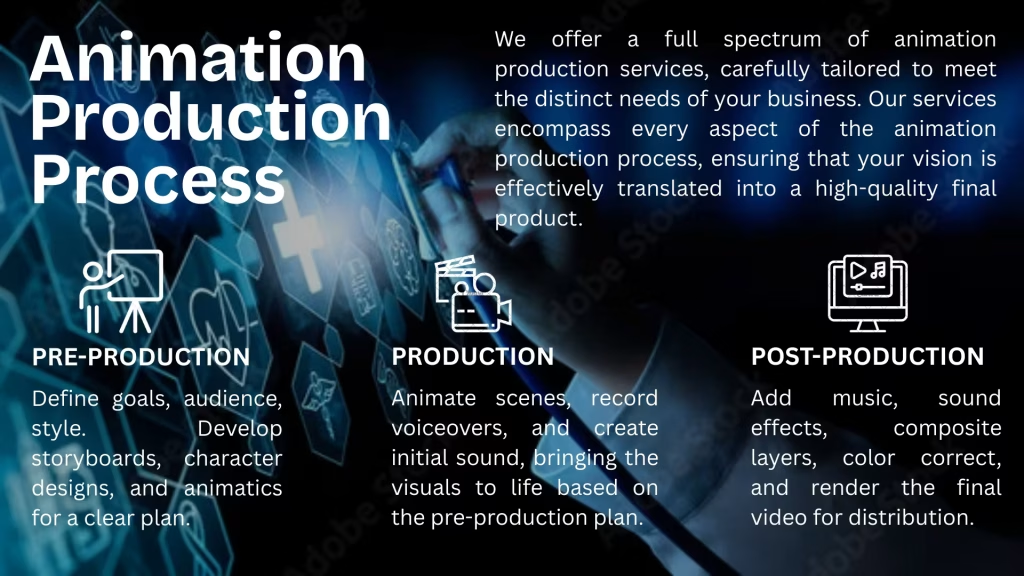
Discovery — Founder Chirag Anand and the team studied the condition from the patient's perspective and defined the target audience (surgeons, learners, patients) before any visual work began.
Storyboarding — every step of the procedure was mapped visually and approved by Dr. Sarkar before production.
3D modeling and animation — the team built realistic anatomical models, applied texturing, and animated each surgical and physiological step in detail.
Review cycles — close, ongoing communication with Dr. Sarkar ensured the video stayed scientifically accurate while remaining visually engaging for hospitals, medical institutions, and patient-education use.
What Treatment Options Exist for Erectile Dysfunction?
The video needed to position the featured device against the existing standard of care. Here's how the main options compare:
Treatment | How It Works | Common Trade-offs |
|---|---|---|
Oral medications (e.g., PDE5 inhibitors) | Increase blood flow via chemical pathway | Doesn't work for all causes of ED; interacts with certain heart medications. |
Injectable therapies | Medication injected directly into penile tissue to induce erection | Invasive administration; discomfort; doesn't mimic natural erection process |
Implantable devices (traditional) | Surgically placed mechanical or inflatable implant | Higher surgical complexity; risk of mechanical failure or infection |
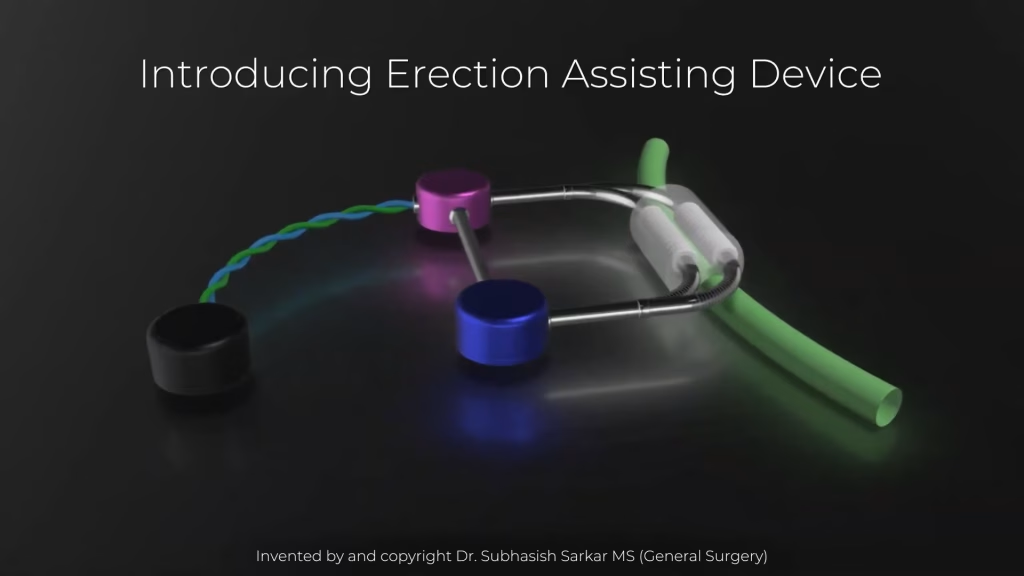
Erection Assisting Device | Artificial shunt + pump system restoring natural blood flow, controlled via remote/Bluetooth | Newer approach; designed to reduce side-effect profile vs. above. |
How Does the Device Featured in the Video Work?
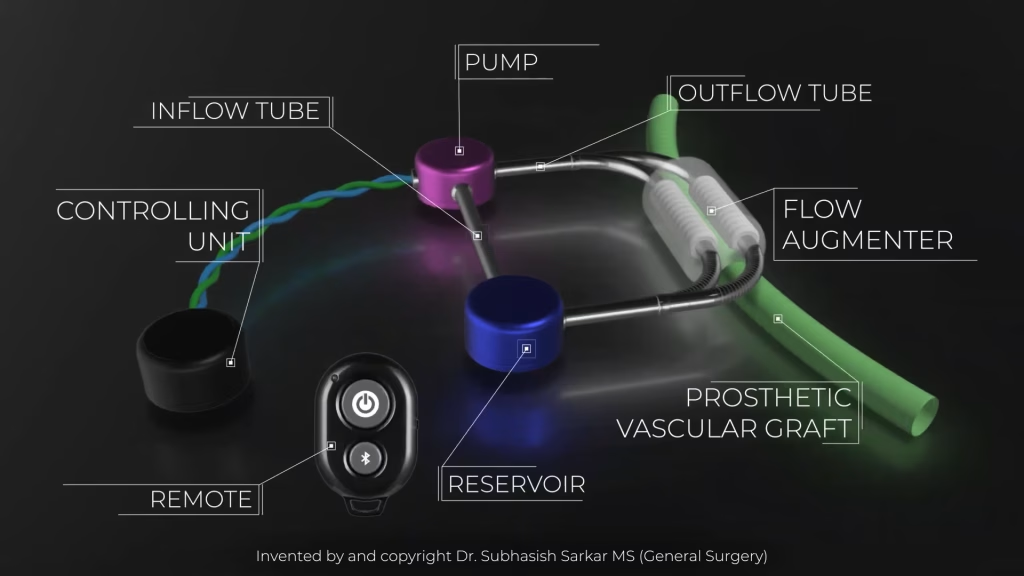
Components:
Positive displacement pump
Inflow and outflow tubes
Flow augmentor
Small reservoir
Prosthetic vascular graft
Control unit (remote or Bluetooth-operated)
How the procedure works, step by step:
Diagnosis — the underlying cause of ED is identified using advanced imaging.
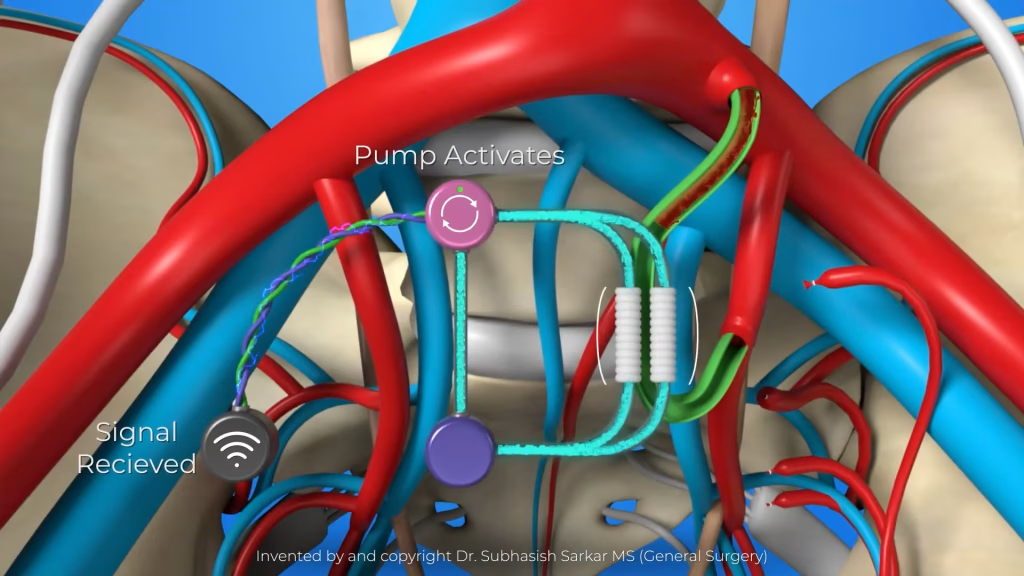
Shunt creation — surgeons create an artificial shunt between the common iliac artery and the internal iliac artery using a prosthetic graft.
Device integration — the pump, tubes, and control unit are incorporated to regulate blood flow on demand.
Activation — the patient controls the device via remote or Bluetooth to achieve an erection when needed.
Safety design: the device is built to reduce complications such as fibrosis and to keep blood flow and pressure controlled, which is intended to prevent discomfort and downstream medical issues. It's positioned as particularly relevant for patients with spinal cord injuries or neurodegenerative diseases, where traditional treatments are often less effective.
NOTE: This describes a medical device and surgical procedure for informational purposes based on the animation's content. It is not medical advice. Patients should consult a qualified physician before pursuing any ED treatment.
What Was Actually Delivered?
Credit: Chasing Illusions
Spec | Detail |
|---|---|
Format | 3D medical animation, 4K |
Runtime | 5 minutes, 57 seconds |
Tone | Scientifically precise, patient-respectful |
Intended use | Patient education, surgical training, clinic/hospital awareness campaigns |
Subject | ED mechanism + device-based surgical treatment |
The animation illustrates the physiological causes of ED and the treatment mechanism in parallel — designed so a patient could watch it and understand their options without a clinical background, while a surgical trainee could watch the same video and follow anatomically correct procedural detail.
What Results Did the Video Achieve?
Dr. Sarkar, a General Surgeon at Eskag Sanjeevani Hospital, decided to trust in Chasing Illusions for Erectile Dysfunction treatment 3D Medical Video brought significant results:
Credit: Chasing Illusions
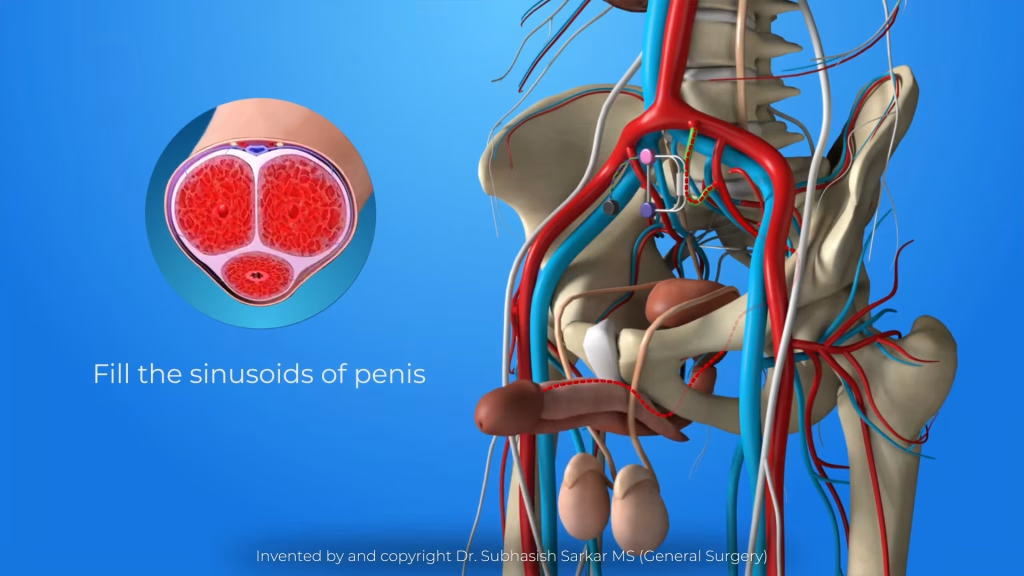
Clarified the condition visually — 3D male anatomy visuals showed exactly how erection is achieved and maintained, and where the process can break down.
Improved doctor-patient communication — gave Dr. Sarkar a tool to explain ED and treatment options during consultations, which supported better-informed patient decisions.
Increased patient education reach — presented complex medical information in a format patients could actually sit through and understand, rather than a dense written handout.
Strengthened institutional trust — the visual accuracy and professional production signaled credibility to patients evaluating a sensitive treatment decision.
This engaging and easy-to-understand video significantly enhanced patient education by 62% regarding erectile dysfunction and its treatments. By presenting complex medical information in a visually appealing format, the video increased awareness by 78% and understanding can lead to earlier diagnosis and more effective treatment seeking within the medical community.
Apart from this, based on a study of Erectile Dysfunction to educate Physicians, a workshop was organized which included role‐play sessions, video‐based classes, and medical tutorials. According to the study, the workshop was attended by 600 physicians and the response rate was 62.3%. The medical tutorial of Erectile Dysfunction (ED) achieved (P < 0.001) and the role‐play on sexual session (P < 0.05) achieved higher positive scores.
Key Takeaways:
ED affects an estimated 18.4% of US men aged 20+, based on NHANES-derived analysis (Selvin, Burnett & Platz, Am J Med, 2007).
The featured device uses an artificial shunt + pump system, not medication or a traditional mechanical implant.
The video was built for two audiences simultaneously — surgical trainees and patients — without splitting into two separate assets.
Final deliverable: a 6-minute 3D medical animation covering mechanism, procedure, and safety design.
Chasing Illusions has produced medical animation for Practo, Max Healthcare, Smith & Nephew, and Novartis, among others.
Conclusion: Erectile Dysfunction Treatment
Credit: Chasing Illusions
The Erectile Dysfunction Treatment animation Chasing Illusions produced for Dr. Subhasish Sarkar demonstrates how 3D medical animation can serve two distinct audiences — surgical trainees and patients — from a single asset, on a topic most content formats handle poorly. Through precise visuals, accurate procedural detail, and a respectful tone, the video functions as both a training resource and a patient-trust-building tool for hospitals and healthcare education platforms.
FAQs: Erectile Dysfunction Treatment
What device is used in this Erectile Dysfunction Treatment video?
The video features a device-based ED treatment referred to as the "Erection Assisting Device" — a pump-and-shunt system designed to restore natural blood flow without the side-effect profile of some existing treatments.
How does the Erection Assisting Device work?
Surgeons create an artificial shunt between the common iliac artery and the internal iliac artery using a prosthetic graft. The device's pump, tubes, and control unit are integrated into this shunt to regulate blood flow. Diagnosis happens first, via advanced imaging, to confirm the underlying cause of ED.
What components make up the device?
A positive displacement pump, inflow and outflow tubes, a flow augmentor, a small reservoir, a prosthetic vascular graft, and a remote/Bluetooth-operated control unit.
Who is this treatment designed for?
The video positions the device as particularly relevant for patients with spinal cord injuries or neurodegenerative diseases, where standard ED treatments are often less effective.
How long did this 3D medical animation take to produce?
The complete medical video of Erectile Dysfunction took 25 days to create; delivered with high-quality 4K format. The video followed a systematic way from script to final delivery. Here is the step by step process followed as:
Understand Medical Concepts
We began by collaborating with healthcare professionals & team of Dr. Subhasish Sarkar to ensure accurate representation of Erectile Dysfunction.
Create Script And Storyboard
Chirag Anand and his professional medical team developed a detailed script and storyboard to outline the flow of the animation, ensuring clarity and precision at every step.
Anatomy Of 3D Modelling
Using advanced tools, we created realistic 3D models of Erectile Dysfunction, human anatomy, how-to-use "Erection Assisting Device" medical device, or biological processes to bring the visuals to life.
High-Quality Animation
We crafted smooth, engaging animations with attention to detail, showcasing complete detailed process of Erectile Dysfunction and interactions with exceptional accuracy.
Incorporate Labels And Callouts
To enhance comprehension, we integrated clear labels, callouts, and annotations that explained each aspect of the animation effectively.
Final Review And Delivery
After incorporating the feedback, we delivered the medical animation video of Erectile Dysfunction in the required format, optimised for educational presentations, training, or marketing use.
Is 3D medical animation accurate enough for surgical training?
Yes — when produced with a review process like the one described here (storyboard approval, anatomical modeling, and physician sign-off at each stage), 3D medical animation can meet the accuracy bar needed for both surgeon training and patient education.
Why did Dr. Sarkar choose Chasing Illusions for this project?
Chasing Illusions has produced custom 3D medical animations for healthcare brands including Practo, Max Healthcare, Smith & Nephew, and Novartis, with a specific focus on presenting sensitive medical topics like total knee replacement, brain surgery, and medical devices tutorials like A Flex - eye pupil expansion, Camouflage - SmartReactor, etc., and other medical topics accurately and respectfully.
Looking to explain a sensitive or complex medical procedure to patients or trainees?
Book a discovery 20-minutes strategy call.
📞 +91-9910911696 | +91-9910660851
📩 info [@] chasingillusions [.] in
Written by Deepak, Healthcare Content Strategist at Chasing Illusions Studio, who leads content for clients including Ambler Surgical, Practo, Bayer, SMT, Novartis, and 100+ healthcare brands across India, USA, Thailand, and the UK.
Last Updated: Sep 02 2026 | Chasing Illusions Studio
Chasing Illusions Studio
Premium animation & video production studio based in Delhi, India. Specialising in 3D animation, medical visualisation, architectural walkthroughs, and CGI.