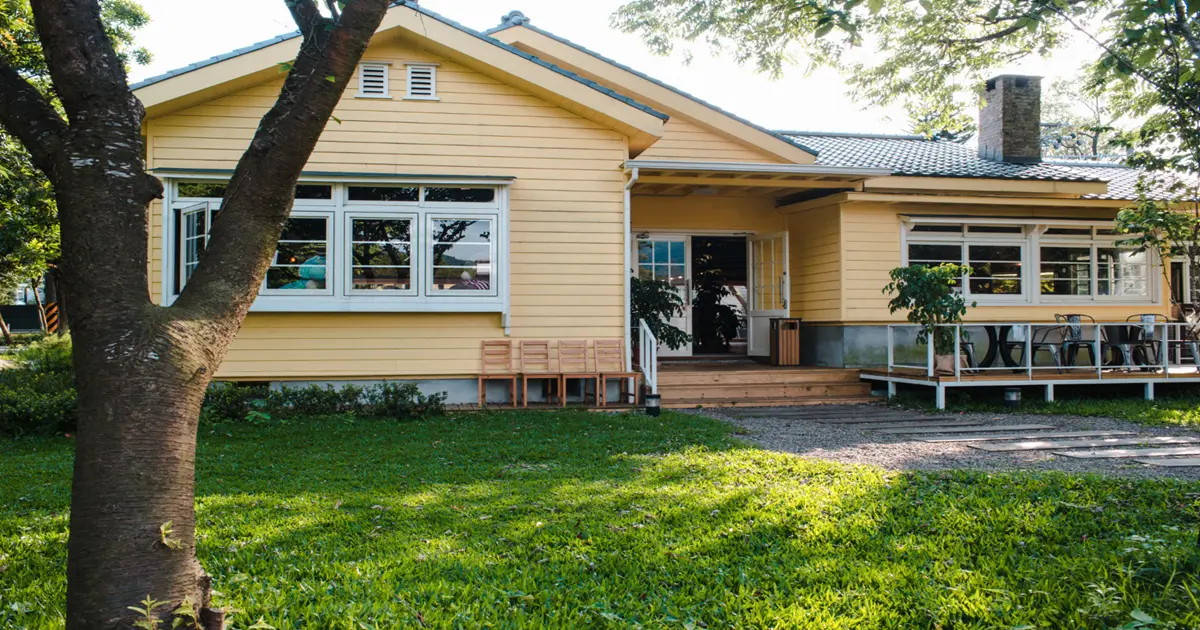
Dubai closed Q1 2025 with 45,474 residential deals valued at AED 142.7 billion — a 22% jump in volume and a 30% surge in value versus the prior-year quarter. That pace of transaction activity, combined with buyer expectations shaped by global luxury benchmarks, has made the quality of interior presentation a commercial differentiator for UAE developers, architects, and interior designers working on residential and hospitality projects across Dubai and Abu Dhabi.
For most UAE property projects — whether a new villa handover on Palm Jumeirah, a turnkey apartment in Downtown Dubai, or a hospitality suite in Abu Dhabi — the interior visualization package is what convinces a buyer, investor, or client to commit before a space is physically complete. A photorealistic 3D interior render communicates what no 2D plan or material board can: how light moves through the space, how the materials relate to each other, how the room's proportions feel from a human vantage point, and whether the design intent is actually being achieved.
This guide covers what 3D interior design visualization involves for UAE projects, what a complete package includes, UAE-specific design and regulatory considerations, what it costs, and how to commission a production that serves its commercial purpose.
What 3D Interior Design Visualization Is — and What It Is Not
3D interior design visualization is the production of photorealistic digital images, animated walkthroughs, or interactive experiences showing an interior space before it is built or furnished. It is produced from architectural drawings, interior design plans, and material specifications — not from photographs of the finished space.
This is distinct from:
Interior design itself — the discipline of planning spatial layouts, selecting materials, and specifying furniture. Visualization studios produce visual representations of design decisions; they do not make those decisions on behalf of the client.
3D modelling for construction — BIM (Building Information Modelling) models used by engineers and contractors for construction documentation. Interior visualization is a communication and sales tool, not a technical construction document.
Virtual staging — adding furniture to photographs of empty rooms using photo editing software. Interior 3D visualization builds a complete scene from scratch from design files, not from existing photography.
Understanding this distinction matters before briefing a studio — the input requirements, production timelines, and output formats are different for each.
What a 3D Interior Visualization Package Includes
A complete interior visualization package for a UAE project typically covers five output types, each serving a different audience and purpose.
1. Interior Still Renders
Photorealistic still images of individual rooms and spaces — living areas, kitchens, master bedrooms, bathrooms, lobby areas — showing materials, furniture arrangement, lighting quality, and spatial proportion from a specific camera angle.
For UAE residential projects, interior stills are typically produced for all primary spaces — at minimum, the main living area, master bedroom, and kitchen. For hospitality projects, all guest room typologies and public areas are standard.
Still renders are the primary asset for sales brochures, property portal listings, developer marketing materials, and agent presentations. A buyer evaluating an off-plan purchase on a property portal in Dubai or making a remote purchase decision from India, the UK, or Russia is relying on interior stills as their primary reference.
2. Interior Walkthrough Animation
A continuous animated sequence — typically 60 to 120 seconds — that moves through the interior spaces of a property in a single, fluid journey. The walkthrough shows how rooms connect spatially, how natural light changes through the space, and how the design reads in motion rather than in a frozen still.
For off-plan residential projects and luxury developments, a walkthrough embedded on the project website and shared at launch events is now the standard marketing asset — more effective than stills alone for communicating spatial quality to buyers who have not visited the site.
3. Virtual Reality Interior Tour
A headset-compatible or browser-based interactive environment where users navigate through the interior independently, rather than following a fixed camera path. VR tours are used in developer sales centres for buyer presentations, at international property exhibitions for remote buyer demonstrations, and on project websites as a premium engagement tool.
Dubai's population surpassed 4 million in 2025 and is projected to grow further through 2026, with a large proportion of demand from international buyers purchasing remotely. A VR tour gives overseas buyers the ability to experience an interior space without traveling to a show apartment — directly relevant for Indian, British, Russian, and Chinese buyer segments that account for a significant share of Dubai's off-plan purchases.
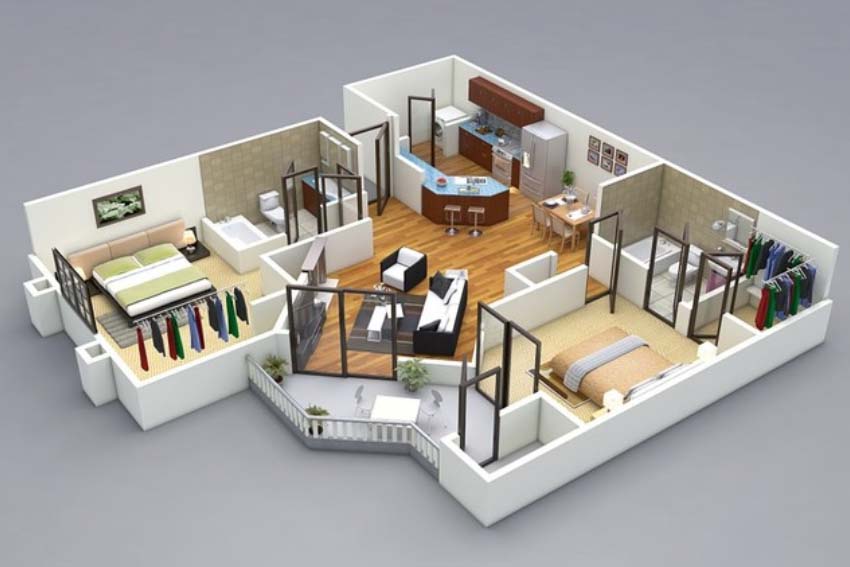
4. 3D Interior Floor Plans
Isometric or perspective floor plan renders showing room layout, furniture placement, door and window positions, and spatial flow — replacing the flat architectural floor plans typically used in sales brochures. For buyers evaluating an apartment layout, a 3D floor plan communicates configuration more clearly than a 2D drawing.
5. Material and Finish Variation Renders
Renders showing the same space in multiple finish options — different flooring materials, kitchen finishes, colour schemes, or furniture specifications — allowing buyers or clients to make informed selection decisions before any physical work begins.
For UAE developers offering buyers a choice between standard, premium, and bespoke finish packages, this asset type is operationally valuable: it removes the need for separate physical show apartments for each finish tier.
UAE-Specific Considerations for Interior Visualization
UAE interior projects have specific characteristics that directly affect what a visualization needs to communicate and how it should be produced.
Cultural Design Elements
UAE luxury interiors frequently incorporate design elements drawn from Arabic and Islamic architectural tradition — geometric patterning in tilework and screens, mashrabiya-inspired light filtration, arabesque motifs in plasterwork, and calligraphic art as a primary decorative element. A visualization studio producing UAE-market interior renders should be able to model and render these elements accurately, not substitute generic neutral interiors.
This is a specific technical requirement: mashrabiya screens with accurate geometric repetition, hand-knotted rug textures rendered with appropriate depth and pattern fidelity, and bespoke joinery finishes specific to Gulf regional preferences require modelling capability that generic residential visualization does not demand.
Sustainability Certification Frameworks
UAE sustainability standards directly shape material selection and interior environmental quality across emirates — Al Safat in Dubai, Estidama in Abu Dhabi, and Barjeel in Ras Al Khaimah — affecting specifications for lighting systems, indoor air quality, and building materials. For projects seeking certification under these frameworks, interior visualizations used in design review and stakeholder presentations should accurately represent compliant material specifications rather than idealized non-compliant alternatives.
Renovation and Remodelling Context
Renovation and remodelling represented 68.05% of UAE interior design market activity in 2025. For retrofit and refurbishment projects — a significant proportion of the UAE interior design market — visualization is produced from as-built drawings of existing structures rather than new-build plans. This requires a studio capable of working accurately from measured survey data and as-built documentation, not just greenfield design drawings.
Luxury Tier Dominance
Premium and luxury interiors led the UAE interior design market with 48.72% share in 2025, advancing at a 10.12% CAGR — the fastest growth segment. The implication for visualization: UAE market renders are expected to meet a luxury production standard — bespoke furniture modelling, high-fidelity material rendering, and atmospheric lighting — rather than the mid-market render quality acceptable in other geographies.
What 3D Interior Visualization Costs in the UAE (2026)
Pricing for interior visualization in the UAE market reflects the luxury production standard expected across the region.
Service | Standard Range (AED) | Premium Range (AED) |
|---|---|---|
Interior still render (per room) | AED 2,500 – AED 6,000 | AED 6,000 – AED 14,000 |
Interior still package (4–6 rooms) | AED 10,000 – AED 25,000 | AED 25,000 – AED 55,000 |
Interior walkthrough (60–90 sec) | AED 18,000 – AED 35,000 | AED 35,000 – AED 70,000 |
VR interior tour | AED 28,000 – AED 60,000 | AED 60,000 – AED 120,000+ |
Material variation renders (per finish option) | AED 2,000 – AED 5,000 | AED 5,000 – AED 12,000 |
3D interior floor plans (per floor) | AED 1,500 – AED 4,000 | AED 4,000 – AED 8,000 |
All pricing reflects professional-grade production. Final costs depend on number of rooms, finish complexity, revision rounds, and delivery format requirements. India-based studios with UAE market experience typically deliver equivalent quality at 35–45% lower cost than UAE-based studio equivalents.
What drives cost in UAE interior visualization:
The number of distinct rooms — a two-bedroom apartment produces fewer renders than a seven-bedroom villa across multiple levels. Furniture specification complexity — generic furniture libraries cost less to implement than custom bespoke joinery and high-end brand-specific pieces. Material rendering depth — standard finishes render faster than exotic stone surfaces with high-resolution veining maps, hand-applied plaster textures, or complex textile renders. The number of finish variation sets required.
How India-Based Studios Serve UAE Interior Projects
A significant proportion of UAE interior visualization — particularly for off-plan residential marketing and developer presentations — is commissioned from India-based studios. The practical reasons are cost and production scale.
India is two hours ahead of UAE Standard Time, which means the timezone overlap for communication is significant — UAE mornings overlap directly with Indian working hours, and Indian teams can produce overnight against UAE feedback, delivering results the following UAE morning.
For UAE developers targeting Indian buyers — a consistently prominent segment of Dubai's international buyer base according to the Dubai Land Department — content produced by Indian studios can include Hindi narration, culturally calibrated lifestyle staging, and locally relevant investment return messaging within the same production pipeline. A UAE developer running an investor roadshow in Mumbai or Delhi can commission content in the same production that serves the Dubai sales centre.
Our architectural walkthrough and interior visualization services serve UAE developers and architects with AED pricing, UAE-hours communication, and production calibrated to the Gulf regional luxury standard. For UAE industrial and commercial clients, our safety animation and industrial visualization services cover OSHAD-SF and Dubai Municipality HSE framework requirements.
How to Commission a 3D Interior Visualization for a UAE Project
What to prepare before briefing a studio:
Interior design drawings: dimensioned floor plans showing room layout, furniture placement intent, and fixture locations
Material and finish schedules: all surface materials, floor finishes, wall treatments, ceiling details, and joinery specifications
Furniture specifications: specific pieces if bespoke, or reference images for the style and quality level if generic
Reference imagery: photography showing the mood, light quality, and aesthetic direction you are targeting
Output format requirements: what platforms and formats the renders need to be delivered in — print-ready, web-optimized, VR-compatible
The production process:
Most professional studios follow a three-stage review process. First, a grey model review — the spatial geometry of the scene without materials or lighting, allowing you to confirm spatial accuracy and camera angles before materials are applied. Second, a styled still review — two or three fully rendered images showing the material palette, lighting, and furniture arrangement for client approval before the full render set is produced. Third, final delivery of the complete render set, walkthrough, and VR package.
The grey model review stage is where spatial and design errors are cheapest to correct. Changes to geometry after rendering begins are significantly more expensive than changes at the grey model stage.
Understanding what 3D visualization actually involves across all project types — from the production process to what inputs are required — is useful context before briefing any studio.
Frequently Asked Questions
How much does 3D interior design visualization cost in Dubai?
Professional interior renders in Dubai run AED 2,500–AED 6,000 per room at standard quality and AED 6,000–AED 14,000 for luxury-tier photorealism. A full interior still package for a three-bedroom apartment typically runs AED 10,000–AED 25,000. Walkthrough animation for a residential unit runs AED 18,000–AED 35,000 at standard tier. India-based studios with UAE market experience deliver equivalent output at 35–45% lower cost.
Can 3D interior visualization incorporate Arabic and Islamic design elements accurately?
Yes — provided you work with a studio that has specific experience modelling and rendering Arabic design vocabulary: mashrabiya screens, geometric tilework, arabesque plasterwork, and Arabic calligraphic art as decorative elements. Request specific portfolio examples showing these elements before committing to production. Generic residential visualization studios may not have the modelling depth for accurate Arabic detail.
What is the timeline for 3D interior visualization in the UAE?
A single interior still render takes 5–10 working days. A full still package for a three-to-four bedroom property (8–12 views) takes 2–3 weeks. A 60–90 second interior walkthrough takes 4–6 weeks from approved brief. VR interior tours take 8–12 weeks. Rush delivery options are available at most professional studios for a 30–40% premium.
What inputs does a studio need to start interior visualization?
At minimum: dimensioned floor plans, material schedules, furniture specifications or reference images, ceiling height information, and window/door position drawings. 3D CAD files from your interior designer (if available in AutoCAD, Revit, or SketchUp format) reduce production time by 25–35%. The more complete the input package, the faster and more accurate the output.
Do UAE sustainability standards (Al Safat, Estidama) affect interior visualization briefs?
Not directly — sustainability certification frameworks govern physical material specifications, not visualization production. However, renders used in design review presentations for sustainability-certified projects should accurately represent the specified compliant materials rather than idealized alternatives. A studio familiar with UAE sustainability frameworks understands this distinction and can produce renders that reflect certification-aligned specifications.
Is 3D interior visualization useful for renovation projects, not just new builds?
Yes. For UAE renovation and refurbishment projects — which represented 68% of interior design market activity in 2025 — visualization is produced from as-built drawings of the existing structure. A studio working on a renovation brief needs to be able to model from measured survey data accurately, which is a different input process from greenfield visualization but a standard capability for professional studios.
Commission Your UAE Interior Visualization
Chasing Illusions Studio produces 3D interior visualization for UAE developers, architects, and interior designers — photorealistic stills, animated walkthroughs, VR tours, and material variation renders calibrated to the Gulf regional luxury standard.
Request a project quote within 24 hours →
Getting Started
Ready to discuss a rendering project for your jewelry line? [Get a Quote →]
📞 +91-9910911696 | +91-9910660851
📩 info [@] chasingillusions [.] in
Written by Deepak, Content Strategist at Chasing Illusions Studio, who leads content for clients including Ambler Surgical, Practo, Bayer, SMT, Novartis, and 100+ brands across India, USA, Thailand, and the UK.
Also read:
Chasing Illusions Studio
Premium animation & video production studio based in Delhi, India. Specialising in 3D animation, medical visualisation, architectural walkthroughs, and CGI.