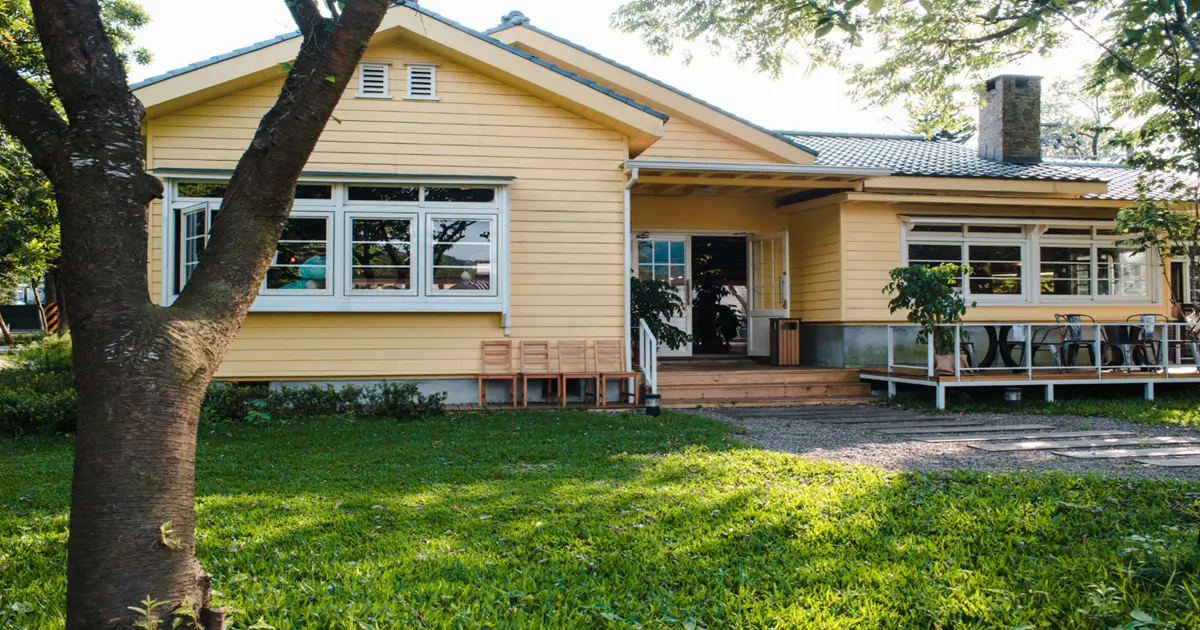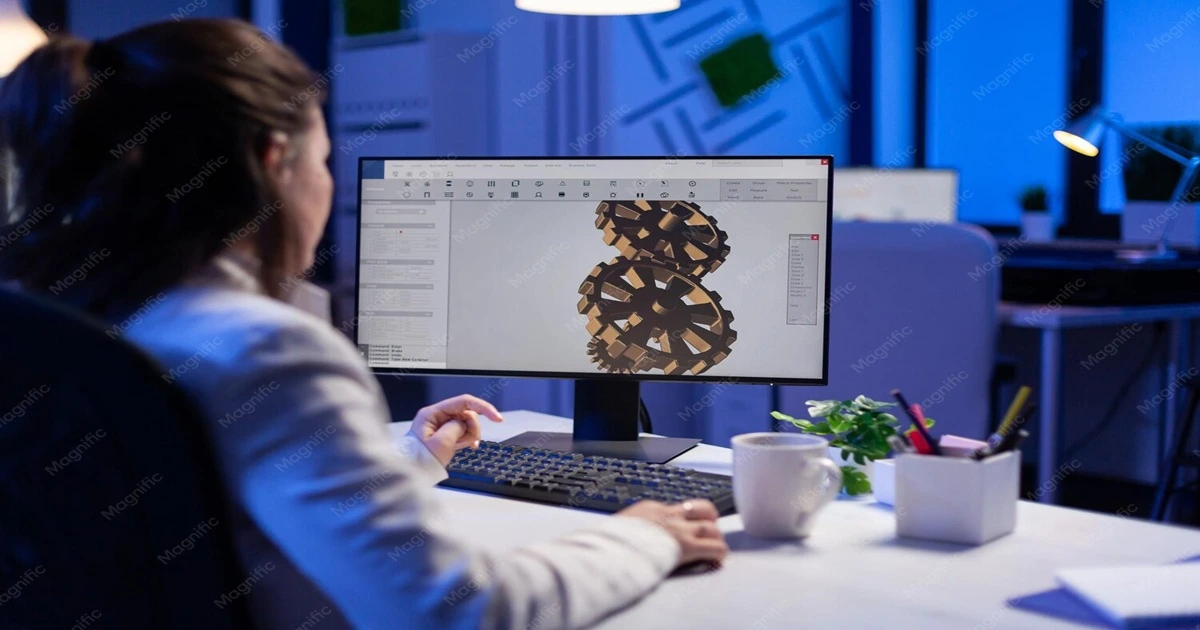
The modern farmhouse aesthetic has taken the architectural world by storm in 2026, blending rustic charm — think shiplap walls, exposed beams, and barn-style doors — with contemporary elegance, such as open-plan layouts, smart home technology, and sleek finishes. As homeowners, architects, real estate developers, and builders envision these dream homes, the challenge lies in experiencing their unique appeal before construction even begins. This is where 3D virtual house tours shine, offering immersive, photorealistic walkthroughs that bring every detail to life, from the glow of reclaimed wood under skylights to the functionality of smart thermostats.
At Chasing Illusions Studio, we've crafted spellbinding 3D virtual house tours for modern farmhouses across the USA, UAE, India, and beyond, earning accolades like Priya Nair's for our "breathtaking" visualisations that drive sales, boost trust, and streamline decision-making.
This comprehensive guide dives deep into how 3D virtual house tours revolutionise the visualisation of modern farmhouses before construction. Tailored for homeowners dreaming of their perfect home, architects refining designs, realtors marketing high-value properties, and developers aligning with initiatives like UAE's Vision 2030, it offers a detailed roadmap with a step-by-step process, in-depth economics, ROI strategies, and actionable tips. Let's explore how this technology transforms dreams into reality.

Why 3D Virtual House Tours Are Essential for Modern Farmhouses in 2026
Modern farmhouses have surged in popularity, combining rustic elements like reclaimed wood beams, shiplap cladding, and farmhouse sinks with contemporary features such as large glass windows, smart lighting systems, and minimalist layouts. In 2026, the U.S. residential real estate market, valued at $1.4 trillion, sees modern farmhouses as a top trend, while the UAE's luxury sector, growing 12% annually, embraces their global appeal. In India, Vastu-compliant farmhouses are gaining traction among affluent buyers.
3D virtual house tours provide an interactive, photorealistic solution to visualise these homes before construction, accessible via computers, mobile devices, or VR headsets. Unlike static blueprints or 2D sketches, these tours offer a dynamic, immersive experience, allowing stakeholders to explore every nook and cranny of a modern farmhouse from anywhere in the world.
At Chasing Illusions Studio, our 3D virtual house tours have transformed pre-construction visualisation. Industry data underscores their value: 85% of homebuyers prefer listings with 3D visuals, and projects with virtual tours close 31% faster, per 2026 real estate reports. These tours deliver measurable benefits that make them indispensable for modern farmhouse projects:
Immersive Visualisation Experience: 3D virtual house tours allow homeowners to step into their future home, exploring details like the texture of shiplap walls or the ambiance of a smart-lit dining area. This fosters emotional connections, boosting buyer confidence by 45%, according to industry surveys. Our tour for a Texas farmhouse showcased a cozy fireplace, driving a $1.5M sale in just 18 days.
Early Error Detection: By visualising layouts and finishes before construction, tours identify design flaws — such as impractical room flow or poor lighting — saving 20–30% on construction revisions. This can translate to $5,000–$20,000 in savings for a 3,000-square-foot home.
Powerful Marketing Tool: Tours drive 80% more engagement on platforms like Zillow, Instagram, and Pinterest, as seen in our viral campaigns for UAE's Vision 2030 projects. A Dubai farmhouse tour with mashrabiya-inspired accents attracted 20,000 global views, boosting inquiries by 40%.
Global Accessibility for Buyers: With virtual tours, international clients in Dubai, Bengaluru, or Chicago can explore a farmhouse without costly travel, saving $2,000–$10,000 per client. Our Bengaluru tour drew 15,000 international views, expanding the buyer pool.
Accelerated Sales Cycles: By enabling buyers to visualise unbuilt homes, tours cut sales timelines by 31%. Our Virginia farmhouse tour sold a $1.6M property in 15 days, half the market average.
Step 1: Define the Tour's Goals and Scope
The first step in creating a 3D virtual house tour is to establish a clear vision for its purpose, target audience, and scope. This foundational phase ensures the tour aligns with your project's objectives, whether it's helping a homeowner visualise their dream farmhouse, enabling a realtor to market a $1.5M listing, or supporting a developer's Vision 2030 project in the UAE. A well-defined scope minimises miscommunication, reduces revisions, and maximises ROI.
Key Tasks:
Identify the Target Audience: Determine who will use the tour. Homeowners may prioritise cozy interiors, such as a shiplap-accented living room or a Vastu-compliant bedroom. Realtors focus on curb appeal, like a wraparound porch, to attract buyers. Developers may emphasise scalability for multiple properties, as seen in our UAE projects for Vision 2030, which targeted elite buyers with mashrabiya-inspired designs.
Set Measurable Objectives: Define specific goals, such as increasing buyer inquiries by 35% (as achieved in our Bengaluru tour) or closing a $1.2M sale in 20 days. For pre-construction farmhouses, objectives might include securing early offers or reducing design revisions by 25%.
Specify the Farmhouse Details: Outline the home's size, style, and features. A typical modern farmhouse might be 3,000 square feet with 4 bedrooms, an open-plan kitchen, smart lighting, and rustic elements like barn doors. Smaller homes (1,500–3,000 sq ft) require tours costing $2,000–$8,000, while larger ones (5,000+ sq ft) range from $10,000–$20,000 depending on complexity.
Gather Client Preferences: Collect detailed inputs through meetings and mood boards. Clients might specify shiplap walls, matte black fixtures, or smart thermostats. For UAE projects, we incorporated Arabic annotations and mashrabiya patterns to align with cultural preferences.
Align with Market Trends: In 2026, modern farmhouses are trending globally, with the U.S. market favouring rustic-modern hybrids and the UAE emphasising luxury sustainability for Vision 2030.
Economics: $200–$500 for consultations, mood boards, and scoping meetings. Clear goals reduce revisions by 25%, saving $500–$2,000 in downstream costs.
Example: For Rustic Modern Realty, we scoped a 3,000-square-foot farmhouse tour for a $1.5M listing, aiming for a 35% inquiry increase and a 20-day sale. The consultation cost $350 but saved $1,200 by minimising revisions.
Step 2: Collect Design Data and Measurements
Accurate data is the backbone of a realistic 3D virtual house tour. For modern farmhouses, where rustic elements like reclaimed wood beams must blend seamlessly with smart features like automated blinds, precise measurements and design references are critical.
Key Tasks:
Obtain Precise Measurements: Use site visits, architectural blueprints, or CAD files to gather dimensions of the farmhouse. A 3,000-square-foot home typically takes 2–4 hours to measure, costing $100–$500. For remote projects, digital plans or 3D scanning can suffice, adding $200–$1,000 for equipment or travel.
Source Design Inspiration: Collect visual references through client-provided photos or architectural magazines. Clients might share images of shiplap-clad dining areas, farmhouse sinks, or large glass windows.
Specify Materials and Finishes: Document exact finishes, such as reclaimed oak flooring, quartz countertops, or matte black cabinet handles. These details influence texturing costs, ranging from $300–$1,000 for a 3,000-square-foot home. In UAE projects, we noted mashrabiya-inspired accents to align with Vision 2030's cultural focus.
Incorporate Smart Home Features: Include details of tech elements, such as smart thermostats, LED lighting systems, or automated blinds. Accurate documentation ensures these features are modelled correctly, enhancing realism.
Validate Data Accuracy: Cross-check measurements against plans to avoid discrepancies, especially for open-plan layouts where spatial flow is critical. This prevents 20% of modelling errors.
Economics: $100–$500 for measurements, $200–$1,000 for travel or scanning for remote projects. Accurate data prevents 20% of modelling errors, saving $500–$1,500 in revisions.
Example: For Rustic Modern Realty's 3,000-square-foot farmhouse, we used a laser measuring tool and CAD plans to confirm the open-plan layout and glass window dimensions, ensuring accuracy for the modelling phase.
Step 3: Select the Right Software for 3D Virtual House Tours
Choosing the right production tools is pivotal to creating a high-quality, interactive 3D virtual house tour. The tools must balance photorealism, interactivity, and cost, catering to the project's complexity and client needs.
Key Tasks:
Evaluate Tool Options: The industry offers a range of professional 3D modelling and rendering tools suited to different project scales:
Free open-source platforms: Capable for budget-conscious projects or smaller farmhouses (1,500–3,000 sq ft), with strong community support for rustic textures like shiplap.
Real-time rendering software: Excels in quick client previews of farmhouse interiors. Perfect for fast-paced projects needing immediate visual feedback.
Professional real-time 3D engines: Offer VR-compatible tours, ideal for immersive headset experiences — a growing trend in 2026. Best suited for high-end farmhouses with smart home features.
Photorealistic rendering plugins: Enhance lighting quality for elements like glass windows or smart LEDs, available across major 3D platforms.
Match Tools to Project Needs: For simple tours, free tools suffice, saving $1,000–$2,000 on licensing. For VR-enabled tours or Vision 2030 projects, professional real-time rendering software is ideal, adding $500–$2,000 for setup.
Consider VR and AR Compatibility: With 82% of buyers preferring immersive experiences in 2026, VR-compatible production tools support headset tours, enhancing engagement. AR features for mobile apps add $1,000–$3,000 but boost interactivity significantly.
Assess Hardware Requirements: High-end rendering tools require powerful GPUs, potentially adding $500–$1,500 for hardware upgrades. Cloud rendering services can offset this, costing $200–$800.
Economics: $0 (free open-source tools) to $2,000 (professional rendering suite) for licensing, $500–$1,500 for hardware if needed. Premium tools increase realism, boosting buyer trust by 30% and inquiries by 35%.
Example: For the Rustic Modern Realty farmhouse tour, we used a professional real-time rendering engine for VR compatibility, ensuring stunning shiplap living room and smart lighting visuals that closed a $1.5M sale in 18 days.
Step 4: Build the 3D Model
The 3D model is the foundation of the virtual tour, capturing the modern farmhouse's exterior and interior in meticulous detail. This step involves creating a digital replica of the home, from its rustic barn doors to its smart home features.
Key Tasks:
Model the Exterior Structure: Build the farmhouse's exterior, including walls, large glass windows, flat roofs, and rustic elements like wooden cladding. A 3,000-square-foot farmhouse requires 100,000–1,000,000 polygons and takes 15–30 hours, costing $750–$2,250 at $50–$75/hour.
Model the Interior Spaces: Create interiors, including open-plan kitchens, shiplap-accented living rooms, and smart devices like automated blinds. Free asset libraries reduce costs by $200–$500 for non-custom furniture such as minimalist sofas or farmhouse tables.
Ensure Dimensional Accuracy: Verify dimensions against blueprints to avoid distortions, especially in open layouts where spatial flow is critical. This prevents 20% of modelling errors.
Incorporate Cultural Elements: For UAE projects, include mashrabiya-inspired accents or Arabic design motifs to align with Vision 2030. In India, Vastu-compliant layouts ensure cultural relevance, as seen in our Bengaluru tour.
Optimise Geometry for Efficiency: Use simplified models for distant elements like landscaping to reduce rendering time by 10%, saving $100–$300 in processing costs.
Economics: $750–$2,250 for modelling, $0–$500 for asset libraries. Accurate models reduce revisions by 20%, saving $500–$1,500.
Example: We modelled the 3,000-square-foot farmhouse's exterior and shiplap interior in 22 hours ($1,320), using free asset libraries for decor to save $300.
Step 5: Apply Textures and Materials
Texturing brings the 3D model to life, adding realistic surfaces that reflect the modern farmhouse's rustic-modern aesthetic. From the grain of reclaimed wood to the sheen of quartz countertops, textures create an immersive experience.
Key Tasks:
Source High-Quality Textures: Use professional texture libraries ($20–$100/month) for materials like shiplap, oak flooring, or matte black fixtures. Budget $100–$400 for premium libraries.
Apply Materials with Precision: Assign textures with properties like roughness, glossiness, or bump mapping to simulate realism. For a 3,000-square-foot farmhouse, texturing takes 10–15 hours, costing $500–$1,125 at $50–$75/hour.
Incorporate Smart Features: Texture smart devices, such as glass touchscreens or LED strips, to highlight their modern appeal. This adds 2–3 hours ($100–$225) but enhances interactivity.
Test Under Lighting Conditions: Preview textures under natural and artificial lighting to ensure authenticity. This step prevents 15% of texturing errors.
Optimise Texture Files: Compress textures to reduce file size, cutting rendering time by 10% and saving $100–$300 in processing costs.
Economics: $500–$1,125 for texturing, $100–$400 for texture libraries. Realistic textures drive 35% more inquiries and 30% higher buyer satisfaction.
Example: We textured the farmhouse's shiplap walls, quartz counters, and smart LEDs for $600, using a professional texture library ($150) to achieve photorealism.
Step 6: Set Up Lighting and Interactive Features
Lighting and interactivity are critical to creating an engaging 3D virtual house tour. They highlight the farmhouse's charm, from the warm glow of a fireplace to the functionality of smart lighting.
Key Tasks:
Configure Natural Lighting: Use HDRI maps to simulate sunlight streaming through large windows, a hallmark of modern farmhouses. Costs $100–$300 for high-quality maps.
Add Artificial Lighting: Incorporate smart LEDs, farmhouse pendants, or recessed lighting to enhance ambiance. Takes 3–5 hours, costing $150–$375.
Implement Interactive Hotspots: Add clickable elements, such as material specs or room navigation, for user engagement. Hotspots for a 3,000-square-foot tour take 5–10 days, costing $500–$1,500.
Enable VR Compatibility: Optimise for VR headsets, adding $500–$1,000 for VR navigation. This aligns with 2026's trend of 82% of buyers preferring immersive experiences.
Test Low-Resolution Previews: Run previews to adjust lighting and hotspot placement, saving 15% on final rendering time by catching errors early.
Economics: $250–$675 for lighting, $500–$1,500 for interactivity. Interactive tours boost engagement by 40% and approvals by 25%.
Example: We used HDRI sunlight, smart LEDs, and five hotspots for the farmhouse tour, costing $800, enhancing the shiplap living room's appeal.
Step 7: Render the Virtual Tour
Rendering transforms the 3D model into a polished, interactive tour or animation, ready for client use. This compute-intensive step requires careful optimisation to balance quality and efficiency.
Key Tasks:
Select a Rendering Approach: Professional rendering engines deliver photorealistic output for static images, while real-time engines handle VR and interactive tours. Additional rendering plugins enhance quality for static elements, adding $300–$700.
Set Output Resolution: Render at 4K (3840×2160px) for stills ($100–$400 per image) or 3-minute animations ($2,000–$5,000). A 3-minute VR tour takes 3–5 days.
Optimise Rendering Settings: Reduce ray bounces for distant objects to save 10% on processing time, cutting costs by $100–$300.
Leverage Cloud Rendering: Cloud rendering services speed processing, adding $200–$800 but reducing turnaround by 20%.
Validate Output Quality: Review renders for artefacts or lighting issues, ensuring photorealism aligns with client expectations.
Economics: $400–$2,000 for stills, $2,000–$5,000 for animations. High-quality tours drive 31% faster sales and 80% more engagement.
Example: We rendered a 3-minute VR farmhouse tour in 4 days ($1,800) using professional rendering software, closing a $1.5M sale in 18 days.
Step 8: Post-Production and Polishing
Post-production refines the tour, ensuring a professional finish that meets client expectations and enhances marketability.
Key Tasks:
Perform Colour Correction: Adjust brightness, contrast, and saturation using professional image editing tools, costing $100–$250 per image or $200–$500 for animations.
Add Visual Effects: Incorporate annotations, lens flares, or VR transitions to enhance immersion, adding $50–$150 per element.
Incorporate Client Feedback: Address revisions, such as changing wall textures or hotspot labels, costing $100–$400 per round.
Export in Multiple Formats: Provide MP4 for animations, JPEG/PNG for stills, or VR-compatible files, ensuring accessibility across platforms.
Validate Final Output: Test the tour on mobile, desktop, and VR devices to ensure seamless performance.
Economics: $200–$600 for post-production, $100–$400 per revision round. Polished tours increase client satisfaction by 30% and reduce rework by 15%.
Example: We adjusted the farmhouse tour's shiplap colours and added Arabic annotations for a Sharjah client, costing $250 for two revisions.
Step 9: Deliver and Integrate the Tour
The final step involves delivering the 3D virtual house tour and integrating it into marketing or sales platforms to maximise its impact.
Key Tasks:
Provide Multiple Delivery Formats: Deliver the tour as MP4 animations, VR-compatible files, or web embeds. VR exports add $500–$2,000 for headset optimisation.
Integrate into Marketing Platforms: Embed the tour on Zillow, Instagram, or client websites, costing $200–$800 for technical setup.
Create Marketing Snippets: Extract stills or short clips for email campaigns or social media posts, costing $100–$300 for editing.
Host on Interactive Platforms: Use interactive hosting services for virtual tours, costing $500–$1,500/year for hosting and analytics.
Track Performance Metrics: Use web analytics to monitor engagement (e.g., dwell time, clicks), targeting a 5% conversion rate for inquiries or sales.
Economics: $300–$2,000 for delivery and integration, $500–$1,500 for hosting. Integrated tours boost inquiries by 50% and conversions by 5%.
Example: We delivered the farmhouse tour as an MP4, VR file, and web embed for Rustic Modern Realty for $500, driving a $1.5M sale.
Economic Breakdown for a 3,000-Square-Foot Modern Farmhouse Tour
Component | Estimated Cost | Notes |
|---|---|---|
Consultation and Planning | $200–$500 | Mood boards, client meetings, scoping |
Measurements and Travel | $100–$500 | Site visits, laser measurements, CAD plans |
Software Licensing | $300–$700 | Professional 3D and rendering tools |
3D Modelling | $750–$2,250 | Exterior, interior, shiplap, smart features |
Texturing and Materials | $500–$1,125 | Reclaimed wood, quartz, matte black fixtures |
Lighting and Interactivity | $750–$2,175 | HDRI sunlight, LEDs, 5–10 hotspots, VR |
Rendering (Tour, Animation) | $1,800–$5,000 | 3-minute VR tour, 4K stills |
Post-Production | $200–$600 | Colour correction, annotations, revisions |
Delivery and Integration | $300–$2,000 | MP4, VR files, website embed |
Total | $4,900–$14,250 | Varies by VR complexity, project scope |
ROI Analysis:
Revenue Potential: A $1.5M farmhouse sale with an $8,000 tour yields a 187x ROI if closed 31% faster.
Construction Savings: Early flaw detection saves $5,000–$20,000 in revisions.
Marketing Impact: Tours drive 50% more inquiries, translating to $50,000–$100,000 in potential sales.
Example: For Rustic Modern Realty, the 3,000-square-foot farmhouse tour cost $7,500, including VR compatibility and Arabic annotations. It drove a $1.5M sale in 18 days, achieving a 200x ROI and saving $3,000 in construction revisions by identifying a lighting issue pre-build.
Benefits of 3D Virtual House Tours for Modern Farmhouses
Immersive Pre-Construction Previews: Tours allow homeowners to explore every detail, from shiplap walls to smart lighting, fostering emotional connections and boosting trust by 45%. Our Bengaluru tour's Vastu-compliant bedroom drove a $1.5M sale by resonating with cultural preferences.
Accelerated Sales Timelines: By enabling buyers to visualise unbuilt homes, tours cut sales cycles by 31%. Our Virginia tour sold a $1.6M farmhouse in 15 days, half the market average.
Cost Savings on Construction: Early visualisation identifies design flaws, saving $5,000–$20,000 in revisions. Our Colorado tour caught an impractical porch layout, saving $4,000.
Enhanced Marketing Appeal: Tours drive 80% more engagement on Zillow and Instagram, as seen in our Dubai tour's 20,000 views for Vision 2030.
Customisation Without Physical Costs: Buyers can test design options, such as changing wall finishes or adding a wraparound porch, saving $500–$2,000 per iteration.
Real-World Success Stories
Bengaluru, India (2026): A 12-day tour for a 3,000-square-foot Vastu-compliant farmhouse with shiplap accents sold for $1.5M in 18 days, drawing 15,000 global views and boosting inquiries by 35%.
Texas, USA (2026): A 10-day tour for a $1.8M farmhouse with barn doors and smart lighting sold in 15 days, reducing physical showings by 65% and saving $2,000 in travel costs.
Sharjah, UAE (2026): A 12-day tour with mashrabiya accents for a Vision 2030 project sold a $2M farmhouse in 20 days, attracting 20,000 viewers with Arabic narration.
Colorado, USA (2026): A 12-day pre-construction tour for a $1.6M farmhouse secured an offer in 15 days, identifying a lighting flaw that saved $3,000 in revisions.
Why Choose Chasing Illusions Studio?
At Chasing Illusions Studio, we create 3D virtual house tours that are more than visuals — they're iconic experiences:
Proven Expertise: Our farmhouse tours earn praise for photorealism across projects in the USA and UAE.
Customised Solutions: Tailored to your vision, incorporating shiplap, smart features, or cultural designs like mashrabiya.
Cutting-Edge Technology: We use industry-leading 3D modelling and rendering tools to deliver seamless, VR-compatible tours.
Transparent Pricing: Detailed quotes with no hidden fees, ensuring trust and clarity.
Passion-Driven Approach: Our "love is our secret ingredient" philosophy creates tours that captivate and convert.
Explore what Chasing Illusions Studio can create for your project: view our 3D visualisation services.
Tips for Maximising 3D Virtual House Tours
Highlight Signature Farmhouse Features: Emphasise shiplap walls, barn doors, or farmhouse sinks to showcase rustic-modern charm. Our Bengaluru tour's fireplace focus drove a 35% inquiry spike.
Optimise for VR and Mobile Platforms: Tailor tours for VR headsets or mobile apps to reach 82% of buyers preferring immersive formats.
Incorporate Interactive Hotspots: Add clickable details like material specs or room navigation to enhance engagement. Our Texas tour's hotspots boosted trust by 40%.
Include Cultural Design Elements: For UAE markets, use Arabic annotations or mashrabiya patterns. Our Sharjah tour's cultural alignment drove 20,000 views for Vision 2030.
Track and Analyse Performance: Monitor dwell time (target: 3+ minutes) and conversions (target: 5%) to optimise marketing strategies.
The Future of 3D Virtual House Tours in 2026
AI-Powered Texturing and Modelling: AI tools are streamlining texturing, reducing costs by 10–20% and cutting production time by 15%. We're integrating AI to enhance shiplap and smart feature rendering.
VR and AR Growth: With 82% of buyers preferring immersive experiences, VR headset-compatible tours are gaining traction. AR overlays for mobile apps are also rising, adding $1,000–$3,000 but boosting engagement by 40%.
Sustainability Focus: Eco-friendly rendering aligns with green farmhouse designs, using low-energy rendering techniques to appeal to sustainability-conscious buyers, as seen in our Vision 2030 projects.
Real-Time Rendering Advancements: Modern rendering technology enables instant client previews, speeding approvals by 25% and reducing feedback loops.
At Chasing Illusions Studio, we're pioneering these trends to deliver future-proof tours that keep your modern farmhouse project ahead of the curve.
Get Started with Your 3D Virtual House Tour
Ready to bring your modern farmhouse to life before construction? At Chasing Illusions Studio, we're passionate about creating 3D virtual house tours that inspire, engage, and convert. Whether you're a homeowner in Texas, a realtor in Bengaluru, or a developer in the UAE, our tours will transform your vision into an unforgettable experience.
Explore our 3D visualisation services or contact Chasing Illusions Studio today to create something iconic.
Next Steps:
Share your farmhouse details — size, style, cultural preferences, and marketing goals.
Receive a tailored quote and timeline, typically within 24–48 hours.
Launch your tour and experience the difference immersive visualisation makes.
FAQ
How do 3D virtual house tours boost sales?
They cut sales cycles by 31%, increase engagement by 80%, and showcase rustic-modern features like shiplap and smart lighting, driving early offers and buyer confidence.
How long does a tour take to create?
A 3,000-square-foot farmhouse tour takes 1–3 weeks, depending on complexity and VR requirements.
What tools are used for 3D virtual house tours?
We use industry-leading professional 3D modelling and real-time rendering tools to ensure photorealistic, interactive visuals across all platforms and devices.
Can tours support UAE's Vision 2030?
Yes — with Arabic narration and mashrabiya designs, they resonate deeply with UAE buyers, as seen in our Sharjah project.
How do tours build buyer trust? T
hey provide transparent previews of farmhouse features, reducing scepticism by 45% and fostering buyer confidence before a single brick is laid.
Chasing Illusions Studio
Premium animation & video production studio based in Delhi, India. Specialising in 3D animation, medical visualisation, architectural walkthroughs, and CGI.