Introduction:
Hiring the wrong anamorphic video company usually shows up in the final render: flat depth, mismatched lens characteristics, or a "3D ad" that reads as a flat video with a filter. This guide covers what anamorphic video actually is, what it costs to produce in 2026, and — most importantly — how to evaluate and choose a company to make it for you.
What Is Anamorphic Video?
Anamorphic video is footage or CGI shot or rendered in a compressed, elongated aspect ratio, then "desqueezed" during editing to produce a wide, cinematic frame with characteristic horizontal lens flares, oval bokeh, and a shallow depth of field — without loss of resolution.
In 2026, most anamorphic content for brands and events is produced through CGI and digital simulation rather than physical anamorphic lenses, because digital methods are cheaper, more flexible in post, and don't require specialized camera hardware.
Key visual markers of anamorphic footage:
Horizontal (not circular) lens flares
Oval-shaped bokeh
Wider field of view than standard footage
Pronounced cinematic depth of field
How Do I Choose the Right Anamorphic Video Maker Company?
Evaluate a company on four things: a portfolio with anamorphic-specific (not just generic 3D) work, a documented production process, transparent pricing tied to deliverables, and post-production capability for desqueezing and color grading in-house.
Use this checklist when looking for anamorphic video maker companies in Delhi NCR 2026:
Criteria | What to look for | Red flag |
|---|---|---|
Portfolio | Anamorphic/CGI-specific reel, not just generic animation | Only stock 3D renders, no anamorphic examples |
Process | Documented pipeline from concept to desqueeze | Vague "we'll figure it out" answers |
Software stack | Blender, Maya, Cinema 4D, DaVinci Resolve, After Effects named specifically | Can't name their toolchain |
Pricing | Itemized by deliverable (concept, render, grading, revisions) | Single flat quote with no breakdown |
Turnaround | Realistic weeks-based estimate matching project scope | "We can do it in 3 days" for a complex piece |
Revisions | Defined number of revision rounds in the contract | Unlimited revisions promised (usually a scope-creep trap) |
Communication | Single point of contact, regular check-ins | Slow or unclear responses pre-contract (a preview of post-contract) |
Explore our CGI/Anamorphic Videos Portfolio for Social Media Marketing
In-House Team vs. Freelancer vs. Anamorphic Video Company: Which Should You Choose?
In-house teams make sense only for companies producing anamorphic content continuously; freelancers work for small, one-off, low-budget projects; a specialized studio is the right choice for brand campaigns, events, or product launches that need reliability, a full pipeline, and revision support.
Option | Best for | Typical cost | Risk |
|---|---|---|---|
In-house hire | High-volume, ongoing production | Salary + software licenses (highest fixed cost) | Slow to build expertise, single point of failure |
Freelancer | Small, one-off social clips | $500–$3,000 | No backup if they're unavailable; inconsistent quality control |
Specialized studio | Brand campaigns, events, product launches | $2,000–$50,000+ depending on scope | Higher upfront cost, but lower risk and full pipeline coverage |
How Much Does an Anamorphic Video Company Charge in 2026?
Basic anamorphic video of ~15 seconds ranges costs from Rs. 1,50,000 to Rs. 1,80,000 for a product marketing social media reel, whereas standard anamorphic video of ~30 seconds ranges costs from Rs. 2,50,000 to Rs. 3,00,000, for a mid-scale brand campaign, and premium level of anamorphic video of ~30 seconds ranges costs from Rs. 4,50,000 to Rs. 5,50,000, for large-scale event projection mapping.
Project type | Typical price range (2026) | Typical turnaround |
|---|---|---|
Social media / product clip | Rs. 1,50,000 to Rs. 1,80,000 | 10–12 working days |
Brand campaign / commercial | Rs. 2,50,000 to Rs. 3,00,000 | 18–22 working days |
Event projection / LED wall display | Rs. 4,50,000 to Rs. 5,50,000 | 25–30 working days |
Professional studios based in Delhi NCR, India, including Chasing Illusions, typically deliver the same CGI and anamorphic pipeline as US or European studios at 30–50% lower cost, without a difference in render quality, since the software stack (Blender, Maya, Cinema 4D, DaVinci Resolve) is identical across regions.
NOTE: Get FREE anamorphic video quotation + cost sheet within 12 hours, contact us.
What is the Process of Creating Anamorphic Video?
A full anamorphic video project moves through seven stages scene and aspect-ratio planning, 3D modeling and animation,
anamorphic camera simulation, high-resolution rendering, desqueezing in post, color grading, and final export/optimization for the target platform.
Plan scene & aspect ratio — Widescreen ratios such as 2.39:1 or 2.76:1 are chosen based on final display (cinema, LED wall, social).
Model & animate in 3D — Built in Blender, Maya, or Cinema 4D with wide-field camera distortion simulated for realism.
Apply anamorphic camera settings — Digital anamorphic rigs apply a horizontal squeeze (commonly 1.33x or 2x).
Render the stretched footage — Output at 4K/8K in the compressed aspect ratio.
Desqueeze in post — Restored to true widescreen using After Effects, DaVinci Resolve, or Premiere Pro.
Color grade & add effects — Lens flares, depth of field, and optional film grain are applied.
Export & optimize — Final render is optimized for cinema, LED walls, or social platforms without quality loss from compression.
What Should I Ask a Company Before Signing a Contract?
Ask to see anamorphic-specific work (not general 3D), request an itemized quote, confirm the number of included revision rounds, and ask who handles desqueezing and color grading — some studios outsource this step, which affects both cost and turnaround.
Questions worth asking directly:
Can you show anamorphic-specific examples, not just general CGI work?
Is desqueezing and grading done in-house or outsourced?
How many revision rounds are included in the quote?
What's the realistic timeline for a project of this scope?
Who is my single point of contact during production?
Where Is Anamorphic Video Used in 2026?
The main 2026 use cases are AI-assisted CGI production, AR/VR brand experiences, event projection mapping, short-form social ads, and LED wall virtual production.
AI-assisted CGI rendering — Faster iteration cycles using AI-assisted modeling and rendering workflows.
AR & VR applications — Immersive anamorphic content for AR shopping and VR brand experiences.
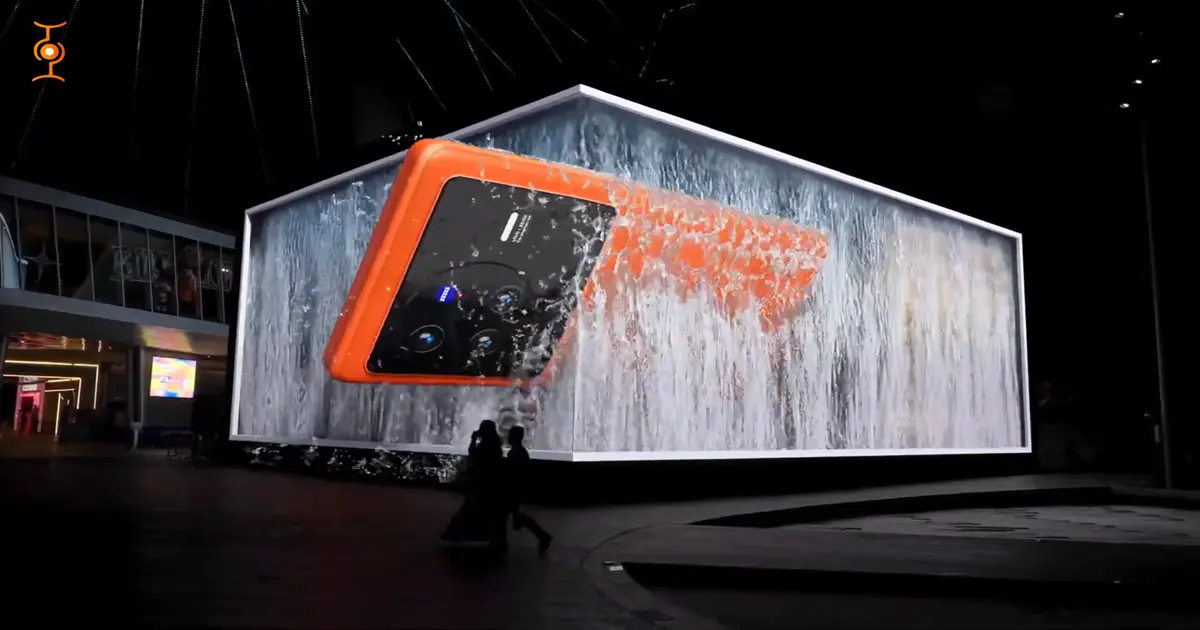
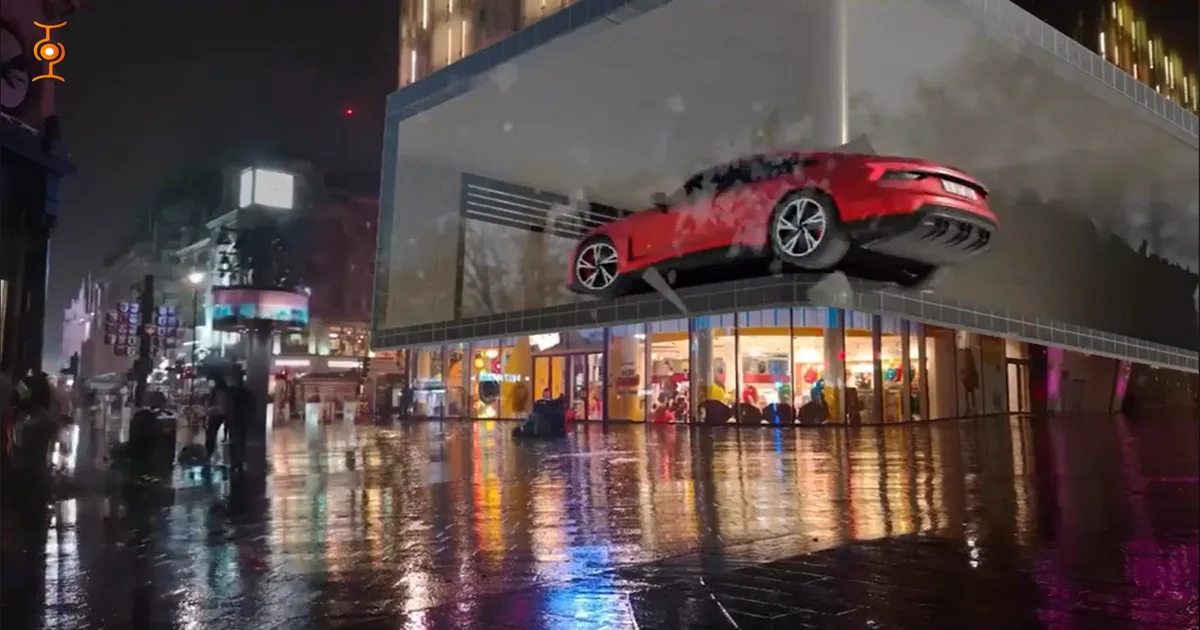
Event projection mapping — 3D anamorphic illusions at expos, festivals, and product launches.
Social media ads — Short widescreen-format clips built for Reels, TikTok, and YouTube Shorts.
LED wall / virtual production — Anamorphic effects integrated into live event and film virtual sets.
Why Work With Chasing Illusions Studio?
Chasing Illusions is a Delhi-based studio with production teams also serving clients in the US and Thailand, specializing in CGI, anamorphic video, and adjacent technical animation (medical, architectural, industrial) since 2009 — giving clients a full in-house pipeline rather than a patchwork of subcontractors.
15+ years in production (founded 2009), with a specialization spanning CGI/anamorphic, medical animation, architectural visualization, and industrial/safety content.
Full in-house pipeline — modeling, rendering, desqueezing, and color grading are handled internally rather than outsourced.
Cross-border delivery — active client base and offices across India, the US, and Thailand.
Transparent, itemized quoting — see the pricing table above for typical ranges by project type.
Frequently Asked Questions
How much does an anamorphic video cost in 2026?
Small social or product ads of 15 seconds typically cost from Rs. 1,50,000 to Rs. 1,80,000. Mid-scale brand campaigns of 30 seconds cost from Rs. 2,50,000 to Rs. 3,00,000. Large event projection or LED installations exceed to Rs. 4,50,000.
How long does production take?
Simple product videos of basic level take 10–12 working, whereas brand campaigns of standard level take 18–22 working days. Large event installations take 25–30 working days.
What software do anamorphic video companies use?
Modeling and animation are typically done in Blender, Maya, or Cinema 4D. Desqueezing and grading happen in After Effects, DaVinci Resolve, or Premiere Pro.
Do I need a specialized company, or can a general video agency do this?
A general video agency can produce standard video, but anamorphic work requires specific expertise in CGI camera simulation and desqueeze/grading workflows — a generalist studio without anamorphic-specific experience is more likely to produce flat or misaligned results.
Can anamorphic videos be used on social media?
Yes. Platforms including Instagram Reels, TikTok, and YouTube Shorts support cinematic widescreen formatting.
Which industries use anamorphic video most?
Entertainment and film, real estate and architecture, automotive and luxury goods, and corporate events/expos are the most common use cases.
Conclusion:
Choosing an anamorphic video maker company in 2026 comes down to four checks: anamorphic-specific portfolio work, a transparent process, itemized pricing, and in-house desqueeze/grading capability. Chasing Illusions Studio meets all four, with production teams serving clients across India, the US, and Thailand since 2009.
Ready to scope your project? Get a quote now ->
Book a discovery 20-minutes strategy call.
📞 +91-9910911696 | +91-9910660851
📩 info [@] chasingillusions [.] in
Written by Deepak, Anamorphic & CGI Ads content strategist at Chasing Illusions Studio. Our clients include Vivo Mobile, McDonald's, Kotak Mahindra Bank, Mitsubishi Electric, Rolls Royce, etc., 100+ consumer brands across India, USA, Thailand, and the UK.
Last Updated: July 27 2026 | Chasing Illusions Studio
Chasing Illusions Studio
Premium animation & video production studio based in Delhi, India. Specialising in 3D animation, medical visualisation, architectural walkthroughs, and CGI.