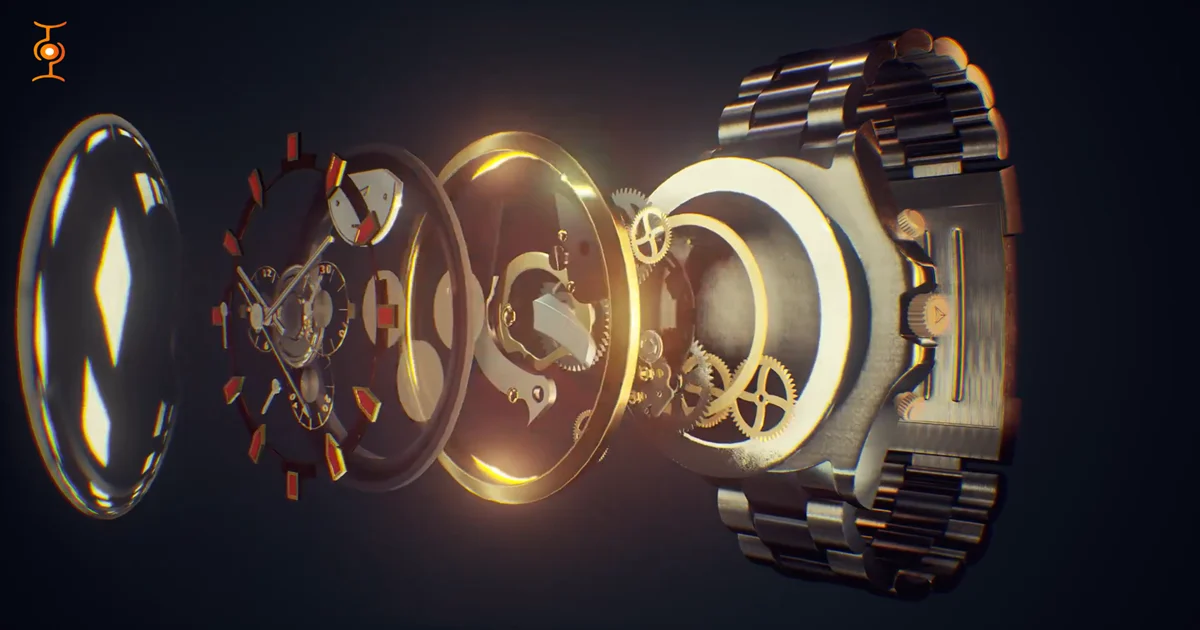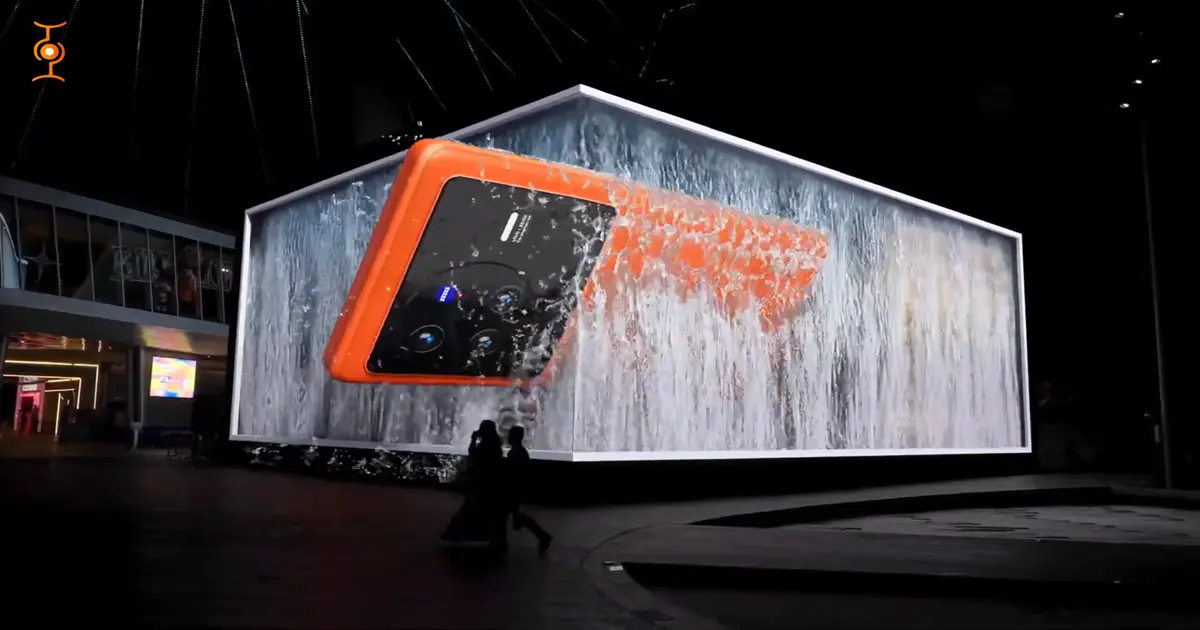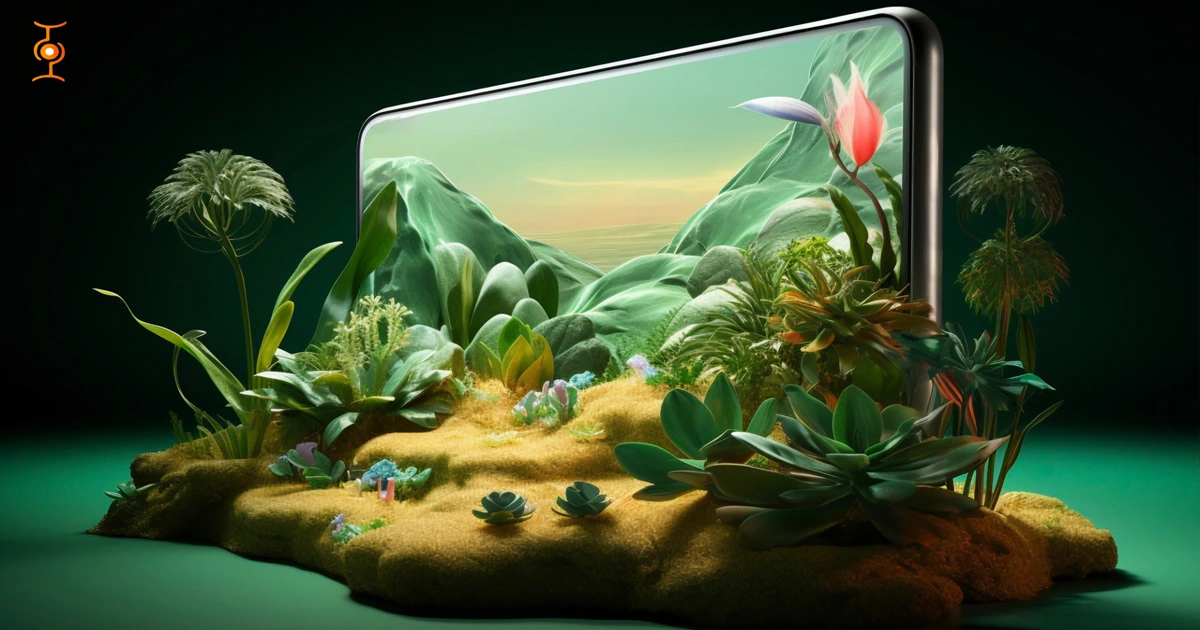
3D anamorphic video is a specially calculated animation designed to look three-dimensional when displayed on a specific screen setup — usually a corner LED display or large billboard — viewed from a defined angle. Unlike a standard 3D animation, it only works correctly with the screen geometry and viewpoint it was built for.
What Is 3D Anamorphic Content?
3D anamorphic content is video built with deliberately distorted perspective, so that when it's displayed on a matching screen and viewed from the correct angle, an object appears to break out of the frame in three dimensions. It's an optical illusion technique, not a physical 3D display — the "3D" effect exists entirely in how the animation is calculated, not in the hardware.
The three components that make it work:
A calculated perspective model — the animation is built for one specific viewing angle, not a general audience
A matching screen setup — most commonly a corner LED display (two or three screens forming an L- or U-shape) or a single large flat panel
Lighting and depth cues — shadows, parallax, and edge blending that sell the illusion of objects leaving the screen
How Is 3D Anamorphic Different From Regular 3D Animation?
Standard 3D animation is rendered for a flexible viewing experience — it looks correct from any angle on a screen, TV, or phone. Anamorphic animation is rendered for one fixed angle only; move away from that viewpoint and the illusion visibly breaks down.
This matters for buyers because:
A regular 3D product animation can be reused across a website, social media, and ads
An anamorphic video is generally built for one specific screen and location and won't translate the same way elsewhere without rebuilding the perspective math
What Screen Types Does 3D Anamorphic Content Need?
Display type | How it works | Typical use case |
|---|---|---|
Corner LED (2–3 panel) | Two or three LED screens joined at an angle to form a pseudo-3D "box" | Flagship billboards, retail storefronts, brand activations |
Single flat LED/digital billboard | One flat screen, illusion created purely through perspective animation | Lower-cost DOOH campaigns, transit ads |
Projection mapping | Video projected onto a physical structure or building facade | Events, launches, temporary installations |
Static diorama + screen hybrid | Physical props combined with digital screen elements | High-end retail and entertainment marketing |
Most viral anamorphic billboards you've seen (corner-cube style) use a two- or three-panel LED setup — this is the format that creates the strongest "popping out of the screen" effect, but it also requires the most precise perspective calibration and the highest production cost.
Explore our 3D Anamorphic Video campaigns
How To Create a 3D Anamorphic Video? Step by Step Guide for Beginners (2026)
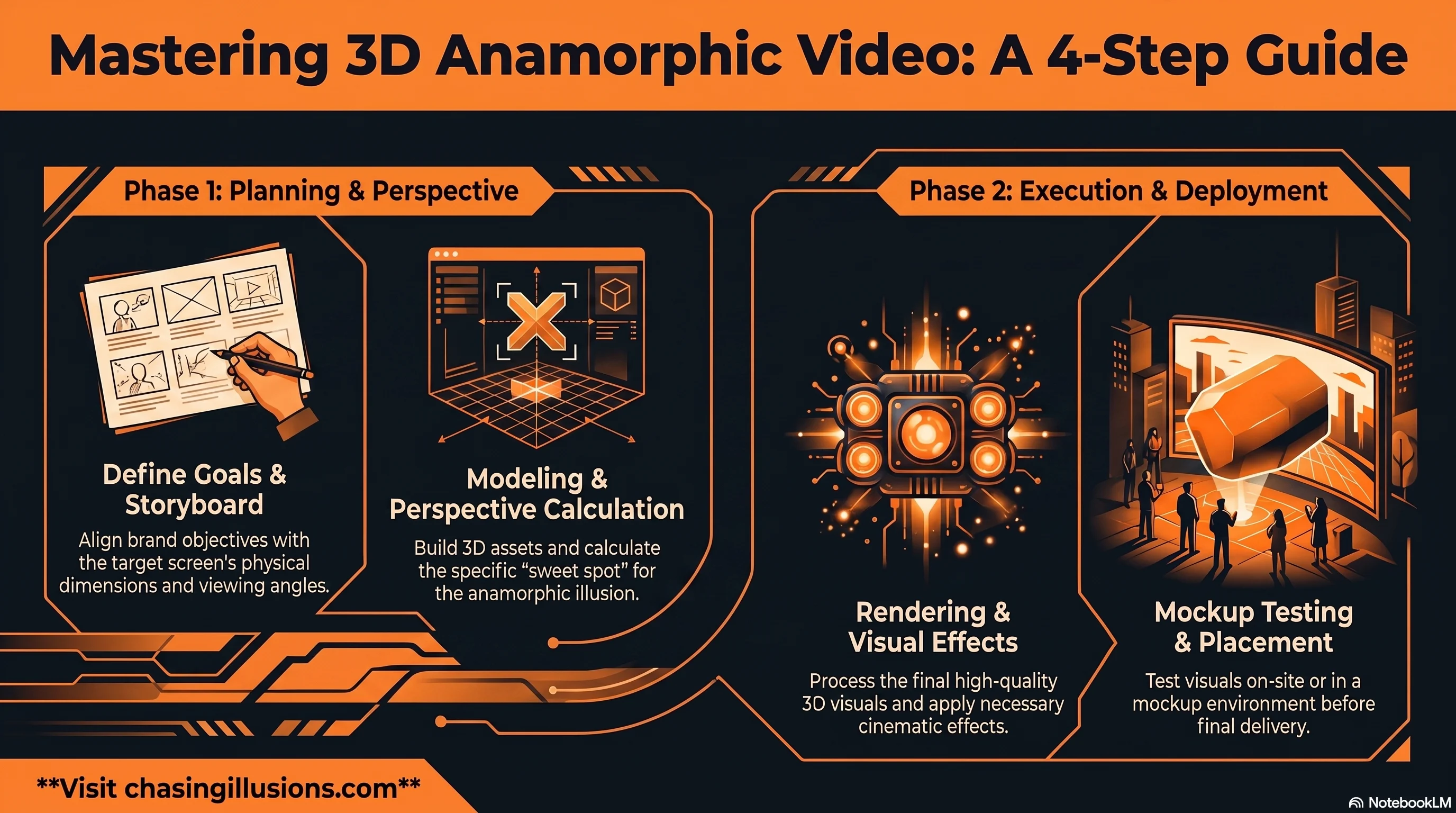
Producing a 3D anamorphic video takes six stages — brand/goal alignment, storyboarding, 3D modeling, rendering, illusion testing on a virtual mockup of the target screen, and final delivery with placement guidance.
Step 1: Define the Brand Goal and Target Screen
Before any design work, the target display (corner LED, flat billboard, projection) and the campaign objective are locked in — because the whole production is built backward from the exact screen geometry.
Step 2: Concept and Storyboarding
The creative concept is mapped out frame by frame, including the specific moment the illusion "activates" for the viewer.
Step 3: 3D Modeling and Perspective Calculation
Models are built and then mathematically distorted to match the intended viewing angle and screen geometry — this is the technical core of anamorphic work, and it's where inexperienced studios most often get it wrong.
Step 4: Rendering and Visual Effects
Lighting, shadow, and depth cues are added to sell the three-dimensional illusion.
Step 5: Mockup Testing
The animation is tested against a virtual simulation of the actual screen and viewing angle before final render — this step catches perspective errors before they're expensive to fix.
Step 6: Delivery and Placement Guidance
The final file is delivered in the format required by the display, along with guidance on optimal placement and viewing distance.
What Does a 3D Anamorphic Video Cost?
The 3D Anamorphic Video Cost depends on major factors like basic to premium quality, duration, flat screen to corner wrap, etc. As of now a basic quality flat screen of 15 seconds of 3d anamorphic video cost in Delhi NCR is Rs, 1,50,000, whereas corner wrap cost Rs, 1,80,000.
The standard quality flat screen of 30 seconds of 3d anamorphic video cost in Delhi NCR is Rs, 2,50,000, whereas corner wrap cost Rs, 3,00,000.
The premium quality flat screen of 30 seconds of 3d anamorphic video cost in Delhi NCR is Rs, 4,50,000, whereas corner wrap cost Rs, 5,50,000.
Cost is driven mainly by three factors:
Screen complexity — a single flat panel is significantly cheaper than a multi-panel corner LED setup
Animation length and detail — a 10–15 second loop costs less than a full narrative sequence
On-site testing and calibration — projects that require physical mockup testing or on-location calibration add cost
Note: Contact us for a quote + cost sheet.
How Long Does an Anamorphic Video Project Take?
Most anamorphic projects take 3–6 weeks from concept approval to final delivery, depending on screen complexity and revision rounds.
Hereby the anamorphic video timeline is divided as based on the requirement:
Basic 3d anamorphic video takes around 10–12 working days after approval.
Standard 3d anamorphic video takes around 18–22 working days after approval.
Premium 3d anamorphic video takes around 25–30 working days after approval.
What Industries Use 3D Anamorphic Video?
While outdoor advertising is the most visible use case, the same technique is used in:
Retail and storefronts — window displays that create depth illusions to draw foot traffic
Product launches and events — temporary installations built around a single hero product
Entertainment marketing — film and show promotion using dimensional character reveals
Corporate brand activations — trade show and lobby displays
What Makes an Anamorphic Studio Good at This?
Direct answer: The two things that separate strong anamorphic studios from weak ones are (1) accurate perspective mockup testing before final delivery, and (2) experience with the specific screen technology you're using — corner LED calibration is a different skill set from flat-panel design.
When evaluating a studio, ask to see:
Named, verifiable past projects — not just described case studies, but actual client names and links
Their mockup/testing process — do they simulate the exact screen and angle before final render, or only after?
Experience with your specific display type — corner LED vs. flat panel vs. projection are different technical disciplines
Revision and calibration policy — what happens if the illusion doesn't read correctly on-site?
Frequently Asked Questions
Is 3D anamorphic video the same as a hologram?
No. There's no physical projection of light into open space — it's a 2D video built with distorted perspective so it appears three-dimensional from one specific angle.
Can any billboard or screen display anamorphic content?
Not without adaptation. Corner-style illusions need a matching multi-panel LED setup; a standard flat billboard can still use anamorphic techniques, but the effect is generally less dramatic than a corner-cube display.
Do I need to own the billboard or screen already?
We just create the 3d anamorphic videos; means manages the production-only part; we have no connection with placement/media buying authorities.
What file format is the final video delivered in?
The anamorphic billboard video requires to be delivered in high resolution such as MP4 and MOV. With different frame rate like 24, 25, 30, or 60 frames per second (fps).
How is cost different between a corner LED video and a flat-screen video?
Corner LED productions cost more because the animation must be calculated and tested against two or three screen surfaces simultaneously, with precise calibration for the physical angle between panels — flat-screen anamorphic work involves a single perspective calculation.
Can 3D anamorphic content be reused across different screens or locations?
Generally no — because the perspective math is built for one specific screen geometry and viewing angle, moving the content to a different setup usually requires re-rendering.
Conclusion:
3D anamorphic video is a technically demanding format — the illusion only works when the perspective math, the screen hardware, and the viewing angle all match precisely. Studios that get it right combine careful mockup testing with real experience across corner LED, flat-panel, and projection formats. If you're evaluating anamorphic partners, ask to see named past work and their calibration process before committing.
Book a discovery 20-minutes strategy call.
📞 +91-9910911696 | +91-9910660851
📩 info [@] chasingillusions [.] in
Written by Deepak, Anamorphic & CGI Ads content strategist at Chasing Illusions Studio. Our clients include Vivo Mobile, McDonald's, Kotak Mahindra Bank, Mitsubishi Electric, Rolls Royce, etc., 100+ consumer brands across India, USA, Thailand, and the UK.
Last Updated: July 21 2026 | Chasing Illusions Studio
Chasing Illusions Studio
Premium animation & video production studio based in Delhi, India. Specialising in 3D animation, medical visualisation, architectural walkthroughs, and CGI.