Most animation software comparison guides make the same mistake: they evaluate tools in isolation and declare a winner. The honest answer from a studio that uses these tools daily is that there is no single best animation software — there is the right tool for a specific output, a specific pipeline, and a specific team's existing skills.
This guide covers the tools that professional animation studios actually use in 2026, the real trade-offs between them, what they cost, and the decisions that should drive your choice — not a ranked list that oversimplifies a genuinely complex question.
The Software Map: Who Uses What and Why
Before comparing tools directly, the most useful frame is output type. The tool you need depends almost entirely on what you are producing and for whom.
Output Type | Primary Tool | Backup / Alternative |
|---|---|---|
3D character animation (film, TV, VFX) | Maya | Blender 4.x |
3D character animation (games, real-time) | Unreal Engine / Unity | Blender |
2D character animation (broadcast, series) | Toon Boom Harmony | Moho Pro |
Motion graphics and compositing | After Effects | Cinema 4D |
Architectural visualization, walkthroughs | Unreal Engine / Twinmotion | Lumion |
Frame-by-frame / hand-drawn 2D | TVPaint | Clip Studio Paint |
Product and commercial 3D | Cinema 4D | Blender |
AI-assisted animation (inbetweening, mocap) | Cascadeur | Maya + Motion Capture |
The most common briefing mistake studios make when evaluating software: comparing Maya and Blender as if they are competing for the same use case. They are not. Maya is the standard for hand-keyed character animation in film and VFX pipelines with motion capture integration. Blender is the standard for 3D generalists working outside the largest studios on projects where licensing cost is a real constraint. Both are legitimate professional tools. The choice depends on output, not on which is "better."
Maya — The Professional Character Animation Standard
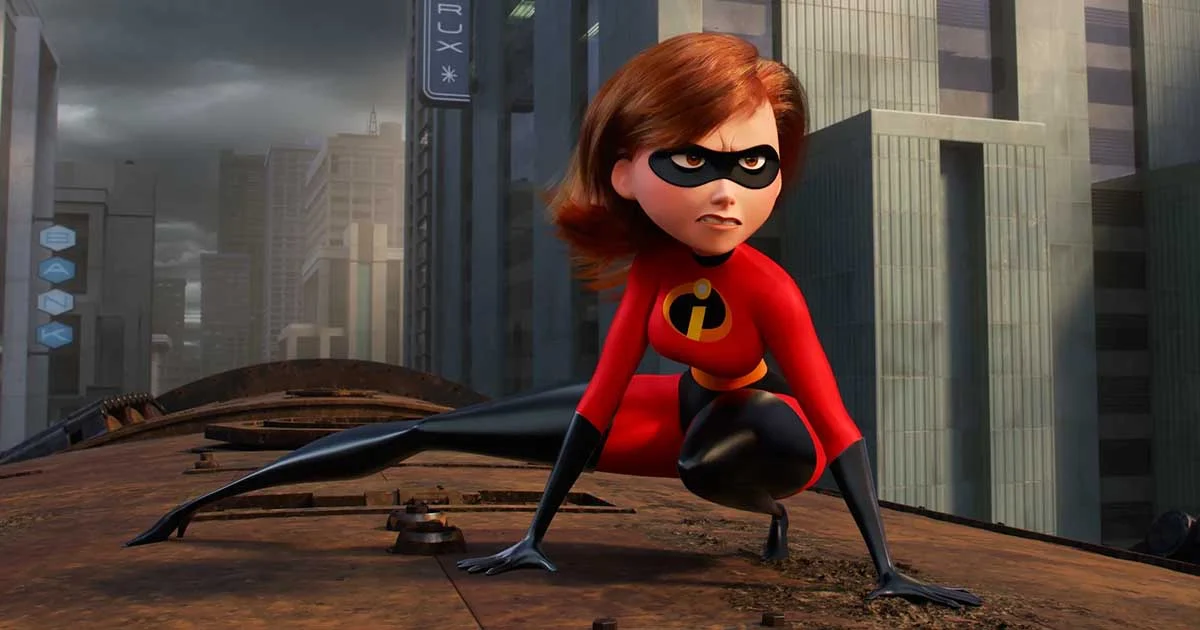
Maya 2026 remains the animation standard for professional character animation. HumanIK is well-established for character rigging — FK/IK blending, motion capture integration, and predictive FK are deeply integrated. Maya's Graph Editor is comprehensive for animation curves, and its mocap integration is essential in VFX and game studios.
What Maya does better than anything else: Hand-keyed character performance for film and TV, motion capture cleanup and retargeting, complex rig systems for feature-quality characters, and pipeline integration with major studios' existing infrastructure. If your goal is to work as a character animator at a major production company or VFX studio, Maya is the tool you need to know — not because it is objectively superior, but because it is what those studios use and what they will expect you to know.
The honest limitations: The subscription is pricey. Since animation principles — timing, spacing, weight — translate across all software, many students start in Blender and switch to Maya once they are pro-ready. The learning curve is steep and the interface is not modern. For a studio starting from scratch without legacy pipeline dependencies, the cost-benefit case for Maya over Blender requires a clear answer to "will our clients or collaborators require Maya compatibility?"
Pricing (2026): Autodesk Maya subscription runs approximately $245/month or $1,950/year per seat. Volume licensing is available for studios. A free educational version is available for students and educators with a verified institution email.
Best for: VFX studios, broadcast animation with complex character rigs, motion capture pipelines, studios that need to exchange Maya files with larger production partners.
Blender 4.x — The Professional Alternative That Has Genuinely Arrived
Blender is the default 3D suite outside the largest studios. It is a complete open-source 3D suite covering modeling, sculpting, rigging, animation, simulation, rendering, and compositing, free for any commercial use.
The important distinction from five years ago: Blender in 2026 is not the underdog tool that serious studios overlook. It is used in professional pipelines at studios of every size, its character animation capabilities have closed a meaningful portion of the gap with Maya, and for studios that are not embedded in a VFX pipeline requiring Maya file compatibility, the cost advantage is real.
Blender 4.x has improved significantly. The Armature system now includes better IK solvers, and the Rigify add-on generates human rigs procedurally. Performance improvements make real-time playback smoother. Blender offers solid character rigging, matching well-established workflows in character animation.
What Blender does better than Maya: Cost (free versus $1,950/year), generalist breadth (you can model, rig, animate, render, and composite in one application without switching tools), active development pace, and community-driven plugin ecosystem. For architectural visualization, product animation, and motion graphics alongside character work, Blender's integrated pipeline is genuinely more efficient than Maya plus separate rendering software.
The honest limitations: Blender hasn't replaced HumanIK. If you animate characters in professional productions with mocap, Maya is the studio standard. The studio infrastructure, recruiter expectations, and pipeline tooling at major film and VFX studios still assume Maya. Blender's NLA editor and character animation workflows, while much improved, have a different philosophy from Maya's and require relearning if you switch.
Pricing: Free, open source, commercial use permitted with no licensing fee.
Best for: Independent studios, generalist 3D production, architectural and product visualization alongside character work, studios where licensing cost is a genuine constraint, educators.
Toon Boom Harmony — The 2D Studio Standard
Toon Boom Harmony is the production tool behind most major 2D animated series. Its node-based compositing, cut-out rigging, and bone deformation make it the right choice for broadcast animation on a schedule.
If you are producing 2D character animation for broadcast, streaming, or episodic content — not motion graphics, not one-off explainer videos — Toon Boom Harmony is the professional tool. It is used at the studios behind major animated series because its workflow is designed around the realities of 2D production at scale: reusable character rigs, scene-to-scene asset management, team pipeline support, and efficient compositing.
A 2D character animator needs Toon Boom Harmony, Moho, or Blender's Grease Pencil. Trying to use one tool for every animation type produces mediocre results across the board.
What Harmony does better than alternatives: Cut-out animation with reusable rigs across episodes, the node-based compositing that professional 2D pipelines require, and industry adoption that means studios hiring 2D animators will expect Harmony familiarity.
The honest limitations: Expensive for smaller studios. The Essentials tier ($25/month) is insufficient for professional production. Advanced ($60/month) or Premium ($115/month) is what serious studios need. The interface is not intuitive for animators coming from an Adobe workflow, and the learning curve is genuinely steep.
Toon Boom Harmony 25 introduced Ember, an AI add-on for storyboarding and pre-visualization. Worth evaluating if your pipeline includes pre-production stages that can benefit from AI-assisted storyboarding.
Pricing: Essentials $25/month, Advanced $60/month, Premium $115/month. Educational pricing available.
Best for: Broadcast and episodic 2D animation studios, animators aiming for careers in 2D series production, studios producing cut-out animation at volume.
After Effects — The Motion Graphics Default
After Effects is not a character animation tool. It is a compositing and motion graphics tool that is used in nearly every animation studio's finishing pipeline regardless of what software was used for production. Understanding this distinction is important: After Effects is where animation goes to be assembled, enhanced, and delivered — not where characters are rigged and moved.
For motion graphics specifically — logo animation, text animation, data visualization, UI demonstrations, explainer video — After Effects is the unambiguous standard. Its expression language, integration with Illustrator and Premiere, and the After Effects plugin ecosystem (in particular Duik Bassel for character rigging directly in AE) make it the right choice for motion graphics studios and for studios producing commercial and corporate animation where the output does not require 3D.
Pricing: Included in Adobe Creative Cloud subscriptions ($60/month for the full suite, or $22/month for After Effects standalone).
Best for: Motion graphics studios, finishing and compositing in any 3D pipeline, explainer video production, studios that are already in the Adobe ecosystem.
Cascadeur — The AI-Assisted Inbetweening Tool Worth Watching
Cascadeur's AI inbetweening calculates physically plausible intermediate frames from keyframes, respecting centre of mass and momentum constraints. These AI capabilities do not replace animators but eliminate the most tedious aspects of the workflow, particularly inbetweening.
Cascadeur is not a replacement for Maya or Blender — it is a specialist tool that sits alongside them for studios doing action animation, game cutscenes, or any character work where physically plausible inbetweens matter. The AI physics layer means that when you set two keyframes for a character movement, Cascadeur calculates the intermediate frames in a way that respects gravity, momentum, and body mass — something that would otherwise require manual correction passes in Maya or Blender.
The practical value for studios: reduction in manual inbetweening and secondary animation passes, which can represent 30–40% of animation time on action-heavy sequences.
Pricing: Free tier available with limitations. Professional from $12/month per user.
Best for: Game animation studios, studios producing action-heavy character work, teams looking to reduce inbetweening time.
What We Use at Chasing Illusions Studio
Our pipeline varies by project type, which is the honest answer from any studio that takes on diverse work.
For 3D architectural walkthroughs and visualization, we use Unreal Engine 5 and Lumion — both real-time engines built specifically for photorealistic visualization rather than general animation. Our guide to architectural walkthroughs covers the full production pipeline in detail.
For 3D character animation, our team works primarily in Maya for projects requiring complex rig systems and motion capture integration, and in Blender for projects where that level of pipeline complexity is not required — including most commercial and corporate animation briefs.
For 2D character animation and explainer video, we use Toon Boom Harmony for episodic and broadcast-quality production, and After Effects for motion graphics and shorter-form commercial work.
For medical animation — surgical procedures, mechanism of action sequences, anatomical visualization — the software choice is secondary to the science review process. The rendering output looks similar whether produced in Maya, Blender, or Cinema 4D; what matters is the accuracy of the 3D model at the biological level. Our guide to medical animation for clinical skills training covers this in detail.
How to Choose — The Actual Decision Framework
If you are a professional animator choosing software for your career: The single most important question is what software the studios you want to work at use. For VFX and film: Maya. For 2D broadcast: Toon Boom Harmony. For games: Unreal Engine or Unity, often alongside Maya. For independent / generalist 3D: Blender is the most practical starting point given its zero cost and professional-grade capabilities.
If you are a studio choosing software for your pipeline: Start with your output. If your pipeline involves mocap data and VFX collaboration with larger studios, Maya is not optional — the pipeline compatibility requirement overrides any cost argument. If you are producing architectural visualization, product animation, or commercial motion graphics, Blender plus After Effects covers most briefs at a fraction of the cost.
If you are evaluating for a specific project brief: Match the tool to the output type using the table at the top of this guide. Do not start with a preferred tool and work backwards to justify it.
On free versus paid: In 2026, a total beginner can download Blender for free and start animating a 3D short film today. Meanwhile, high-end studios still happily pay thousands for tools like Toon Boom Harmony or Maya. The real question is not whether free software can do professional work — it can. The better question is when is paid software actually worth the investment. The answer is: when specific pipeline requirements, client compatibility needs, or advanced capabilities that free tools genuinely cannot match justify the cost.
Frequently Asked Questions
What animation software do professional studios use in 2026?
Maya for 3D character animation in film, VFX, and game studios. Toon Boom Harmony for 2D broadcast and episodic animation. Blender for independent and generalist 3D studios where licensing cost is a constraint. After Effects for motion graphics and compositing at every studio size. Unreal Engine and Unity for real-time and game animation. Most professional studios use more than one tool depending on the project type.
Is Blender good enough for professional animation in 2026?
Yes, for most professional animation outputs outside of major VFX and film production pipelines that require Maya compatibility. Blender 4.x character animation has improved significantly and is used at professional studios of every size. The primary limitation is not quality but pipeline compatibility — studios embedded in VFX infrastructure that assumes Maya file formats need Maya.
Maya vs Blender — which should a studio choose?
It depends on output and pipeline requirements, not on which is objectively better. Maya is the standard for VFX, film, and mocap-heavy character animation. Blender is the standard for independent and generalist 3D production. If your projects require VFX collaboration with larger studios or mocap integration at scale, choose Maya. If your projects are self-contained and licensing cost matters, Blender is a fully professional alternative.
How much does professional animation software cost in 2026?
Maya: ~$245/month or $1,950/year. Blender: free. Toon Boom Harmony: $25–$115/month depending on tier. After Effects: $22/month standalone or included in Adobe CC. Cinema 4D: ~$94/month. Cascadeur: free tier, $12/month professional. Unreal Engine: free with revenue share above $1M.
What animation software should a beginner start with in 2026? Blender for 3D — it is free, professionally capable, and the principles you learn transfer to Maya when needed. Toon Boom Harmony Essentials for 2D if broadcast animation is your goal. After Effects for motion graphics. Do not start with Maya unless you have a specific reason related to the studio or program you are joining — the cost is not justified for a beginner learning animation fundamentals that transfer across tools.
What is Cascadeur and is it worth using? Cascadeur is an AI-assisted animation tool that calculates physically plausible inbetween frames from keyframes, respecting centre of mass and momentum. It is not a replacement for Maya or Blender but a specialist tool that reduces manual inbetweening on action-heavy character work. The free tier is worth evaluating for any studio doing action animation — it can reduce inbetweening time by 30–40% on suitable projects.
Book a discovery 20-minutes strategy call.
📞 +91-9910911696 | +91-9910660851
📩 info [@] chasingillusions [.] in
Written by Deepak, content strategist at Chasing Illusions Studio. Our clients include DLF, Emaar, Ganga Reality, Banner Boswell, Shapoorji Pallonji, EC World, Taj, Florida Hospital, etc., 100+ architectural companies across India, USA, Thailand, and the UK.
Chasing Illusions Studio
Premium animation & video production studio based in Delhi, India. Specialising in 3D animation, medical visualisation, architectural walkthroughs, and CGI.