Most eLearning platforms struggle with the same problem: learners click “start,” skim a few slides, then quietly drop off before the course is done. Explainer video animation gives online courses a story, characters, and clear visuals—turning passive scrolling into active, memorable learning experiences. Used strategically, explainer video animation can simplify complex topics, boost engagement, and improve knowledge retention across eLearning environments.
What Is Explainer Video Animation for eLearning?
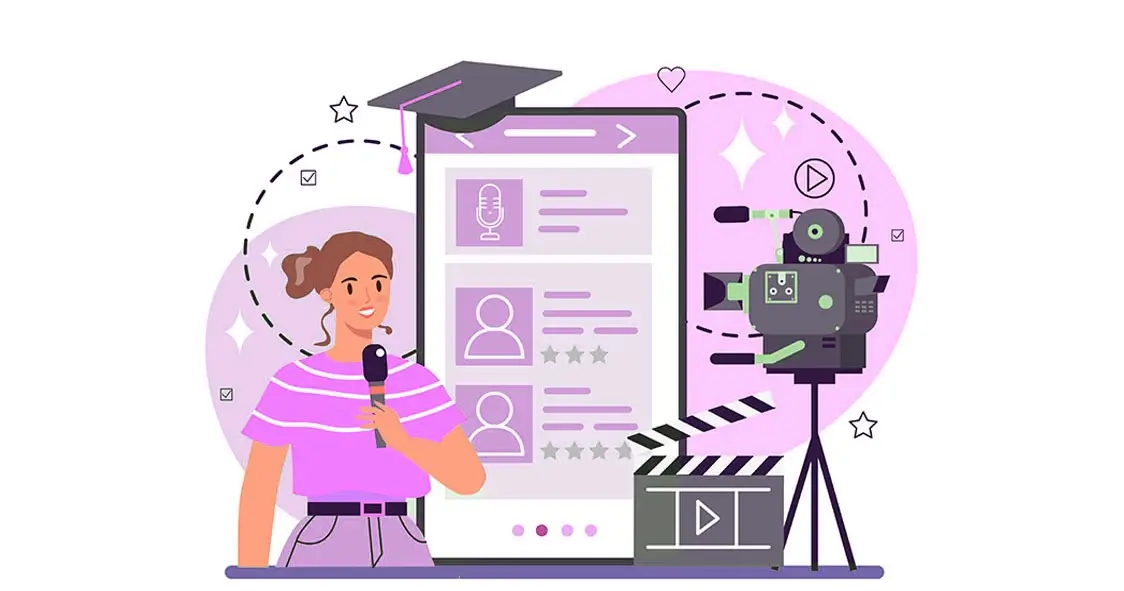
Explainer video animation is a short, focused animated video designed to explain a concept, process, product, or skill in a clear, visual way. In eLearning, these become educational explainer videos and animated eLearning videos that break down course topics into simple, digestible narratives using characters, icons, motion graphics, and voiceover.
Unlike static slides or text-heavy modules, explainer video animation combines visuals, narration, and pacing to guide learners step by step through ideas, workflows, or scenarios. These animations are widely used in online education, corporate training, virtual classrooms, and digital learning platforms to make content more accessible and engaging.
Why Explainer Video Animation Matters in eLearning?
Explainer Video Animation and Learner Engagement
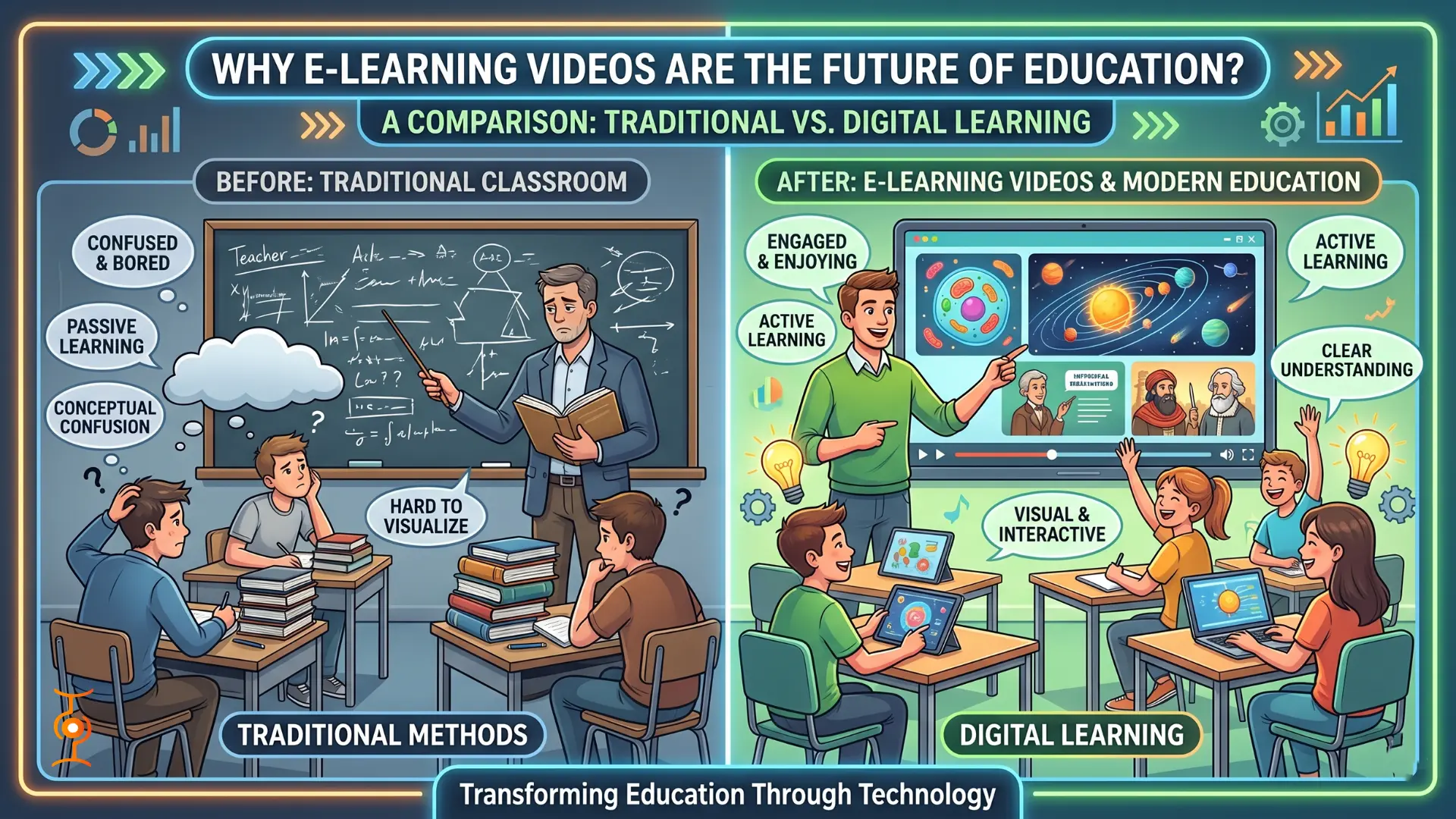
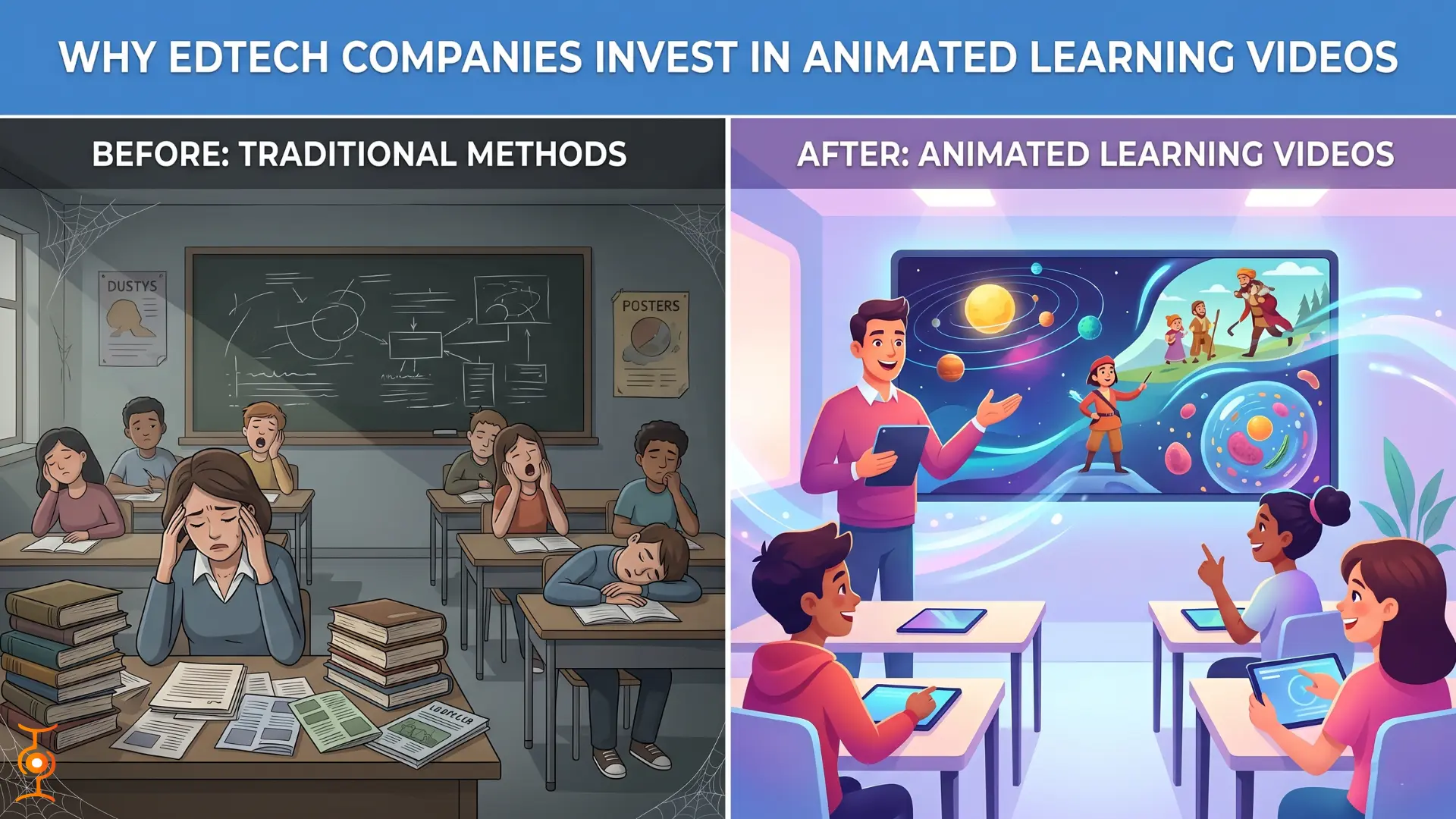
Studies consistently show that animation-based learning increases student engagement and perceived effectiveness compared with traditional formats. Learners report that animated instructional videos are more interesting, easier to follow, and better aligned with how they prefer to consume information in digital environment.
Research on animated instructional videos in university settings found that combining tailored visuals with audio narration significantly improves students’ learning experience, engagement, and flexibility in self-directed learning. Case studies in eLearning environments also show strong positive correlations between animated content and higher levels of motivation, interest, and participation.
Simplifying Complex Concepts Through Visual Learning
Animation is particularly powerful for complex or abstract topics that are difficult to grasp using text alone. Visual representations, motion graphics, and step-by-step animated sequences help learners see processes unfold—whether it is a scientific mechanism, financial model, clinical workflow, or software architecture.
Teachers and learners in animation-enhanced classrooms consistently report that animations “concretize” abstract concepts, making them easier to understand and remember. Explainer video animation can turn theoretical ideas into relatable stories, scenarios, or visual metaphors, which aligns closely with visual learning and multimedia learning principles.
Knowledge Retention and Course Completion Rates
Visual learning plays a major role in how much information learners retain. Survey data on video in education indicates that educators overwhelmingly see video as essential to improving academic performance and overall learning outcomes, with many reporting that video content outperforms plain text for helping students remember material.
Explainer videos for online courses often use narrative, visuals, and microlearning structures to reinforce key points, resulting in higher knowledge retention and better recall after training. Research on gamification and animation in eLearning shows that animated, game-like content significantly improves understanding, critical thinking, and knowledge retention, with engagement strongly linked to perceived effectiveness.
Accessibility, Learning Styles, and Self-Paced Learning
Animated eLearning videos support multiple learning styles at once—visual, auditory, and, when interactive elements are added, kinesthetic. Learners can listen to explanations, watch visual cues, and replay sections as needed, which is particularly helpful in self-paced learning environments.
By controlling pacing and chunking information, explainer video animation allows learners to pause, rewind, or revisit difficult segments, thereby supporting diverse cognitive learning needs. When integrated with captions, alternate language tracks, and platform accessibility features, these educational explainer videos also enhance inclusion for different learner groups.
Key Use Cases of Explainer Video Animation in eLearning
Onboarding and Platform Walkthroughs
Explainer videos for online courses are ideal for onboarding new learners, guiding them through how a platform works, how to navigate modules, and how assessments are structured. Short animated tutorials can show learners how to use dashboards, participate in virtual classrooms, and access resources in a learning management system (LMS).
This reduces friction at the start of a course and increases the likelihood that learners will feel comfortable enough to continue and complete the program.
Concept Introductions and Microlearning Modules
Animated eLearning videos are frequently used to introduce new topics at the start of a module, providing a high-level overview before learners dive into deeper readings or activities. Many eLearning strategies now use microlearning—short, focused learning units—where each animated explainer video covers a single concept, case study, or procedure.
By breaking complex curricula into a series of brief educational animations, platforms help learners process information incrementally and reduce cognitive overload.
Corporate and Compliance Training
Animated training videos are widely used in corporate learning and development, especially for compliance, safety, and process training. Organizations find that animation helps employees better understand policies, workflows, and risk scenarios because it allows them to see realistic situations played out in a controlled, repeatable format.
Studies examining animated training interventions report improvements in employee satisfaction, engagement, and retention of training content when animated videos are integrated into regular programs.
Healthcare, Technical, and STEM Education
Educational animation plays a growing role in healthcare and technical training, where learners must master complex procedures, systems, or scientific mechanisms. Neuroscience and other STEM disciplines have successfully used animations to explain multi-step processes, with evidence that well-designed animated resources increase comprehension and engagement for both majors and non-majors.
For healthcare training providers and universities, explainer video animation can visualize clinical pathways, equipment usage, and patient scenarios, supporting skills development in a safe digital environment.
Virtual Classrooms and LMS-Based Learning Paths
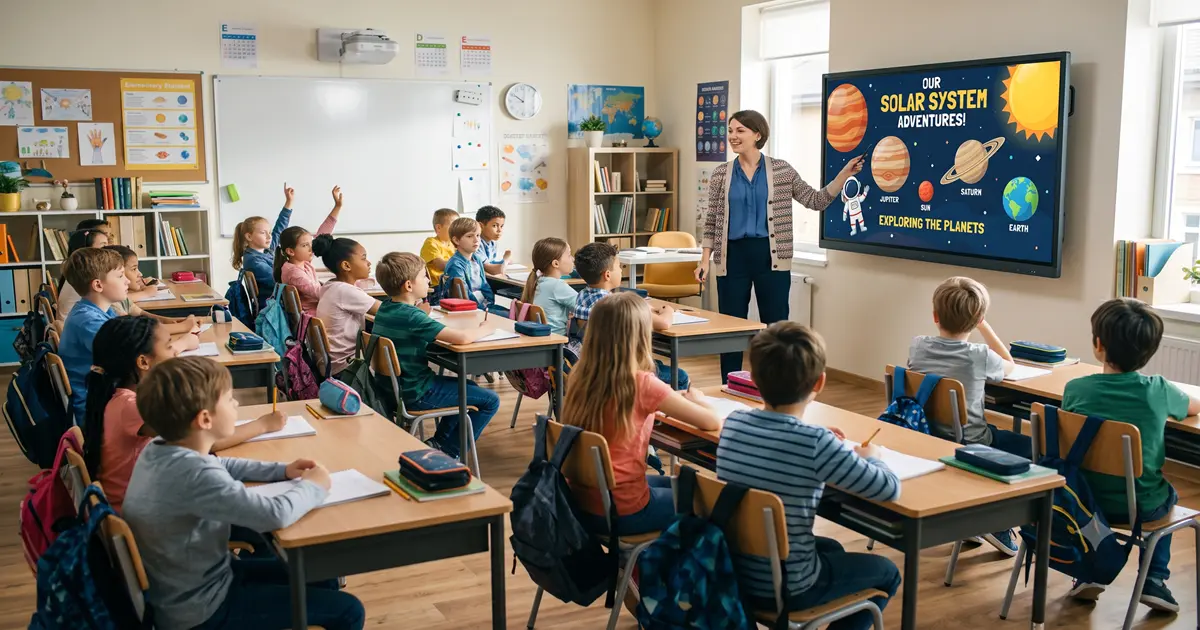
In virtual classrooms and LMS-driven eLearning platforms, explainer video animation often serves as the “anchor” content for each lesson. Educators embed animated videos directly into courses and link them to quizzes, discussion prompts, and follow-up assignments to reinforce learning.
This integration creates cohesive learning experiences where animated tutorials introduce a topic, and interactive elements immediately test knowledge and encourage application.
Types of Explainer Video Animation for Online Learning
Character-Based Educational Explainer Videos
Character-driven animations use one or more characters to guide learners through the content, tell stories, or model real-world behaviors. Research on cartoon instructional videos suggests that character design, voice acting, and dialogue play a significant role in boosting student interest and engagement.
These videos are particularly effective for soft skills training, language learning, customer service scenarios, and learner engagement in younger audiences.
Motion Graphics and Data-Driven Animation
Motion graphics explainer videos rely on text, icons, charts, and graphic elements to explain data-heavy topics. They are commonly used in finance, statistics, policy, and technology courses, where animated charts, diagrams, and flows help learners understand abstract relationships and trends.
Animated motion graphics help translate numbers and models into visual stories, improving comprehension for learners who might otherwise struggle with dense data tables or formulas.
Whiteboard and Line-Art Explainer Videos
Whiteboard animation simulates a hand drawing illustrations and text on a whiteboard, synchronized with a voiceover. This style feels similar to watching a live classroom explanation but with the advantages of animation such as precise pacing and visual emphasis.
Whiteboard explainer videos work well for step-by-step explanations, historical narratives, and process-oriented topics where a visual sketch supports the storyline.
Mixed-Media and Interactive Animated eLearning Videos
Many modern eLearning experiences combine animation with gamification—interactive activities, branching scenarios, and quizzes embedded inside or around the video. Studies show that gamified and animated content significantly enhances student engagement, motivation, and perceived learning effectiveness.
Interactive explainer videos can allow learners to make decisions, explore alternate paths, and receive immediate feedback, making digital education strategies more immersive and learner-centered.
Specialist studios such as Chasing Illusions Studio often work alongside instructional designers to blend character animation, motion graphics, and storytelling into cohesive educational explainer videos tailored for different industries.
Checkout our eLearning explainer videos portfolio.
How To Create Custom Animated eLearning Videos?
Start with Clear Learning Objectives and Audience
Before production begins, define exactly what learners should know, feel, or be able to do after watching the explainer video. Clarifying objectives helps determine which concepts to include, what level of detail is necessary, and how to align the animation with overall course outcomes.
Understanding the target audience—such as school students, university learners, corporate employees, or healthcare professionals—guides decisions on tone, examples, and visual style.
Apply Instructional Design Principles
Highly effective educational explainer videos follow core instructional design principles such as chunking, scaffolding, and minimizing cognitive load. Content is broken into small, logically ordered segments, each building on prior knowledge and focusing on one clear idea at a time.
Designers often integrate microlearning structures, where learners watch a short animation and immediately reinforce the concept through practice or reflection, improving retention.
Educational Storytelling and Scriptwriting
Storytelling is central to learner engagement in animation-based learning. Scripts for explainer video animation frame concepts within relatable scenarios, problems, or character journeys rather than listing facts in isolation.
Research on animated instructional videos highlights the importance of narrative flow, character relatability, and clear dialogue for sustaining attention and supporting deeper understanding.
Visual Design, Motion Graphics, and Sound
Visual clarity is essential: relevant graphics, color-coding, and layout guide learners’ attention to the most important elements in each frame. Animators use motion graphics to highlight cause-and-effect relationships, show changes over time, or emphasize key steps in a process.
Audio design—voiceovers, music, and sound effects—should support learning rather than distract from it, reinforcing key messages and emotional cues.
Interactivity, Assessment, and Feedback
When animated eLearning videos are integrated with interactivity—quizzes, hotspots, or branching decisions—engagement and learning effectiveness increase. Gamification research shows a strong positive relationship between student engagement and perceived effectiveness of animated and gamified content.
Linking explainer videos to short assessments, reflective prompts, or simulations enables instructors to check understanding and adapt future content based on learner performance.
Integrating Explainer Videos into eLearning Ecosystems
Within LMS, Learning Paths, and Virtual Classrooms
Most eLearning platforms and LMSs support embedding video directly into lessons, modules, or learning paths. Educators can use animated eLearning videos as the entry point to each unit, followed by readings, exercises, and discussions.
Consistent use of animation across modules helps maintain a cohesive teaching style and brand identity while making the learning experience feel more unified.
Supporting Self-Paced, Blended, and Hybrid Learning
Animated explainer videos are highly compatible with self-paced learning, blended courses, and flipped classroom models. Learners can watch animations before live sessions, freeing classroom time for discussion, problem-solving, or hands-on practice.
In hybrid or virtual classrooms, educational explainer videos act as reusable learning objects that students can revisit whenever they need to refresh their understanding.
Analytics, Iteration, and Continuous Improvement
When hosted on modern eLearning platforms, explainer video animation can be tracked through analytics such as view counts, drop-off points, replays, and associated quiz results. These metrics help L&D managers and instructional designers identify which videos are working well and where learners struggle.
Regularly reviewing engagement and performance data supports iterative improvements—updating scripts, clarifying visuals, or adjusting pacing to better match learner needs.
Practical Checklist for eLearning Teams
For eLearning platform owners, EdTech companies, corporate training teams, and instructional designers, the following checklist can help structure an explainer video animation project:
Define the learning objective and audience for each video (e.g., onboarding, concept explanation, skill demonstration).
Choose the animation type (character-based, motion graphics, whiteboard, or mixed-media) that best fits the topic and learners.
Map content into a storyboard that uses educational storytelling rather than bullet-point narration.
Apply instructional design principles: chunk content, build progression, and align with assessments and activities.
Design visuals and audio to emphasize clarity, relevance, and emotional connection without overloading learners.
Integrate the video within the LMS or training platform alongside quizzes, downloadable resources, and discussion spaces.
Collect analytics and learner feedback, then refine future animated training videos based on measurable outcomes.
FAQs on Explainer Video Animation for eLearning
1. How is explainer video animation different from regular training videos?
Explainer video animation relies on custom visuals, motion graphics, and storytelling to simplify concepts, whereas regular training videos often use live-action recordings or slide-based narration. Animation offers more control over pacing, visual emphasis, and abstraction, making it easier to represent complex or invisible processes.
2. What is the ideal length for animated eLearning videos?
Research suggest that short, focused videos—typically in the range of a few minutes—are more engaging and effective, especially for microlearning. Longer topics are better covered as a series of concise educational explainer videos, each addressing a single learning objective.
3. What is the cost of explainer video animation?
The cost of explainer video animation depends on some major factors like animation style (2D vs 3D), video duration, level of revisions, and whether you work with freelancers, agencies, or use template-based tools. Industry guides suggest that a premium level of 60‑second animated explainer can range from 1 Lakh to 3 Lakhs. Pricing typically increases with bespoke illustration, complex motion graphics, multiple language voiceovers, and tighter deadlines, so most teams first define scope and quality expectations before seeking detailed quotes.
Note: For exact cost sheet + customized elearning video animation quotation, contact us.
4. Do explainer videos really improve knowledge retention?
Studies on video in education and animation-enhanced learning report that visual-plus-audio formats increase satisfaction, performance, and perceived understanding compared with text-only materials. Correlation analyses in gamified, animated eLearning environments also show strong positive relationships between engagement and perceived learning effectiveness and retention.
5. Where can explainer video animation be used beyond formal education?
Animated training videos are used widely in corporate onboarding, compliance training, customer education, healthcare, nonprofit initiatives, and government training departments. Any context that requires clear, scalable explanation of processes, policies, or concepts can benefit from animation-based learning.
6. How should I integrate animated videos into my LMS or eLearning platform?
Best practice is to embed explainer videos directly into modules as core learning assets, then link them to quizzes, discussions, and downloadable materials. Use LMS analytics to monitor completion, engagement, and assessment performance, and refine your digital education strategies over time.
7. Which industry benefits most from explainer video animation?
Explainer video animation is widely beneficial across sectors such as education/eLearning, healthcare, finance, and technology—see the greatest impact. In these fields, animated explainer videos help simplify jargon-heavy content, clarify processes, and improve understanding for diverse audiences, from students and patients to customers and employees. As a result, these industries typically report stronger engagement, better decision-making, and more effective communication when explainer video animation is integrated into learning and training strategies.
Conclusion:
In a world where online education and digital learning compete for attention with countless distractions, explainer video animation offers a practical, research-backed way to make eLearning experiences more engaging, understandable, and memorable. By combining visual learning, educational storytelling, and thoughtful instructional design, animated eLearning videos can improve learner engagement, support diverse learning styles, and enhance knowledge retention across schools, universities, corporations, and public-sector training programs.
What's Next?
Whether you are an eLearning platform owner, L&D manager, instructional designer, or healthcare training provider, investing in well-planned educational explainer videos can transform how learners experience your content and improve overall course completion rates. If you are exploring how to create explainer video animation for your eLearning initiatives, consider partnering with specialized teams such as Chasing Illusions Studio to collaboratively plan, storyboard, and produce animations aligned with your learning goals and audiences.
Book a discovery 20-minutes strategy call.
📞 +91-9910911696 | +91-9910660851
📩 info [@] chasingillusions [.] in
Written by Deepak, eLearning Explainer Video Production content strategist at Chasing Illusions Studio. Our clients include Hindalco, Ernst & Young (EY), BinBase, Dozr, Equipment Wallet, Venwind, Healmate, Badacare, and 100+ brands across India, USA, Thailand, and the UK.
Last Updated: July 02 2026 | Chasing Illusions Studio
Chasing Illusions Studio
Premium animation & video production studio based in Delhi, India. Specialising in 3D animation, medical visualisation, architectural walkthroughs, and CGI.