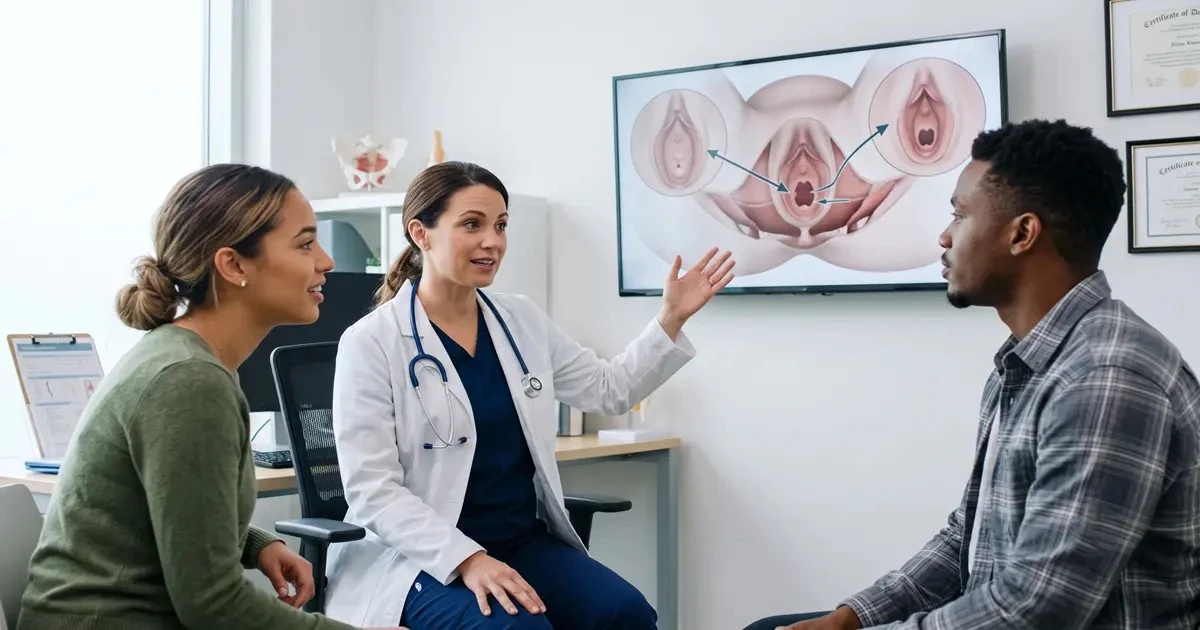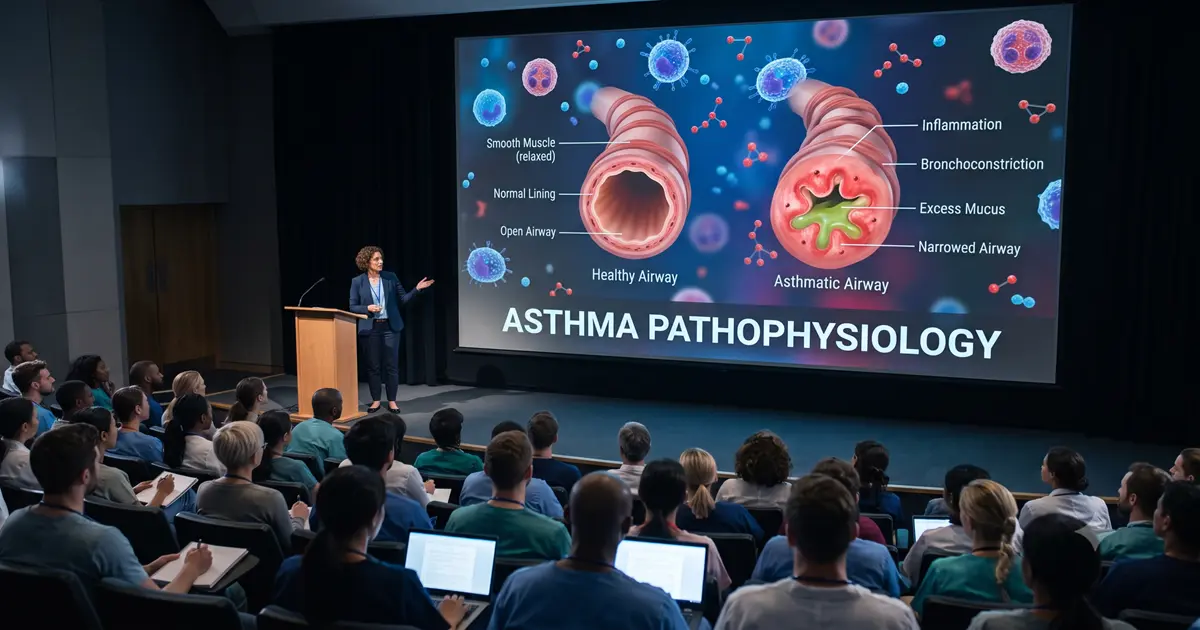
Imagine a senior nurse finishing a night shift, still responsible for completing her mandatory compliance training before the week ends. No classroom is available. No instructor is scheduled. Under a traditional system, that training simply doesn't happen — or it does, under duress, with minimal retention. Now imagine that same nurse completing a scenario-based, mobile-optimized module between patient rounds, revisiting a pharmacology concept at her own pace, and submitting her assessment before heading home. That's not a future vision. That's what healthcare eLearning makes possible today.
Whether you are a hospital administrator trying to standardize training across facilities, a pharmaceutical training manager onboarding a new field force, a medical device company educating clinical users globally, or a medical college modernizing pre-clinical curriculum — the case for digital learning solutions is the same: better outcomes, lower cost, and a workforce that stays competent as medicine evolves.
As medical knowledge expands faster than any classroom curriculum can keep pace with, digital learning has shifted from a supplementary option to a strategic necessity for hospitals, medical colleges, pharmaceutical companies, and healthcare training teams worldwide.
What Is Healthcare eLearning?
Healthcare eLearning refers to the delivery of medical education, clinical training, compliance programs, and continuing professional development through digital platforms — including learning management systems (LMS), video-based modules, interactive simulations, and mobile learning tools. It encompasses everything from onboarding new clinical staff to delivering accredited Continuing Medical Education (CME) to senior physicians.
Healthcare eLearning covers both clinical and non-clinical staff, spanning clinical skill development, compliance, leadership, and CME. It is no longer a "nice to have" — it is an operational imperative for any healthcare organization committed to quality care and workforce competency.
The Problem with Traditional Healthcare Training
Traditional healthcare training has served the medical field for decades, but it carries structural limitations that have become increasingly difficult to ignore.
Bringing together a group of nurses for a day-long in-person seminar means paying for the venue, instructor travel and fees, printed materials, and pulling clinical staff off the floor — either paying overtime to cover their shifts or leaving units short-staffed.
Beyond cost, the consistency problem is significant. Traditional training often varies by instructor or location, leading to inconsistent results across teams and facilities. In healthcare, where protocol variation directly impacts patient safety, this inconsistency carries serious clinical consequences.
When new evidence-based guidelines emerge, traditional systems are also slow to respond. Updated protocols may take months to reach frontline staff through scheduled sessions — a delay that no modern healthcare organization can afford.
Key Benefits of eLearning for Healthcare Professionals
1. Flexibility That Fits Clinical Schedules
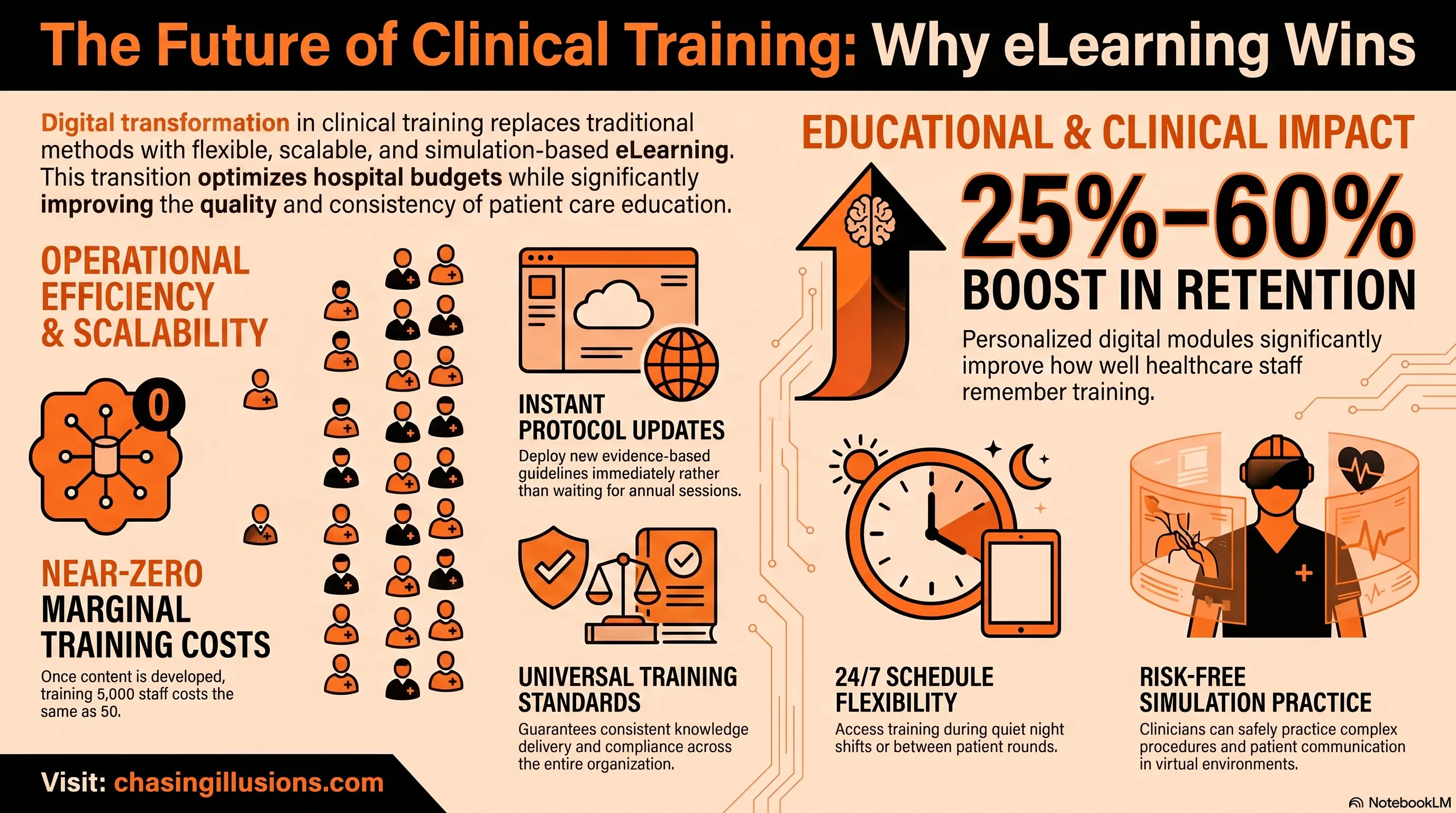
Healthcare eLearning offers staff 24/7 course access so they can learn during a quiet night shift or between patient rounds. Multi-device compatibility ensures training is accessible on desktops, tablets, or smartphones — whenever and wherever it's needed. Self-paced learning allows professionals to progress at their own speed, integrating education into their day without disruptions.
This flexibility is critical in an environment defined by shift work, irregular hours, and high-pressure demands.
2. Significantly Higher Knowledge Retention
One of the most evidence-supported advantages of digital healthcare education is its impact on retention. eLearning caters to individual learning needs and significantly improves healthcare education personalization, boosting knowledge retention by up to 25–60%.
A cohort study evaluating eLearning among community health workers showed an improvement in performance scores from 86.5% to 98.2% following eLearning training, with the improvement sustained at a 6-month follow-up.
Interactive formats — including medical animation, scenario-based learning, and microlearning modules — convert passive information delivery into active cognitive engagement, which directly improves long-term recall.
3. Standardization of Clinical Training
The standardization of clinical training through eLearning ensures consistent knowledge delivery across an organization. Every learner receives identical information about procedures, protocols, and best practices, reducing dangerous variations in care delivery. This standardization directly impacts patient safety and outcomes.
For hospital networks operating across multiple locations or a pharmaceutical company training HCPs across regions, standardization is both a compliance requirement and a quality assurance measure.
4. Scalability Without Proportional Cost
Once content is developed, the cost of training additional staff drops to nearly zero. A hospital system can train 50 staff or 5,000 with minimal differences in cost. The same module can serve multiple facilities without the need to coordinate schedules or book conference rooms.
This makes online healthcare training especially valuable for large hospital networks, public health organizations, and medical device companies training distributors and partners globally.
What Is the Real ROI of Healthcare eLearning?
For budget holders building an internal business case, here are the five cost centers that eLearning directly eliminates or reduces:
Cost Center | Traditional Training Cost | eLearning Impact |
Venue & logistics | ₹50,000–₹5,00,000+ per session | Eliminated after content development |
Instructor fees | Per session, per location | One-time production cost, unlimited delivery |
Staff downtime / backfill | Productivity loss per attendee per day | 40–60% reduction in time away from duties |
Printed materials | Per cohort, per update | Zero — content updates deploy digitally |
Compliance re-training | Repeated per cycle | Automated with LMS scheduling and tracking |
Beyond direct cost savings, the measurable downstream value includes: reduced clinical errors linked to training gaps, faster new-hire time-to-competency, improved CME completion rates, and audit-ready compliance documentation that reduces regulatory risk.
Training costs can be cut by 25% when organizations transition from face-to-face training to digital eLearning platforms, with the savings compounding as headcount and geography scale.
5. Rapid Protocol Updates and Compliance Management
When new evidence-based guidelines emerge, organizations can deliver updated training right away instead of waiting for annual sessions. The system can also require completion before staff access updated order sets or documentation in the EHR.
For healthcare compliance training — including infection control, patient safety protocols, and regulatory requirements — this speed and trackability is irreplaceable.
6. Safe, Simulation-Based Clinical Practice
Simulation-based modules allow clinicians to practice procedures, diagnostics, and patient communication in a risk-free environment. Immersive training builds confidence and helps translate knowledge into performance.
Healthcare simulation training through scenario-based eLearning lets professionals encounter edge cases, rare conditions, and high-stakes situations they may not encounter regularly in clinical rotations — building competency before it is needed at the bedside.
eLearning Formats That Work Best in Healthcare
Not all digital formats deliver equal results in medical education. The most effective formats include:
Medical Animation & Healthcare Explainer Videos — Complex anatomical processes, drug mechanisms of action, and surgical procedures are difficult to convey through text alone. 3D medical animation translates clinical complexity into visually precise, easily retained content. Studios like Chasing Illusions Studio specialize in producing high-quality 3D medical animations and healthcare training videos that bring clinical concepts to life for hospitals, pharmaceutical companies, and medical device manufacturers.
Microlearning — Short, focused modules (5–10 minutes) targeting a single competency are highly effective for busy clinical staff. They reduce cognitive load and support spaced repetition for stronger knowledge retention.
Scenario-Based Learning — Placing professionals in realistic patient care situations and requiring decision-making develops clinical judgment in ways that passive content cannot.
Mobile Learning — The increasing adoption of mobile learning technologies allows healthcare professionals access to training and educational resources via smartphones and tablets, promoting continuous learning in a fast-paced environment.
Healthcare LMS Platforms — A Healthcare Learning Management System (LMS) centralizes all training content, tracks completion, manages CME credits, and generates compliance reports — giving L&D teams, HR managers, and training coordinators the visibility they need across large workforces.
Clinical Accuracy — The Non-Negotiable Standard
For pharmaceutical companies, medical device manufacturers, and hospital clinical education teams, content quality is not a preference — it is a regulatory and reputational requirement. eLearning content used for HCP education, product training, or patient safety must be:
Medically reviewed by qualified clinical subject matter experts (SMEs) before finalization
Anatomically precise — especially for 3D animations depicting surgical procedures, drug mechanisms of action, or device implantation
Regulatory-aligned — compliant with applicable guidelines from bodies such as CDSCO (India), FDA (USA), MHRA (UK), or EMA (Europe) depending on the market
Version-controlled — updated promptly when clinical guidelines or product indications change, with LMS tracking to confirm all learners complete the revised version
When evaluating a medical animation or healthcare video production partner, request evidence of SME review processes, revision protocols, and prior work in your specific therapeutic area or device category. The production quality of your training content is a direct reflection of your organization's clinical credibility.
Healthcare eLearning by Audience: Specific Challenges, Specific Solutions
Hospitals & Multi-Facility Health Systems
Pain point: Mandatory compliance training (HIPAA, infection control, patient safety) across hundreds of staff across multiple locations, with no standardized delivery or completion tracking.
eLearning solution: LMS-hosted compliance modules with automated assignment, role-based access, real-time completion dashboards, and digital attestation for audit readiness. Standardized clinical onboarding across all facilities ensures every new hire — including travel nurses — receives identical protocol training from day one.
Pharmaceutical Companies
Pain point: Medical representatives and field force need deep, clinically accurate product knowledge, but in-person training is expensive, geographically inconsistent, and difficult to update when label changes occur.
eLearning solution: 3D mechanism of action (MOA) animations, disease-state education videos, and scenario-based objection handling modules deployed through a mobile LMS. Content updates deploy across the entire field force simultaneously, with completion tracked per rep.
Medical Device Manufacturers
Pain point: Clinical users and distributor networks worldwide need accurate procedural training on device usage, but sending clinical trainers on-site to every account is neither scalable nor cost-effective.
eLearning solution: Step-by-step 3D device procedure animations, interactive implantation or usage tutorials, and post-market safety update modules. These can be deployed globally through a partner LMS or embedded into the manufacturer's existing portal.
Medical Universities & Colleges
Pain point: Pre-clinical courses (anatomy, pharmacology, physiology) require visual learning that physical models and 2D textbook illustrations cannot adequately deliver. Clinical rotations are limited and students may not encounter the full spectrum of conditions.
eLearning solution: Interactive 3D anatomy modules, virtual patient case libraries, pharmacology animation series, and self-paced digital coursework that supplements in-person labs and clinical hours.
Healthcare L&D, HR, and Training Managers
Pain point: Managing training calendars, chasing completion rates, proving ROI to leadership, and keeping up with mandatory renewal cycles across large, shift-based workforces.
eLearning solution: Healthcare LMS with automated scheduling, role-based course assignment, digital certification issuance, renewal reminders, and real-time analytics dashboards that generate audit-ready reports with one click.
Public Health Organizations
Pain point: Reaching geographically dispersed community health workers, field staff, and public education teams with consistent, evidence-based training — often in low-resource settings.
eLearning solution: Mobile-first, low-bandwidth eLearning modules in multiple languages, with offline access capability for areas with limited connectivity.
The Market Is Reflecting This Shift
The growth of digital healthcare education is not anecdotal — it is measurable and accelerating. According to Grand View Research, the global healthcare eLearning services market reached $11.1 billion in 2024 and is projected to grow at over 14% annually through 2030. The broader healthcare education solutions market is projected to reach $164.6 billion by 2028, growing at a CAGR of 8.6%, driven by the focus on patient safety and quality care, the shortage of healthcare professionals, and increasing organizational recognition of the value of continuous education.
Healthcare organizations that invest in digital learning solutions are not just keeping pace — they are building a measurable competitive advantage in workforce quality, compliance outcomes, and patient safety performance.
eLearning vs. Traditional Training: A Direct Comparison
Factor | Traditional Training | Healthcare eLearning |
|---|---|---|
Scheduling | Fixed, instructor-dependent | 24/7, on-demand |
Consistency | Variable by instructor/location | Standardized across all learners |
Cost at Scale | Increases with each cohort | Near-zero marginal cost per learner |
Knowledge Retention | Lower over time | Up to 60% higher with interactive formats |
Protocol Updates | Delayed (weeks to months) | Immediate, push-to-all |
CME Credit Tracking | Manual, paper-based | Automated via LMS |
Mobile Access | Not available | Available on any device |
Compliance Reporting | Labor-intensive | Automated dashboards |
How to Start Your Healthcare eLearning Journey: A Decision Framework
Every organization's entry point into digital healthcare education is different. Here is a practical framework to help you identify where to begin:
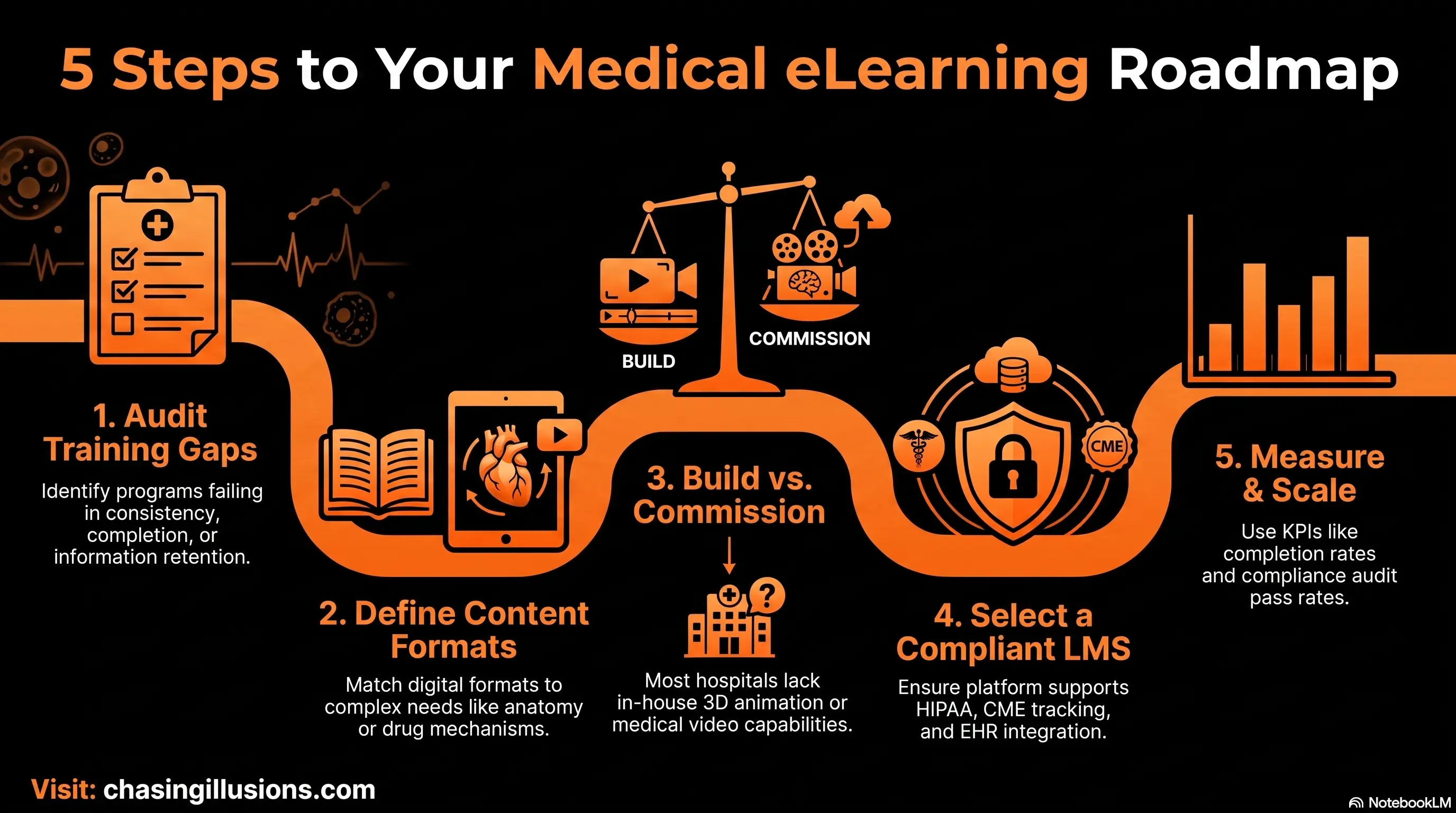
Step 1 — Audit Your Current Training Gaps
Identify which training programs are failing on consistency, completion rate, or retention. Compliance training, new staff onboarding, and product-specific clinical education are the highest-ROI starting points for most organizations.
Step 2 — Define Your Content Needs by Format
Not all training translates equally to digital formats. Ask: Does this content involve complex anatomy, drug mechanisms, or device usage? → 3D medical animation is the most effective format. Does it require decision-making under pressure? → Scenario-based eLearning. Does it need to reach staff across shifts? → Microlearning + mobile-first delivery.
Step 3 — Decide: Build or Commission?
Most hospitals and pharma companies do not have in-house 3D animation or medical video production capability. For clinical content requiring visual accuracy — mechanism of action videos, surgical procedure explainers, patient safety animations — working with a specialized medical content production partner delivers significantly better outcomes than repurposing generic stock footage or slides.
Step 4 — Choose Your LMS
Content is only as effective as its delivery platform. Evaluate LMS options based on: HIPAA/SCORM/xAPI compliance, CME credit tracking, role-based access, mobile compatibility, and integration with your existing EHR or HRMS. Leading healthcare LMS platforms include HealthStream (hospital systems), Relias (behavioral health and post-acute care), Docebo (pharmaceutical and global organizations), and MedTrainer (compliance-focused mid-size facilities).
Step 5 — Measure, Iterate, Scale
Define your KPIs before launch: completion rates, pre/post assessment scores, time-to-competency, and compliance audit pass rates. Use LMS analytics to identify underperforming modules and iterate. Once a format proves effective, scale it across departments or geographies without rebuilding from scratch.
Frequently Asked Questions (FAQs)
Q1: What is healthcare eLearning?
Healthcare eLearning is the delivery of medical training, clinical education, compliance programs, and continuing professional development through digital platforms such as LMS systems, online video modules, simulation tools, and mobile learning applications.
Q2: Is eLearning as effective as traditional training for healthcare professionals?
Research suggests that eLearning is equivalent and possibly superior to traditional learning regarding knowledge, skills, attitudes, and satisfaction among health professions students. No study reviewed found eLearning to be inferior. When combined with hands-on clinical practice in a blended model, outcomes are consistently strong.
Q3: What types of content work best for medical eLearning?
The most effective formats in medical eLearning include 3D medical animation, scenario-based simulations, microlearning modules, healthcare explainer videos, and interactive case studies. Format choice should align with the complexity of the clinical content and the learning objectives.
Q4: How does a Healthcare Learning Management System (LMS) work?
A Healthcare LMS is a centralized platform that hosts all training content, tracks learner progress, manages CME accreditation, automates compliance reporting, and generates analytics for L&D managers and HR teams. It supports scalable training across single institutions or multi-facility networks.
Q5: What is CME in eLearning?
Continuing Medical Education (CME) delivered via eLearning allows physicians and other licensed healthcare professionals to complete required credit hours online, at their own pace, without attending in-person conferences or sessions. Many accredited CME providers now deliver their entire curriculum through digital platforms.
Q6: Can eLearning support patient safety and compliance training?
Yes. Healthcare compliance training delivered through eLearning ensures every staff member receives identical, up-to-date information on protocols, regulations, and safety procedures. Automated tracking through an LMS provides audit-ready documentation for regulatory bodies.
Q7: Is eLearning suitable for remote or rural healthcare professionals?
eLearning has transformed the healthcare education system by providing healthcare professionals with training and development opportunities regardless of their location. Mobile learning and remote healthcare education platforms have made this especially accessible for professionals in geographically underserved settings.
Q8: How long does it take to develop healthcare eLearning content?
Development timelines depend on content complexity and format. A short microlearning module (5–7 minutes) typically takes 3–6 weeks from script to final delivery. A full 3D medical animation explaining a drug mechanism of action or surgical procedure can take 6–12 weeks, depending on revision cycles and SME review. Organizations should plan content development timelines in alignment with their training rollout schedule and allow for clinical review rounds.
Q9: What is the difference between SCORM and xAPI in healthcare eLearning?
SCORM (Sharable Content Object Reference Model) is the long-established standard for packaging eLearning content so it communicates with an LMS — tracking completion, scores, and pass/fail status. xAPI (Experience API, also called Tin Can) is the more modern standard, capable of tracking a wider range of learning experiences including mobile learning, simulations, and offline activity. For healthcare organizations building new eLearning infrastructure, xAPI is the recommended standard for future-proofing. Most modern healthcare LMS platforms support both.
Q10: Can 3D medical animation be used as standalone eLearning content or does it need an LMS?
3D medical animations and healthcare training videos can be used as standalone assets — embedded in websites, shared in training portals, used in sales presentations, or screened at medical conferences. For organizations requiring structured delivery with completion tracking, assessment integration, and compliance reporting, animations should be packaged as SCORM/xAPI modules and hosted within an LMS. A qualified medical content production partner can deliver animations in both standalone and LMS-compatible formats.
Conclusion:
The case for healthcare eLearning is not simply one of convenience — it is one of clinical quality, workforce resilience, and patient outcomes. From scenario-based simulations that sharpen diagnostic decision-making to mobile microlearning that keeps compliance current between shifts, digital learning formats address the real, structural challenges that traditional training was never designed to solve.
For hospitals scaling their onboarding programs, pharmaceutical companies training HCPs across markets, medical device manufacturers educating clinical users, or L&D teams managing CPD across large workforces, the question is no longer whether to adopt healthcare eLearning — it is how well it is implemented.
The healthcare organizations that invest in high-quality, evidence-aligned digital education today are the ones building the competent, compliant, and confident workforces that deliver better care tomorrow.
Ready to Produce Healthcare Training Content That Actually Works?
Studios like Chasing Illusions Studio specialize in producing clinically accurate 3D medical animations and healthcare training videos for hospitals, pharmaceutical companies, and medical device manufacturers — covering mechanism of action (MOA) animations, surgical procedure explainers, disease-state education videos, patient safety training films, and medical device usage tutorials. Unlike generic video production, medical animation at this level requires deep anatomical precision, clinical SME review, and production workflows built for healthcare compliance standards.
Whether you are building your first eLearning module or scaling an existing training program, the right content is what separates a course people skip from one that changes clinical behavior.
If your organization is looking to produce medically accurate, visually compelling, and commercially effective healthcare explainer videos — from patient education content to pharmaceutical 3D animation — Chasing Illusions Studio brings together clinical knowledge, production expertise, and strategic storytelling to deliver assets that work across every channel and every audience.
Book a discovery 20-minutes strategy call.
📞 +91-9910911696 | +91-9910660851
📩 info [@] chasingillusions [.] in
Written by Deepak, Healthcare Content Strategist at Chasing Illusions Studio. Our clients include Ambler Surgical, Practo, Bayer, SMT, Novartis, and 100+ healthcare brands across India, USA, Thailand, and the UK.
Last Updated: June 29 2026 | Chasing Illusions Studio
Chasing Illusions Studio
Premium animation & video production studio based in Delhi, India. Specialising in 3D animation, medical visualisation, architectural walkthroughs, and CGI.