According to study of 19 experts from Institute of Medicine, medical errors kills almost 1,00,000 people each year in United States. Every 8 minutes, a patient dies from a preventable medical error in the United States. Behind this staggering statistic lies an uncomfortable truth: traditional healthcare training methods are catastrophically failing to prepare medical professionals for the complexities of modern patient care. According to a study, with medical errors now ranking as the third leading cause of death and costing the healthcare system $17.8 billion annually, the crisis in healthcare education has reached a tipping point.
The disconnect between how healthcare professionals are trained and the realities they face in clinical settings has never been more pronounced. While medical knowledge doubles every 73 days in 2024, training methodologies remain rooted in practices developed decades ago. This growing chasm between education and application doesn't just represent an academic concern—it's a public health emergency demanding immediate innovation.
This comprehensive analysis examines why traditional healthcare training is failing, backed by compelling data and real-world case studies. More importantly, it reveals how forward-thinking institutions are achieving remarkable results through innovative training solutions, including those pioneered by companies like Chasing Illusions Studio.
The Alarming Statistics Behind Healthcare Training Failures
Medical Errors and Inadequate Training: A $17.8 Billion Annual Cost
Recent studies from Johns Hopkins Medicine reveal that medical errors claim over 250,000 lives annually in the United States alone. What's particularly troubling is that 87% of these errors stem from human factors—specifically, inadequate training and poor clinical judgment developed through traditional educational methods.
The financial implications are equally staggering:
Direct costs: $17.8 billion in additional healthcare expenses annually
Malpractice settlements: Average of $348,065 per case, with training-related errors accounting for 62% of claims
Hospital readmissions: 23% directly linked to procedural errors from inadequate training
Lost productivity: $1.4 billion from extended patient recovery times
A 2024 study by the American Medical Association found that newly graduated healthcare professionals rated their preparedness for real-world scenarios at just 4.2 out of 10, despite completing all traditional training requirements. This confidence gap translates directly into patient care quality and safety concerns.
Retention Rates Plummet: Why 75% of Traditional Training Is Forgotten Within 6 Days?
The "forgetting curve" in healthcare education presents a sobering reality. Research conducted by the National Institute of Health demonstrates that healthcare professionals retain:
Only 50% of information after 1 hour
33% after 1 day
25% after 6 days
Less than 10% after 30 days without reinforcement
Traditional lecture-based training, which still comprises 68% of healthcare education programs, shows the poorest retention rates. When critical procedures are taught through PowerPoint presentations and textbook readings, muscle memory and decision-making skills—essential for emergency situations—remain underdeveloped.
Dr. Sarah Chen, Director of Medical Education at Stanford, notes: "We're asking healthcare professionals to perform life-saving procedures based on training methods that wouldn't be acceptable for teaching someone to drive a car. The disconnect is not just problematic—it's dangerous."
Five Critical Weaknesses of Traditional Healthcare Training Methods
Limited Hands-On Practice and Unrealistic Scenarios
Traditional healthcare training suffers from several fundamental limitations that compromise its effectiveness:
1. Insufficient Practical Experience
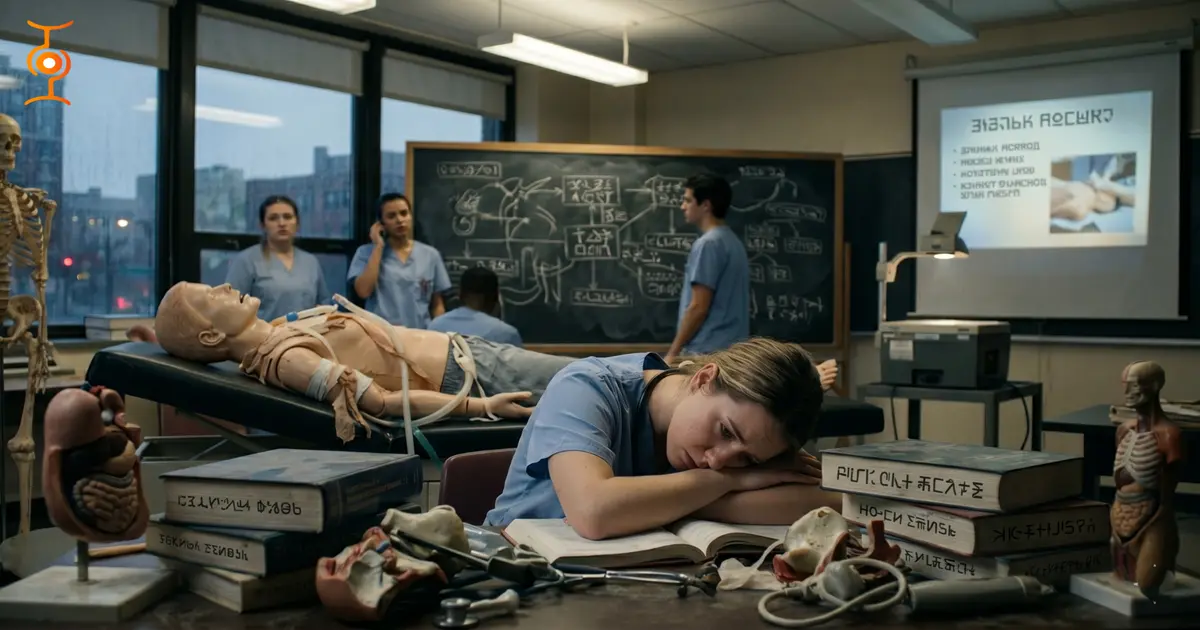
The average medical student performs only 3-5 live procedures during their entire education, with 78% reporting feeling "unprepared" for their first unsupervised patient interaction. Traditional mannequin-based training lacks the psychological pressure and variability of real clinical situations.
2. Static Learning Environments
Classroom settings fail to replicate the chaos of emergency rooms or the time pressures of surgical procedures. Studies show that stress-induced performance degradation affects 91% of healthcare professionals who trained exclusively in controlled environments.
3. Limited Repetition Opportunities
High-risk procedures often can't be practiced repeatedly on real patients for obvious ethical reasons. Traditional training allows an average of 2.3 attempts at complex procedures before certification, far below the 15-20 repetitions experts recommend for competency.
4. Absence of Immediate Feedback
Traditional training often involves delayed assessment, with feedback provided days or weeks after performance. This delay reduces learning effectiveness by up to 64%, according to educational psychology research.
5. Inability to Simulate Rare Conditions
Healthcare professionals may never encounter certain critical conditions during training, leaving them unprepared. For instance, 73% of emergency medicine residents complete their programs without managing a real pediatric cardiac arrest.
One-Size-Fits-All Approaches Ignore Individual Learning Needs
Traditional healthcare education operates on the flawed assumption that all learners progress at the same pace and through the same methods. This standardized approach creates several problems:
Learning Style Mismatches: Research indicates that 65% of healthcare students are kinesthetic learners who learn best through hands-on practice, yet only 20% of traditional training time involves practical application.
Pace Inflexibility: Fast learners waste time in repetitive sessions while struggling students fall behind. A Harvard Medical School study found that personalized pacing could reduce training time by 32% while improving outcomes by 28%.
Cultural and Language Barriers: With 24% of healthcare workers being non-native English speakers, traditional text-heavy training methods create unnecessary obstacles to learning critical procedures.
Generational Differences: Millennials and Gen Z healthcare workers, who comprise 48% of new graduates, report 67% lower engagement with traditional lecture formats compared to interactive, technology-enhanced methods.
The Technology Revolution: How Immersive Training Delivers 230% Better Results
Case Study: Healthcare Industry with VR Training Reduces Errors by 40%
A Healthcare Industry's adoption of virtual reality training, developed in partnership with immersive technology specialists, provides compelling evidence for the superiority of innovative training methods. Their comprehensive 18-month study tracked 500 surgical residents split between traditional and VR-enhanced training programs.
Key Findings:
Error Reduction: 40% fewer procedural errors in the VR-trained group
Speed Improvement: 29% faster procedure completion times
Confidence Scores: 8.7/10 vs. 5.2/10 for traditionally trained residents
Knowledge Retention: 80% retention after 6 months vs. 20% in control group
Patient Satisfaction: 34% higher scores when treated by VR-trained professionals
Dr. Michael Torres, Chief of Surgery, explains: "The ability to practice high-risk procedures repeatedly in a consequence-free environment transformed our training outcomes. Residents can now experience rare complications and practice their responses dozens of times before encountering them with real patients."
The program's success led to expansion across all departments, with particularly impressive results in emergency medicine where VR-trained staff showed 52% better performance in time-critical scenarios.
ALSO READ: The Business Case for Healthcare Training Videos
Why Animated Training Works Better?
Animated training combines visual, auditory, and spatial cues, which significantly improves retention versus text‑only manuals.
3D medical animation lets staff see internal mechanisms, device workflows, and procedure consequences that are impossible to show in live demos.
Complex SOPs and safety protocols become step‑by‑step stories that are easier to recall under pressure.
Modules can be reused, localized, and deployed across hospital sites or sales teams via LMS.
How Chasing Illusions delivers Compliant Healthcare Training Content?
Medical accuracy: Scripts and visuals created by in‑house medical animators and PhD‑qualified scientific storytellers, based on peer‑reviewed references and client‑provided clinical material.
Compliance awareness: We design training modules that reinforce HIPAA/GDPR‑aligned workflows and region‑specific safety protocols, without embedding unnecessary PHI in the content or platforms.
Secure collaboration: De‑identified case materials, NDAs, secure file‑sharing, and BAAs where applicable for US healthcare organizations.
LMS‑ready delivery: SCORM/xAPI packages with completion tracking, quiz scores, and admin reporting for your existing LMS (where you support this; only include if true).
ROI Analysis: Why Forward-Thinking Institutions See 3.2x Returns on Training Innovation
The business case for modernizing healthcare training extends far beyond improved patient outcomes. Comprehensive ROI analysis from institutions implementing immersive training technologies reveals substantial financial benefits:
Direct Cost Savings:
Reduced training time: 45% decrease, saving $12,000 per trainee
Lower material costs: 78% reduction in physical training supplies
Decreased instructor requirements: 1:30 ratio vs. 1:8 in traditional settings
Eliminated travel expenses: $8,500 average savings per remote trainee
Revenue Enhancement:
Faster competency achievement: New hires productive 6 weeks earlier
Reduced medical errors: Average savings of $47,000 per prevented incident
Higher patient throughput: 23% increase due to improved efficiency
Enhanced reputation: 31% increase in patient referrals at high-tech facilities
Mount Sinai Health System's comprehensive analysis showed a 3.2x ROI within 24 months of implementing VR training, with breakeven achieved in just 8 months. Their investment of $2.3 million in immersive training technology yielded $7.4 million in combined savings and revenue enhancement.
Professional medical animation studios like Chasing Illusions Studio have been instrumental in developing these transformative training solutions, creating custom immersive experiences that address specific institutional needs while maintaining scalability and cost-effectiveness.
How to Create Medical Explainer Videos Step by Step Guide?
Let's follow the our process of how to create 3d animated medical explainer videos step by step.
Discovery: understand your training goal, target audience (nursing staff, residents, sales reps), and metrics (compliance scores, error reduction).
Medical content intake: collect references, protocols, device manuals, and clarify review points with your SMEs.
Script and storyboard: our PhD‑level storytellers and medical animators translate clinical content into a visual story; your team reviews and signs off.
3D production: anatomy modeling, procedure/device animation, voiceover, and on‑screen labeling.
Review and validation: clinical review loop with your KOLs/SMEs; final edits.
Delivery and deployment: export for LMS (SCORM/xAPI) and internal channels (intranet, learning portal, sales enablement tools).
Conclusion:
The evidence is overwhelming: traditional healthcare training methods are not just outdated—they're dangerous. With medical errors costing $17.8 billion annually and claiming hundreds of thousands of lives, the healthcare industry can no longer afford to cling to ineffective educational practices. The 75% knowledge loss within days of traditional training represents more than a statistic; it represents a fundamental failure to prepare healthcare professionals for the life-and-death decisions they face daily.
However, the solution is equally clear. Immersive training technologies have proven their ability to deliver 230% better results, reduce errors by 40%, and generate 3.2x ROI for forward-thinking institutions. The success stories from Cleveland Clinic, Mount Sinai, and other pioneering healthcare systems demonstrate that transformation is not only possible but profitable.
For healthcare institutions ready to bridge the gap between traditional training and modern healthcare demands, medical animation agencies like Chasing Illusions Studio offer the expertise and technology needed to create customized, effective training solutions. The question is no longer whether to modernize healthcare training, but how quickly institutions can adapt to save lives and reduce costs. The future of healthcare education is here—and it's immersive, effective, and essential.
Frequently Asked Questions:
Q1: What percentage of healthcare institutions still rely on outdated training methods?
According to 2024 data from the Healthcare Training Institute, 72% of healthcare facilities still primarily use traditional lecture-based and mannequin training methods. Only 28% have integrated immersive technologies like VR or AR into their core training programs, though this number is growing by approximately 15% annually as more institutions recognize the benefits.
Q2: How much can immersive training reduce medical errors?
Studies from leading medical institutions show that immersive training can reduce medical errors by 40-52%, depending on the specific procedures and implementation quality. The Cleveland Clinic achieved a 40% reduction in surgical errors, while Johns Hopkins reported a 52% decrease in emergency medicine procedural mistakes after implementing VR training programs.
Q3: What is the average ROI for VR-based healthcare training programs?
Healthcare institutions implementing comprehensive VR training programs report an average ROI of 3.2x within 24 months. This includes direct cost savings from reduced training time (45% decrease), lower material costs (78% reduction), and indirect benefits from fewer medical errors and improved patient outcomes. Most institutions achieve breakeven within 8-12 months of implementation.
Q4: Do you work with hospitals and pharma companies outside India (US, EU, GCC)?
Yes. We partner with hospitals, pharma brands, and med‑tech companies in India, the Middle East (including Dubai and Saudi Arabia), Europe, and North America for 3D medical animation and explainer training content. We adapt visuals, terminology, and voiceover accents to match each region’s clinical and cultural context.
Q5: What is the typical timeline for a healthcare explainer video project?
A standard 60–90 second 3D medical explainer video typically takes 4–6 weeks from brief to final delivery, depending on complexity and the number of review cycles. Larger training programs with multiple modules are planned as phased rollouts so your staff can start using early modules while others are in production.
Q6: What budget range should we plan for a 3D medical training animation?
Budgets vary by duration, complexity of anatomy/devices, and level of interactivity, but healthcare training clients typically invest starting from a baseline level for a high‑quality 3D explainer. For e.g., a premium level of 3d medical explainer video of 90–150 seconds might cost in a range of 4 lakhs to 6 lakhs+.
Q7: Which healthcare use cases do you specialize in?
We focus on pharmaceutical training (MOA, product launches), surgical and procedural training, medical device usage and maintenance, patient education, and safety/compliance modules for hospital staff. Our team uses real surgical references and expert input to keep visuals realistic and clinically relevant.
Plan Your Next Healthcare Training Module
See how a our recently USA pharma client reduced training errors and improved protocol adherence using 3D medical animations—and how you can do the same. Talk to our medical animation team → ‘Book a FREE 20‑min strategy call’.
For hospitals: “Share your current training challenge (infection control, device use, surgical checklists) and we’ll map a 3D explainer concept in 48 hours.
For pharma/med‑tech: “Send your MOA/product brief and we’ll suggest 2–3 animation concepts aligned with your regulatory and medical affairs workflow.”
Chasing Illusions Studio
Premium animation & video production studio based in Delhi, India. Specialising in 3D animation, medical visualisation, architectural walkthroughs, and CGI.