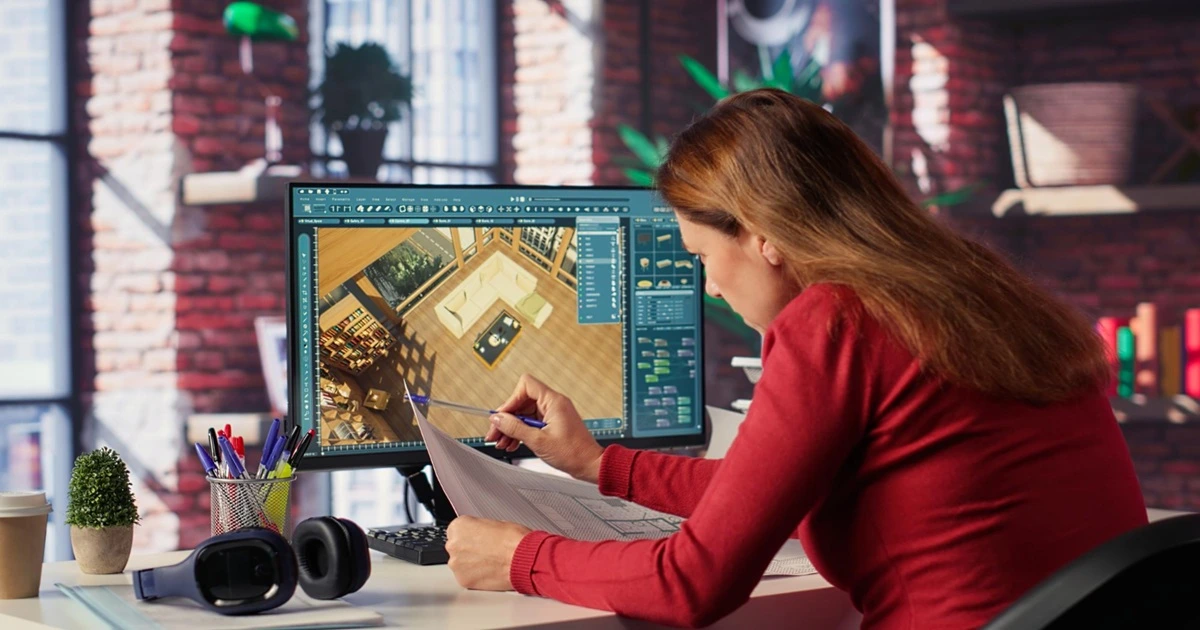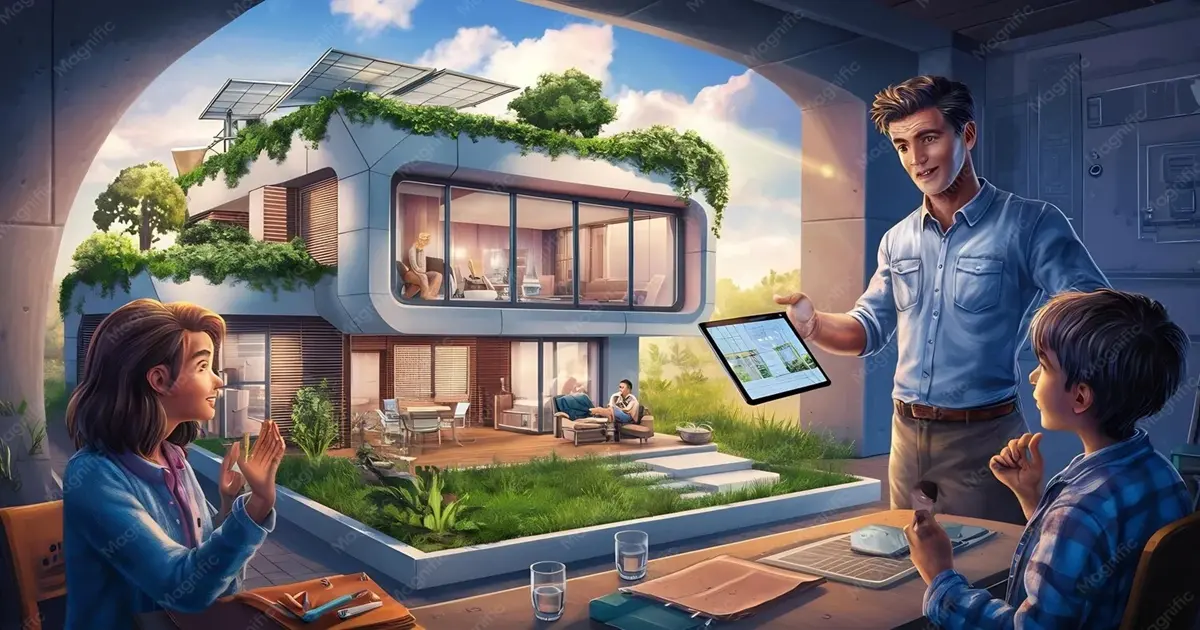
Imagine being asked to invest in a property that does not yet physically exist. You receive a floor plan, a brochure, a few elevations, and perhaps several static renders—but you are still expected to understand how the entrance feels, how one room connects to another, what the balcony view could look like, and whether the overall space suits your needs.
This gap between technical property information and buyer understanding is one reason 3D Walkthroughs for Real Estate Sales have become increasingly important. Over the years, real estate marketing has progressed from printed drawings and physical models to photorealistic 3D visualization, architectural animation, virtual property tours, and increasingly immersive digital experiences.
The transformation is bigger than a change in presentation format. 3D walkthrough technology has changed when developers can begin marketing, how buyers evaluate unbuilt properties, how sales teams communicate spatial information, and how confidently prospects can shortlist a project before visiting it physically.
Research into virtual and immersive real estate experiences supports this broader shift. Studies have found that immersive property visualization can improve customer experience, perceived presence, engagement, and aspects of property purchase decision-making compared with conventional static presentations.
This guide examines how that evolution happened and what it means for modern developers, builders, architects, real estate marketers, and sales teams.
What Is a 3D Real Estate Walkthrough?
A 3D real estate walkthrough is an animated or interactive digital representation that allows viewers to experience a proposed or existing property as though they were moving through it.
Unlike a single architectural rendering, which captures one viewpoint, a walkthrough establishes spatial continuity. It can show:
Building entrances and approach roads
Lobbies and common areas
Living rooms, bedrooms, kitchens, and bathrooms
Balconies and terraces
Landscaping and amenities
Clubhouses and recreational facilities
Commercial interiors and circulation areas
Exterior architecture
Lighting conditions
Materials, furniture, and finishes
Connections between rooms and floors
The wider property environment
Depending on the project, a 3D architectural walkthrough may be delivered as a cinematic animation, interactive walkthrough, 360-degree experience, web-based virtual tour, VR presentation, or combination of several formats.
Its fundamental purpose is simple: translate architectural information into an experience that buyers can understand without needing professional knowledge of drawings or plans.
The Evolution of Real Estate Visualization
The impact of walkthroughs becomes clearer when viewed historically.
Real estate marketing did not suddenly move from brochures to VR. It progressed through several stages, with each stage solving some—but not all—of the visualization problems of the previous one.
Stage 1: Floor Plans, Elevations, and Printed Brochures
For decades, property marketing depended heavily on:
Architectural drawings
Floor plans
Elevations
Site plans
Printed brochures
Photography
Scale models
These tools remain valuable. Floor plans, in particular, communicate dimensions and spatial organization efficiently.
Their weakness is interpretation.
An architect can look at a plan and mentally reconstruct a three-dimensional environment. A typical buyer may not.
Buyers often need to mentally answer questions such as:
How large will this living room actually feel?
What will I see when I enter the apartment?
How does the kitchen relate to the dining area?
Will the balcony feel open or enclosed?
What will the project look like after landscaping is completed?
Traditional marketing material provides information, but it often leaves the buyer responsible for constructing the final experience mentally.
Stage 2: Physical Scale Models
Physical architectural models improved property presentation considerably.
Sales galleries could show buyers:
Building massing
Tower orientation
Landscaping
Roads
Amenities
Surrounding developments
For large residential communities and commercial developments, scale models remain useful.
But they largely represent the project from the outside.
They cannot easily communicate what it feels like to walk through an apartment, enter a lobby, move through an office floor, or experience the view from a particular balcony.
Stage 3: Photorealistic 3D Rendering
The adoption of architectural CGI introduced another major improvement.
Developers could now visualize unbuilt spaces through realistic exterior and interior renders.
Photorealistic rendering made it possible to show:
Materials
Interior design
Lighting
Landscaping
Furniture
Façades
Lifestyle environments
This dramatically improved pre-construction property marketing.
However, a static image still shows only a selected camera angle.
The viewer sees a beautiful scene—but not necessarily the relationship between spaces.
That limitation created an opportunity for property walkthrough animation.
The Rise of 3D Walkthroughs for Real Estate Sales
The next stage of architectural visualization introduced movement.
Instead of showing isolated images, a developer could guide buyers through an entire project.
A typical sequence might begin at the project entrance, travel along landscaped roads, approach the building, enter the lobby, move into an apartment, pass through the living and dining areas, enter bedrooms, and finish on a balcony overlooking surrounding amenities.
That continuity matters.
It transforms property visualization from:
“Here is what individual spaces may look like.”
into:
“Here is how the property may be experienced.”
This is one of the most important ways 3D Walkthroughs for Real Estate Sales have changed property marketing.
The buyer no longer needs to assemble disconnected floor plans, elevations, and renders mentally. The presentation connects those elements into a coherent spatial story.
Traditional Property Marketing vs. Modern 3D Walkthrough Marketing
Traditional Property Presentation | 3D Walkthrough-Based Presentation |
|---|---|
Primarily static | Dynamic and spatial |
Requires interpretation of plans | Demonstrates room relationships visually |
Individual views | Continuous property journey |
Difficult to communicate unbuilt spaces | Designed specifically for pre-construction visualization |
Primarily brochure or sales-gallery based | Can be distributed digitally |
Limited sense of movement | Simulates movement through the project |
Same presentation logic for most buyers | Can be adapted to units, amenities, or campaigns |
Geographic dependence on site/sales office | Can support remote property evaluation |
Architecture explained technically | Architecture communicated experientially |
The significance is not that walkthroughs replace every traditional asset.
They usually work best alongside floor plans, specifications, legal documentation, renders, maps, brochures, photography, and physical site visits.
Their role is to bridge the visualization gap between technical information and buyer experience.
How 3D Walkthroughs Changed Pre-Construction Property Sales?
The influence of walkthroughs is particularly significant in off-plan property sales.
When developers launch projects before construction is completed, buyers face an unusual purchasing situation: they are making a high-value decision about something they cannot yet physically inspect in its finished form.
That creates information asymmetry.
Before Advanced Visualization
Buyers might have relied primarily on:
Location
Builder reputation
Floor plans
Price
Sample apartments
Brochures
Model units
Sales representative explanations
Much of the finished environment remained conceptual.
With 3D Visualization
A developer can digitally demonstrate:
Proposed architecture
Entrance experience
Landscape planning
Typical apartments
Premium units
Amenities
Pool areas
Clubhouses
Parking approach
Commercial zones
Evening lighting
Interior finishes
Views from different parts of the development
As a result, the project can become visually understandable much earlier in its development cycle.
This is why pre-construction property marketing has become one of the strongest commercial applications of architectural visualization.
Explore our 3d architectural walkthrough video portfolio
Why Visualization Matters More for Off-Plan Properties?
Buying an existing property and buying an off-plan property are fundamentally different experiences.
With an existing property, the buyer can inspect the building.
With an unbuilt property, the buyer must evaluate a representation of the future asset.
The better that representation communicates the proposed project, the smaller the visualization gap becomes.
This does not eliminate investment risk, construction risk, market risk, or the need for due diligence. But it can improve comprehension.
In India, the Real Estate (Regulation and Development) Act framework emphasizes disclosure, transparency, approved plans, specifications, project information, and informed decision-making for homebuyers. Ministry of Housing and Urban Affairs materials state that project details and approved information must be disclosed, reinforcing the importance of accurate property communication.
A 3D walkthrough should therefore be viewed as a visual communication and marketing layer, not as a substitute for regulatory disclosures, contracts, approved plans, specifications, or due diligence.
1. 3D Walkthroughs Turn Floor Plans Into Spatial Experiences
One of the most persistent challenges in real estate marketing is spatial comprehension.
Consider a floor plan showing:
1,850 sq. ft.
Three bedrooms
Three bathrooms
Living/dining area
Kitchen
Utility space
Two balconies
These details may be technically sufficient, but they do not automatically communicate how the residence feels.
A 3D property walkthrough can visually demonstrate:
Entrance-to-living-room movement
Furniture scale
Corridor proportions
Ceiling height
Relationship between dining and kitchen areas
Bedroom privacy
Balcony access
Daylight direction
That spatial context can make abstract dimensions easier to understand.
2. Property Marketing Became More Experiential
Traditional property advertising primarily communicated facts:
Location
Price
Area
Configuration
Amenities
Modern real estate marketing increasingly communicates experience.
A luxury residential walkthrough may depict an arrival sequence, landscaped driveway, double-height lobby, elegant apartment, sunset balcony view, swimming pool, and clubhouse.
A commercial real estate walkthrough might demonstrate:
Office arrival
Reception
Workspaces
Meeting rooms
Collaborative areas
Retail frontage
Parking
Connectivity
The property is no longer presented solely as square footage.
It is presented as an environment.
Research has found that virtual real estate environments can generate emotional responses and affect elements associated with purchase intention. A controlled study involving potential homebuyers reported relationships between virtual atmosphere, pleasure, and purchase intention.
This helps explain why experiential visualization has become strategically valuable in property marketing.
3. Buyer Engagement Shifted From Passive Viewing to Exploration
Printed advertisements are passive.
The buyer sees what the advertiser selects.
Digital visualization progressively introduced greater exploration:
Brochure → Render → Animation → 360° Tour → Interactive Walkthrough → VR/AR Experience
Each stage gives the viewer more spatial context or control.
The National Association of REALTORS® describes virtual tours as a way for potential buyers to explore properties remotely while understanding how rooms connect—something static listing photography communicates less effectively.
Research comparing static photographs with interactive 360-degree real estate experiences has likewise found more favorable visiting experiences and attitudes toward properties and service providers in the interactive condition.
The result is a shift from viewing property marketing toward experiencing property marketing.
4. Remote Property Evaluation Became Practical
Real estate has historically been geographically dependent.
A serious buyer often needed to travel to:
The development site
A sales gallery
A model apartment
An agent's office
Digital walkthroughs do not eliminate physical visits, but they can move part of the evaluation process online.
A buyer in another city—or another country—can potentially inspect the visual proposition before deciding whether a physical visit is worthwhile.
The National Association of REALTORS® notes that modern technology enables professionals to show properties to clients located elsewhere through virtual home tours.
For developers marketing to:
NRIs
International investors
Remote corporate tenants
Buyers relocating between cities
Overseas luxury buyers
this can substantially expand the usable reach of a property presentation.
5. Walkthroughs Became a Buyer-Qualification Tool
Not every inquiry deserves the same level of sales effort.
A visitor may like:
The project location but dislike the layout
The apartment but not the amenities
The exterior design but not the interior configuration
If prospects discover these preferences only after an on-site visit, both buyer and sales team invest time unnecessarily.
A virtual property walkthrough can help prospects evaluate suitability earlier.
They can review the layout, design language, environment, amenities, and spatial characteristics before requesting an appointment.
NAR has previously highlighted 3D tours as a way to give properties greater exposure while reducing unnecessary physical showings by allowing prospects to evaluate the home digitally first.
This suggests an important distinction:
Walkthroughs do not merely generate attention.
They can also help filter attention.
For sales teams handling high inquiry volumes, better-informed prospects may be more valuable than raw traffic alone.
6. 3D Walkthroughs Improved Property Launch Campaigns
A modern property launch may need content for:
Developer websites
Landing pages
YouTube
Instagram
Facebook
LinkedIn
Digital advertising
LED screens
Sales offices
Exhibitions
Investor presentations
Broker presentations
WhatsApp marketing
Email campaigns
A well-produced architectural walkthrough can become a master visualization asset.
From one production, developers can derive:
Full walkthrough films
Short promotional edits
Vertical reels
Amenity clips
Exterior sequences
Interior sequences
Still frames
Digital advertisements
Teaser videos
This makes the walkthrough more than an animation deliverable.
It can become part of the wider real estate content infrastructure supporting the launch.
Studios specializing in architectural visualization, including Chasing Illusions Studio, increasingly work within this broader marketing workflow rather than treating walkthrough production as an isolated visualization task.
7. 3D Walkthroughs for Real Estate Sales Can Improve Buyer Confidence
Buying property involves uncertainty.
For an off-plan buyer, uncertainty may involve:
Layout
Finishes
Views
Room proportions
Amenity experience
Building appearance
Spatial relationships
Visualization cannot remove every form of uncertainty, but it can reduce uncertainty caused by difficulty imagining the proposed design.
Research examining AR and VR in India's architecture, engineering, and construction sector identified four relevant constructs influencing real estate investment decisions: confident value perception, innovative investment appeal, trusted property transactions, and effortless property engagement.
A newer 2026 study examining 404 respondents in Delhi NCR who had experienced virtual property tours also investigated how immersive technologies affect real estate purchasing behavior.
The implication for developers is important:
Better visualization does not automatically produce a sale, but it can improve the quality of information and experience surrounding the decision.
8. The Sales Conversation Became Easier to Structure
Consider two sales conversations.
Traditional Approach
A salesperson says:
“This side of the floor plan is your living room. The balcony faces the landscaped courtyard, and the clubhouse will be visible from here.”
The buyer has to imagine it.
Walkthrough-Supported Approach
The salesperson plays the relevant sequence and says:
“This is the entrance. Here is the living room, this opening leads to the balcony, and that is the clubhouse-facing view.”
The explanation becomes visual.
That can reduce ambiguity and make discussions around:
Layout
Design
Finishes
Amenities
Views
Circulation
Landscaping
more concrete.
For sales teams, the benefit is not simply visual appeal. It is communication efficiency.
9. The Buyer Journey Became Increasingly Digital
Real estate transactions still contain physical, legal, and financial processes, but discovery and evaluation have become increasingly digital.
Government initiatives also reflect this wider direction.
In the United Kingdom, HM Land Registry has supported greater adoption of property technology, while the government's 2026 home-buying reform proposals explicitly promote digital property information, digital property logbooks, better upfront information, and a more transparent and consumer-centric buying process.
The UK's Geospatial Commission has similarly described a growing PropTech ecosystem transforming how property is developed, evaluated, bought, sold, rented, and managed.
3D visualization should be understood within this larger digital transformation.
It is one part of a property ecosystem moving from fragmented offline information toward interactive, visual, data-supported digital experiences.
What Does Research Say About the Sales Impact?
Claims such as “3D walkthroughs always increase sales by X%” should be treated carefully.
Performance depends on:
Property type
Market conditions
Pricing
Location
Brand reputation
Visualization quality
Sales execution
Media distribution
Buyer demographics
Competition
Financing conditions
There is no responsible universal conversion percentage applicable to every development.
However, evidence increasingly indicates that immersive real estate technologies can influence important stages of the buying journey.
Improved Customer Experience
A study comparing static photography with interactive 360-degree real estate visits found that interactive experiences were associated with better virtual visiting experiences and more favorable attitudes toward both the property and service provider.
Greater Sense of Presence
Research published in Computers in Human Behavior found that immersive property experiences generated stronger physiological responses, higher presence, and improved user-experience scores compared with photo-based experiences. The study was more cautious about direct purchase intention, finding clearer evidence for willingness to visit than for all purchasing measures.
Influence on Purchase-Related Emotions
A residential real estate VR study found that virtual atmosphere significantly affected pleasure and arousal, with pleasure subsequently influencing purchase intention.
Decision-Making Support
Research in the Indian AEC sector involving 300 respondents found that confident value perception, investment appeal, transaction trust, and effortless engagement were relevant factors connecting AR/VR experiences with real estate investment decisions.
Transaction and Conversion Efficiency
Research using housing-sector data from Beijing between 2017 and 2021 reported that VR use improved consumer-service efficiency, accelerated transactions, and increased conversion associated with offline housing viewings.
The combined evidence suggests that the most defensible business case for walkthrough technology lies in improving:
information quality → engagement → evaluation → qualification → decision support → sales efficiency
rather than promising an automatic sales uplift.
Where 3D Walkthroughs Deliver the Most Value?
Not every property requires the same visualization strategy.
Residential Developments
Useful for:
Apartments
Villas
Townships
Condominiums
Luxury residences
Gated communities
Walkthroughs can communicate lifestyle, interiors, amenities, and neighborhood design.
Commercial Real Estate
Useful for:
Office buildings
Retail developments
Business parks
Mixed-use properties
Shopping centers
Here, visualization can communicate circulation, office environments, public spaces, retail frontage, and tenant experience.
Luxury Property
Luxury buyers often evaluate more than specifications.
They assess:
Design
Material quality
Landscape integration
Views
Exclusivity
Atmosphere
Lifestyle
Photorealistic architectural visualization therefore plays a particularly significant role.
Large Infrastructure and Mixed-Use Projects
Complex developments can be difficult to explain through drawings alone.
Animations can help communicate:
Scale
Zones
Access
Roads
Towers
Amenities
Public areas
Landscape planning
to investors, buyers, authorities, and other stakeholders.
Why Photorealism Alone Is Not Enough?
A common misconception is that the best walkthrough is simply the one that looks most realistic.
Visual realism is important—but effective property communication requires more.
A high-performing walkthrough should balance:
Architectural Accuracy
The animation should remain consistent with approved or intended architecture, materials, proportions, and design.
Camera Planning
Camera movement should reveal spatial relationships instead of simply producing cinematic shots.
Story Structure
The sequence should reflect how the property needs to be understood.
Lighting
Lighting should clarify architectural form while remaining believable.
Materials
Textures and finishes must reinforce the intended positioning of the development.
Scale
Furniture, people, vehicles, landscaping, and architectural elements should maintain believable proportions.
Marketing Objective
An investor presentation, luxury launch film, social media advertisement, and buyer walkthrough may require different pacing and storytelling.
The best real estate 3D visualization is therefore not merely visually impressive.
It is strategically informative.
Common Mistakes Developers Should Avoid
1. Creating Beautiful but Architecturally Inaccurate Visuals
Marketing value should never come at the expense of misleading representation.
2. Showing Unrealistic Space
Overly wide camera lenses can make rooms appear larger than they are.
3. Ignoring the Buyer Journey
Random cinematic shots may look impressive without helping buyers understand the property.
4. Producing the Walkthrough Too Late
Visualization is often most valuable when planned early enough to support pre-launch campaigns.
5. Using One Version Everywhere
A three-minute sales-gallery film may not work as a 15-second digital advertisement.
6. Treating Visualization as a Substitute for Disclosure
A walkthrough is marketing communication—not legal documentation.
In regulated property markets, project representations should remain consistent with applicable disclosures and approved information. India's RERA framework, for example, emphasizes project registration, public disclosure, approved plans, specifications, and consumer transparency.
How Developers Can Measure the ROI of a 3D Walkthrough?
Rather than evaluating a walkthrough based only on visual quality, developers should connect it to measurable marketing and sales KPIs.
Track metrics such as:
Marketing Metrics
Video completion rate
Landing-page engagement
Advertising click-through rate
Cost per qualified inquiry
Social media engagement
Video watch time
Sales Metrics
Inquiry-to-site-visit rate
Qualified lead rate
Site-visit-to-booking rate
Sales-cycle duration
Follow-up frequency
Broker engagement
Buyer Experience Metrics
Frequently asked questions
Understanding of layouts
Unit preference clarity
Remote buyer engagement
Feedback after walkthrough viewing
A useful question is not simply:
“Did the walkthrough generate views?”
It is:
“Did the walkthrough help buyers understand, shortlist, enquire about, visit, or progress toward purchasing the property?”
Where Real Estate Visualization Is Heading Next?
The evolution is continuing.
Interactive Walkthroughs
Instead of following a fixed camera path, buyers can increasingly choose where to move.
Real-Time Rendering
Game-engine technology enables real-time architectural environments.
VR Property Experiences
Head-mounted displays can increase the feeling of presence within unbuilt spaces.
AR Visualization
Augmented reality can overlay digital furniture, building information, or future construction onto physical environments.
AI-Assisted Personalization
Future digital property experiences may increasingly customize:
Furniture
Interior styles
Lighting
Unit configurations
Finishes
Property recommendations
NAR has already documented the emergence of AI-supported property experiences in which digital listings become increasingly interactive rather than remaining simple collections of photographs and property information.
Digital Twins
More advanced projects may connect visualization with BIM, operational information, IoT data, construction progress, and building management.
The direction of travel is clear:
Real estate visualization is moving from presentation toward interaction, personalization, and real-time exploration.
Will 3D Walkthroughs Replace Physical Property Visits?
No—and in many cases they should not.
Physical visits remain essential when buyers need to evaluate:
Actual construction quality
Surrounding neighborhoods
Noise
Traffic
Natural conditions
Existing building maintenance
Real dimensions
Physical materials
Site access
Instead, virtual visualization is more useful as part of a hybrid buyer journey.
A typical modern process might look like:
Online discovery → 3D walkthrough → floor plan/specification review → enquiry → sales discussion → site visit → due diligence → purchase decision
The walkthrough strengthens the earlier stages.
By the time buyers visit physically, they may already have a clearer understanding of what they want to inspect.
Frequently Asked Questions About 3D Walkthroughs for Real Estate Sales
What are 3D walkthroughs in real estate?
3D walkthroughs are animated or interactive digital property experiences created from architectural designs. They allow viewers to understand interiors, exteriors, amenities, landscaping, and spatial relationships before or after construction.
How do 3D walkthroughs help real estate sales?
They can make properties easier to understand, improve digital buyer engagement, support off-plan marketing, enable remote property evaluation, strengthen sales presentations, and help prospects shortlist suitable properties before physical visits.
Are 3D walkthroughs useful for properties that have not been built?
Yes. Pre-construction visualization is one of their primary applications. Architectural drawings, BIM models, CAD files, floor plans, material references, and landscape plans can be used to visualize a proposed development before completion.
What is the difference between a 3D render and a 3D walkthrough?
A 3D render is usually a single still image. A walkthrough uses animated or interactive movement to demonstrate how different areas connect spatially.
Can walkthroughs replace floor plans?
No. Floor plans communicate dimensions and technical organization efficiently. Walkthroughs complement them by making those plans easier to experience visually.
Can 3D walkthroughs guarantee higher property sales?
No. Property sales depend on price, location, demand, financing, reputation, marketing, product-market fit, sales execution, and many other factors. Research suggests immersive visualization can improve engagement and decision support, but it should not be treated as a guaranteed conversion mechanism.
NOTE: Get FREE arhitectural 3d walkthrough real estate quotation + cost sheet, contact now.
Are virtual property tours the same as architectural walkthroughs?
Not always. A virtual tour may photograph or scan an existing property, while an architectural walkthrough is typically generated digitally from architectural information and can therefore visualize projects before they are built.
Which real estate projects benefit most?
Large residential developments, luxury properties, commercial projects, mixed-use developments, villas, townships, office projects, and off-plan launches often gain the most because they require buyers to understand spaces that may not yet be physically available.
Conclusion:
Real estate marketing once asked buyers to imagine the finished property from plans, brochures, specifications, and models.
Photorealistic rendering made that future easier to see.
3D walkthrough technology made it possible to move through it.
That progression has changed how developers present unbuilt projects, how sales teams explain layouts, how remote buyers evaluate opportunities, and how digital campaigns communicate property experiences.
The most important impact of 3D Walkthroughs for Real Estate Sales is therefore not that they make marketing more visually impressive. It is that they reduce the distance between architectural intent and buyer understanding.
As real estate technology continues moving toward interactive visualization, VR, AR, real-time rendering, AI personalization, and digital property ecosystems, buyers are likely to expect increasingly rich information before committing their time—or capital—to a development.
For developers planning an upcoming property launch or seeking to translate architectural designs into a clear digital buyer experience, Chasing Illusions Studio can help develop photorealistic 3D architectural walkthroughs tailored to property marketing, sales presentations, and pre-construction visualization requirements.
Authoritative & Research Sources
The following government, industry, and academic sources provide useful evidence and context for the trends discussed in this guide:
Government and Regulatory Sources
Ministry of Housing & Urban Affairs — RERA FAQs and regulatory guidance for project advertising and registration.
UK Government / HM Land Registry — Digital Property Market initiatives and PropTech adoption.
UK Government — Home Buying and Selling Reform, including digital property information, digital logbooks, transaction transparency, and digitalisation.
UK Geospatial Commission — Research into technology, data, and PropTech transformation across the property lifecycle.
Industry Source
National Association of REALTORS® — Research and guidance covering virtual tours, 3D property tours, real estate technology, and changing digital buyer experiences.
Academic Research
Smart and Sustainable Built Environment — Research into virtual reality, emotions, and residential property purchase intention.
Journal of Retailing and Consumer Services — Study comparing static property photographs and interactive 360-degree real estate experiences.
Computers in Human Behavior — Research comparing immersive and non-immersive real estate experiences.
Engineering, Construction and Architectural Management — Research into AR/VR and real estate investment decisions within the Indian AEC sector.
Property Management — 2026 research into immersive technologies and real estate purchasing behavior using responses from property visitors in Delhi NCR.
Journal of Global Information Management — Evidence examining VR technology, transaction efficiency, property viewings, and consumer service in the housing sector.
Book a discovery 20-minutes strategy call.
📞 +91-9910911696 | +91-9910660851
📩 info [@] chasingillusions [.] in
Written by Deepak, Architectural Walkthrough content strategist at Chasing Illusions Studio. Our clients include DLF, Emaar, Ganga Reality, Banner Boswell, Shapoorji Pallonji, EC World, Taj, Florida Hospital, etc., 100+ architectural companies across India, USA, Thailand, and the UK.
Last Updated: Aug 20, 2026, | Chasing Illusions Studio
Chasing Illusions Studio
Premium animation & video production studio based in Delhi, India. Specialising in 3D animation, medical visualisation, architectural walkthroughs, and CGI.