Imagine asking a buyer to invest ₹2 crore or more in a home that exists only as a floor plan, brochure, and construction site. The location may be promising and the architecture impressive, but the buyer still has to mentally imagine what the finished property will look and feel like.
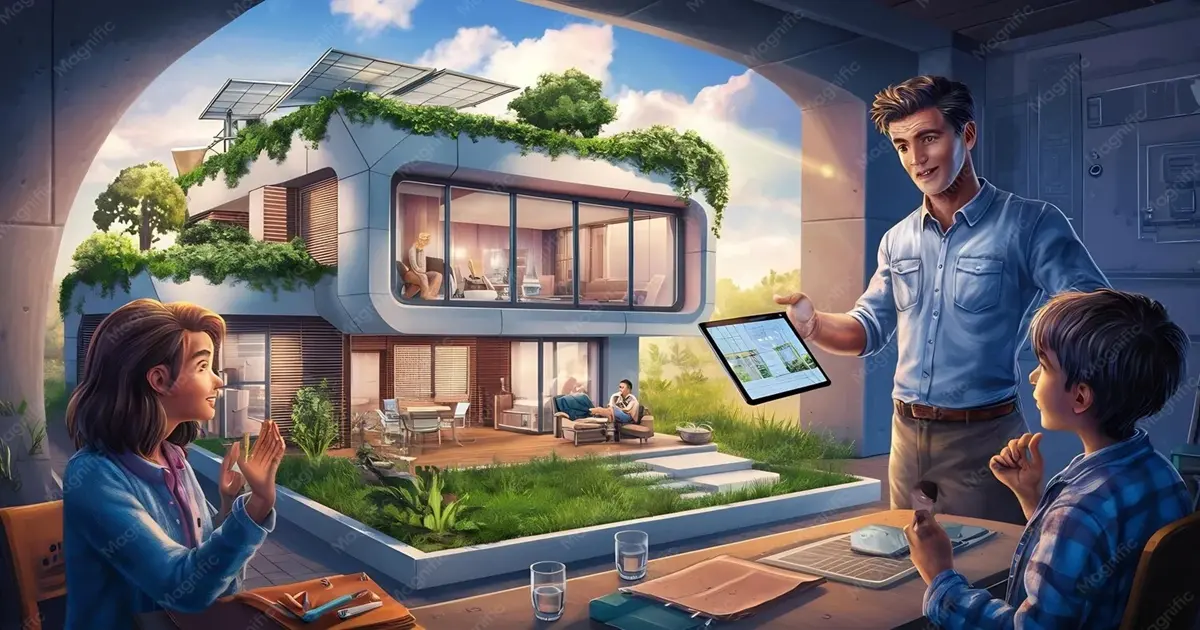
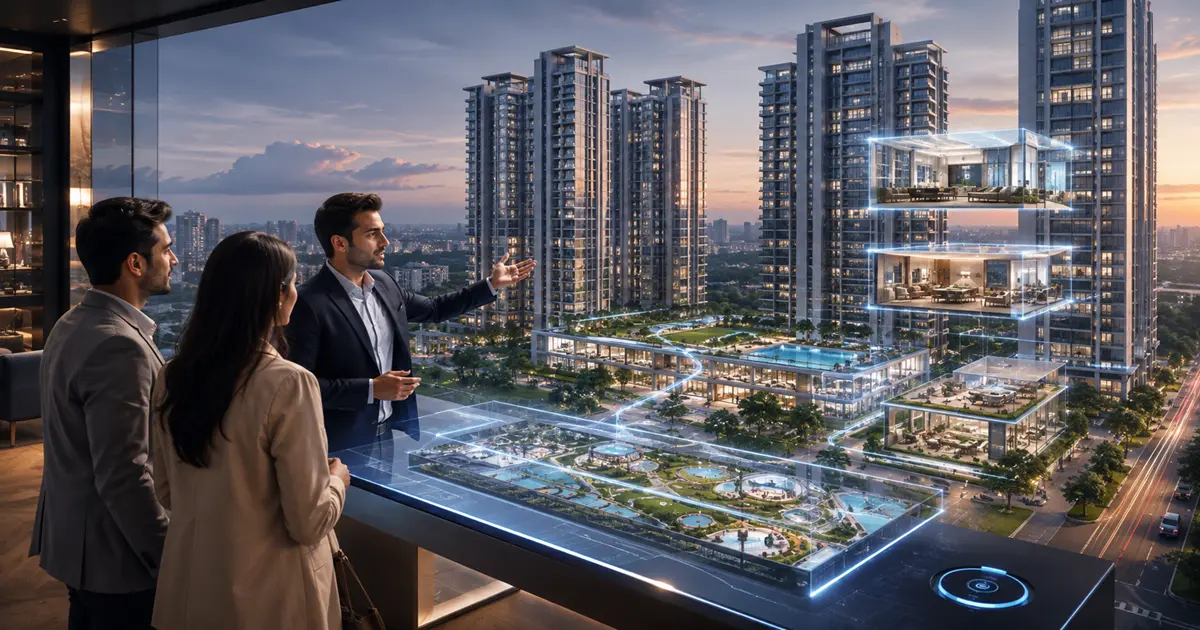
That is where 3D Walkthroughs for Pre-Launch are becoming valuable for Delhi NCR real estate developers. Instead of asking prospective buyers to interpret technical drawings, developers can present the proposed property as an immersive visual journey through apartments, towers, amenities, landscaping, commercial spaces, and the overall development.
The need for strong project communication is particularly relevant in the current NCR market. Knight Frank data reported by ETRealty shows that NCR recorded 24,862 residential sales in H1 2026, down 7% year over year, while new launches declined 5% to 23,877 units. At the same time, Delhi and Faridabad recorded 18% year-over-year residential price appreciation.
For developers competing for buyers at increasingly significant ticket sizes, simply announcing a project is no longer enough. Buyers need to understand what they are being asked to invest in.
Why Are Delhi Developers Using 3D Walkthroughs Before Launch?
Delhi NCR developers use 3D walkthroughs because they allow buyers, investors, brokers, and other stakeholders to experience an unbuilt property before construction is complete.
A well-produced walkthrough can visually explain the architecture, apartment layouts, balconies, views, landscaping, clubhouses, retail areas, parking approaches, common spaces, building façades, and the relationship between different parts of a development. Developers can then reuse this visual asset across project presentations, launch events, sales galleries, websites, digital campaigns, social media, and investor discussions.
The technology does not replace architectural drawings or statutory project information. Instead, it translates approved design information into a format that non-technical audiences can understand more easily.
Why 3D Walkthroughs for Pre-Launch Matter in Delhi NCR?
Delhi NCR is not one uniform real estate market. Gurugram, Noida, Greater Noida, Ghaziabad, Faridabad and Delhi itself serve different buyer segments and have very different development patterns.
Knight Frank's 2025 homebuyer research found particularly strong enthusiasm for pre-launch projects among NCR respondents. The same research showed that buyers increasingly evaluate factors such as location, affordability, developer reputation and access to infrastructure before making a decision.
This creates an important communication challenge.
A buyer considering an under-construction residence in Gurugram may want to understand the luxury amenities and tower experience. A family purchasing in Noida or Greater Noida may focus more closely on apartment planning, open areas and connectivity. A commercial investor may want to understand frontage, arrival experience, circulation and the relationship between offices, retail and public spaces.
Static architectural plans can communicate dimensions, but they require interpretation.
A 3D property walkthrough changes that experience by allowing the audience to see the proposed environment from a human point of view.
For developers, 3D Walkthroughs for Pre-Launch therefore become more than attractive marketing videos. They become communication tools between technical project information and the buyer's understanding of the property.
The Fundamental Pre-Launch Problem: Selling What Buyers Cannot Yet See
Pre-launch and off-plan property marketing have an inherent limitation: the final physical experience does not yet exist.
The sales team may have architectural drawings, floor plans, specifications, material references and perhaps a sample apartment. Yet those assets rarely communicate the complete development.
A buyer might still wonder:
How does the entrance feel when approaching the property? How far is the clubhouse from the residential tower? What will the landscaped central area look like? How spacious will the living room feel? How does the balcony connect with the surrounding view? What will the commercial façade look like at night?
Architects and developers can often understand these elements directly from plans.
Most property buyers cannot.
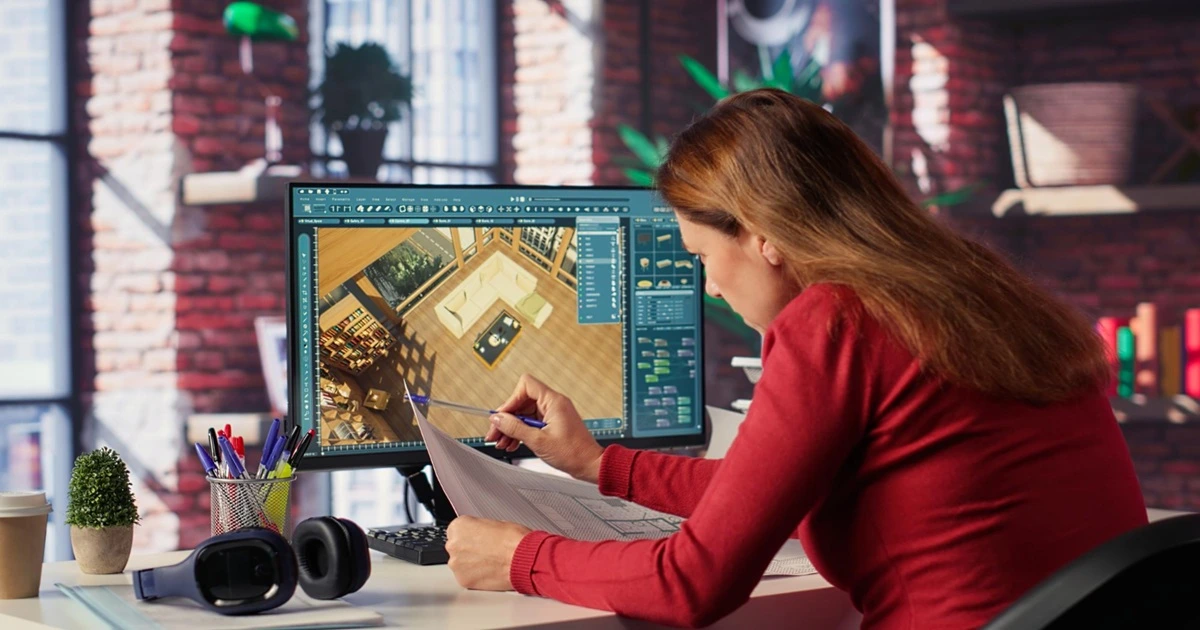
A real estate 3D walkthrough converts the architectural information into a visual sequence that shows spaces, proportions, movement and design relationships more intuitively.
1. They Turn Architectural Plans Into Experiences
Architectural drawings are designed primarily for precision and technical communication. Marketing material serves a different audience.
A prospective homeowner does not necessarily want to interpret elevations, sections and CAD drawings. The buyer wants to understand the experience of entering the lobby, walking through an apartment or looking out from a balcony.
That is where 3D architectural visualization helps.
A walkthrough can start outside the development, move through the entrance, reveal the building façade, enter key common areas and then move through selected residential or commercial interiors.
This transformation from "plan" to "experience" is one of the main reasons walkthrough animation is useful in pre-launch property marketing.
2. Buyers Can Understand Floor Plans More Easily
Two-dimensional floor plans remain essential, but they communicate spatial relationships rather than lived experience.
A 3BHK plan may clearly show bedrooms, bathrooms, living areas and balconies. Yet buyers may still struggle to understand how these rooms connect visually.
A 3D walkthrough adds context.
Furniture can provide a sense of scale. Camera movement can demonstrate circulation. Windows reveal natural-light relationships. Interior visualization can explain how living and dining areas interact.
For property sales teams, this creates a more understandable form of floor plan visualization without replacing the technical plan itself.
3. Developers Can Showcase the Complete Development
Large residential and mixed-use projects are rarely sold on apartments alone.
Their value proposition may include landscaped gardens, swimming pools, children's areas, clubhouses, sports facilities, retail spaces, entrance plazas, pedestrian zones and other amenities.
Showing each feature as an isolated image does not always communicate how the entire project fits together.
A walkthrough can.
The viewer can move from an aerial building visualization to the arrival area, landscaped zones, amenities and finally individual units. This provides a more coherent property showcase and allows the developer's broader architectural concept to be understood.
4. Photorealistic Visualization Strengthens Premium Project Presentation
Premium housing has become increasingly important in India's residential market. Knight Frank's H1 2026 research found that homes above ₹1 crore accounted for 54% of residential sales across India's eight major markets, up from 49% a year earlier.
This matters in Delhi NCR, where high-end developments form a significant part of new activity.
When buyers are considering premium or luxury properties, the quality of the sales presentation needs to reflect the positioning of the development.
Photorealistic rendering can communicate premium materials, façade treatments, lighting, landscaping, interiors and architectural details more effectively than generic graphics.
For luxury developments, the resulting immersive property experience can help communicate the project's intended positioning before the finished building can be visited.
5. How 3D Walkthroughs for Pre-Launch Support Property Pre-Sales
A walkthrough does not guarantee bookings. Property purchases depend on pricing, location, legal compliance, developer credibility, financing, infrastructure, supply, market conditions and many other factors.
Its role is narrower but important: reducing the visual information gap between the proposed development and the prospective buyer.
When the buyer understands the property more clearly, the sales conversation can move from "What will this look like?" toward more substantive questions about specifications, pricing, availability and purchase decisions.
The same walkthrough can support sales presentations at experience centres, broker meetings, investor presentations and launch events.
It therefore becomes a reusable component of the broader real estate sales strategy.
6. One Walkthrough Can Support Multiple Marketing Channels
Producing good architectural visualization requires an investment, but the finished 3D environment can support far more than one video.
Developers can adapt the visual material into shorter campaign videos, social media clips, website banners, presentation footage, sales-gallery displays, digital advertising creatives and still renders.
A longer architectural walkthrough might explain the full project, while shorter sequences can focus on a clubhouse, tower façade, apartment, commercial area or landscape.
This gives marketing teams a consistent visual language across the property launch campaign.
Rather than commissioning unrelated creative assets for every platform, teams can build multiple campaign materials around the same approved visualization.
7. It Helps Sales Teams Present the Same Project Story
Large project launches involve developers, internal sales teams, channel partners, property consultants and marketing agencies.
Without a strong visual reference, each person may describe the project differently.
An architectural walkthrough provides a common presentation asset.
The sales team can show what is being discussed rather than relying entirely on verbal explanations. Brokers can use the same visual narrative during presentations. Investors can examine the overall development strategy. Marketing teams can use consistent project imagery across campaigns.
This is particularly useful for complex residential developments, commercial campuses and mixed-use projects where the complete scheme is difficult to explain through a brochure alone.
8. It Supports Remote and Digital Property Marketing
Not every prospective buyer will visit a sales centre during the early stages of a project.
NRIs, investors and buyers considering several NCR projects may first discover the property through websites, digital advertising, social media or broker communication.
A virtual property tour or video walkthrough makes part of the sales experience portable.
The buyer can understand key aspects of the proposed property without initially being physically present at the project site.
This makes 3D visualization particularly compatible with modern real estate digital marketing, where a substantial part of the discovery and comparison journey can happen before direct engagement with a salesperson.
9. Commercial Property Walkthroughs Solve a Different Problem
The value of walkthrough animation is not limited to residential projects.
Commercial developers may need to communicate offices, retail developments, business parks, mixed-use projects or leasing opportunities before completion.
Here, buyers and occupiers may care about different factors: façade visibility, entrance experience, drop-off zones, floor plates, public spaces, circulation, surrounding development and the quality of the proposed environment.
A commercial property walkthrough can visually demonstrate these factors during investor presentations and leasing discussions.
Commercial real estate marketing therefore benefits from visualization in a slightly different way: the objective is often not simply emotional appeal, but also communicating how a property may function for tenants, customers or investors.
10. 3D Visualization Can Help Developers Review Their Own Presentation
Walkthrough production is primarily a visualization process, but it can occasionally expose aspects of a design that deserve another look.
When architecture is viewed from eye level instead of only through drawings, teams may notice awkward camera-visible transitions, landscape relationships, furniture arrangements or presentation issues that were less obvious in plan form.
This should not be confused with formal architectural review or engineering validation. A marketing walkthrough is not a substitute for professional design documentation.
It does, however, provide another way to visually inspect how the intended development will be perceived.
When developers brief a visualization partner such as Chasing Illusions Studio, providing updated architectural drawings, material references, landscape details, lighting direction and approved design information early in the process can reduce unnecessary revisions later.
Why Accuracy Matters More Than Visual Drama?
A visually impressive walkthrough can attract attention, but accuracy matters more than cinematic exaggeration.
Marketing visualization should reflect the actual proposed project and approved information available to the production team.
This is particularly important in regulated real estate marketing.
Section 3 of India's Real Estate (Regulation and Development) Act, 2016 states that applicable real estate projects cannot be advertised, marketed, booked, sold or offered for sale without registration with the relevant Real Estate Regulatory Authority.
The Ministry of Housing and Urban Affairs also explains that project registration, disclosure and transparency are core parts of the RERA framework.
Delhi RERA itself is intended to promote transparency by requiring project information disclosures, according to the Government of India's National Portal.
Therefore, architectural visualization should not invent amenities, views, specifications or architectural features simply to make a campaign more attractive.
The safest approach is to treat the walkthrough as a visual interpretation of verified project information rather than a fictional representation of what the project might become.
What Should a High-Quality Pre-Launch Walkthrough Show?
The answer depends on the development, but the strongest walkthroughs are structured around the buyer journey rather than showing every possible space.
For a residential development, that may mean beginning with location context and an exterior reveal, moving through the entrance and landscaping, introducing amenities, showing key apartment configurations and ending with the overall lifestyle proposition.
For commercial developments, greater emphasis may be placed on access, frontage, lobbies, circulation, public areas, office spaces and surrounding infrastructure.
The camera should help the viewer understand the project—not race through it.
Similarly, materials, vegetation, people, vehicles and lighting should add realism without distracting from the architecture itself.
Explore our 3D Walkthroughs for Real Estate Developers in Delhi NCR
When 3D Walkthroughs for Pre-Launch Are Most Valuable?
The format becomes particularly useful when the final property cannot yet be experienced physically and when the project contains design elements that are difficult to explain through static media.
That can include premium residential towers, large gated developments, villas, commercial complexes, mixed-use developments, hospitality projects and projects with significant landscaping or amenity components.
It is also valuable when a property launch depends heavily on digital campaigns or presentations to geographically dispersed buyers.
For a very simple development, several high-quality still renders may be sufficient. For a complex project with multiple spaces and a strong experiential proposition, animation can communicate substantially more context.
The format should therefore be selected based on the communication challenge rather than because "every project needs a video."
What Delhi Developers Should Prepare Before Production?
The quality of the final visualization depends heavily on the quality and stability of the information provided at the beginning.
Ideally, the architectural visualization team should receive the latest plans, elevations, sections, CAD or BIM files where available, façade specifications, interior references, landscape plans, material references, branding guidelines and confirmation of which spaces need to be highlighted.
The developer should also define the purpose of the walkthrough.
A video designed primarily for a luxury launch event may require a different pace from one created for investor presentations. A website walkthrough may need different editing from short-form digital advertising.
Clear objectives at the beginning improve both production efficiency and final communication quality.
3D Walkthrough vs Static Rendering: Which Is Better for Pre-Launch Marketing?
Neither format is universally better.
Static architectural renders are excellent for brochures, billboards, portals, social media, print advertisements and individual project features. They are easier for viewers to study at their own pace.
Walkthroughs are more useful when movement, spatial relationships and the sequence of experiences matter.
The strongest pre-launch campaigns often use both.
A 3D model can produce carefully composed still images while animation uses the same environment to explain the project spatially. Together, they provide marketing teams with a broader library of consistent visual content.
Are 3D Walkthroughs for Pre-Launch Worth the Investment?
They can be when the project is complex, high-value or difficult to communicate without immersive visualization.
The appropriate question is not simply, "How much does the walkthrough cost?"
Developers should consider how broadly the resulting content will be used.
If the same visualization supports the website, launch event, investor presentation, sales gallery, digital campaign, broker presentation, social media content and still-render production, the project should be evaluated as a reusable marketing asset rather than a single video.
The value will still depend on production quality, design accuracy and how effectively the content is integrated into the overall property marketing strategy.
RERA and Pre-Launch Property Marketing in Delhi NCR
Developers should distinguish between visualization created during internal project planning and public-facing marketing of a project.
RERA requirements apply to the advertising and marketing of applicable real estate projects. India Code's official text of Section 3 prohibits promoters from advertising or marketing applicable projects before RERA registration.
For Delhi projects, the relevant authority is Delhi RERA. For NCR projects situated in Uttar Pradesh, including areas such as Noida, Greater Noida and Ghaziabad, UP-RERA provides registered-project searches and regulatory information. Haryana RERA provides corresponding project information for Gurugram, Faridabad and other Haryana markets.
This distinction is important because "pre-launch" in marketing language should never be interpreted as bypassing statutory registration or disclosure requirements.
Visualization should support compliant marketing, not replace it.
Frequently Asked Questions:
What is a 3D real estate walkthrough?
A 3D real estate walkthrough is an animated visualization created from architectural information to simulate moving through or around a proposed property. It can show building exteriors, interiors, landscaping, amenities and other planned features before physical construction is complete.
Why do developers use walkthroughs before construction?
They use them mainly to communicate unbuilt spaces more clearly to buyers, investors, architects, sales teams and other stakeholders. Animation can show spatial relationships that may be difficult for non-technical audiences to understand from drawings alone.
Can a 3D walkthrough help sell an off-plan property?
It can support the sales process by helping buyers understand the proposed development more clearly. However, visualization alone cannot determine sales performance; price, location, project credibility, financing, market conditions, legal compliance and numerous other factors remain important.
Are walkthroughs useful for commercial real estate?
Yes. Commercial developments can use walkthroughs to communicate building access, façades, common areas, office spaces, retail areas, circulation and overall project positioning to potential occupiers and investors.
Can a walkthrough replace an actual site visit?
No. It should be treated as a visualization and communication tool. It cannot replace physical inspection, legal due diligence, official project documentation, RERA information or professional advice.
Should the walkthrough match RERA project information?
Public-facing property marketing should be based on accurate project information and comply with applicable laws and regulatory requirements. Developers should ensure that visualized features are aligned with the actual proposed project and relevant disclosures.
Conclusion:
Returning to the buyer standing in front of an empty construction site, the central challenge becomes clear: people are being asked to make important financial decisions about spaces they cannot yet physically experience.
Plans, brochures and specifications remain essential, but they do not always communicate what an unbuilt environment will feel like.
3D Walkthroughs for Pre-Launch help bridge that gap by translating architecture into an understandable visual experience. For Delhi NCR developers competing in increasingly premium and sophisticated residential and commercial markets, that can make project presentations clearer, digital campaigns stronger and conversations with buyers more productive.
The objective should not be to make an unbuilt project look unrealistically perfect. It should be to help prospective buyers understand the proposed property as clearly, accurately and convincingly as possible.
If your upcoming Delhi NCR residential or commercial project needs a professional architectural walkthrough for its pre-launch or marketing campaign, Chasing Illusions Studio can help transform approved architectural plans into clear, photorealistic 3D visualization built around your project's actual design and sales communication requirements.
Book a discovery 20-minutes strategy call.
📞 +91-9910911696 | +91-9910660851
📩 info [@] chasingillusions [.] in
Written by Deepak, Architectural Walkthrough content strategist at Chasing Illusions Studio. Our clients include DLF, Emaar, Ganga Reality, Banner Boswell, Shapoorji Pallonji, EC World, Taj, Florida Hospital, etc., 100+ architectural companies across India, USA, Thailand, and the UK.
Last Updated: Aug 08 2026 | Chasing Illusions Studio
Chasing Illusions Studio
Premium animation & video production studio based in Delhi, India. Specialising in 3D animation, medical visualisation, architectural walkthroughs, and CGI.