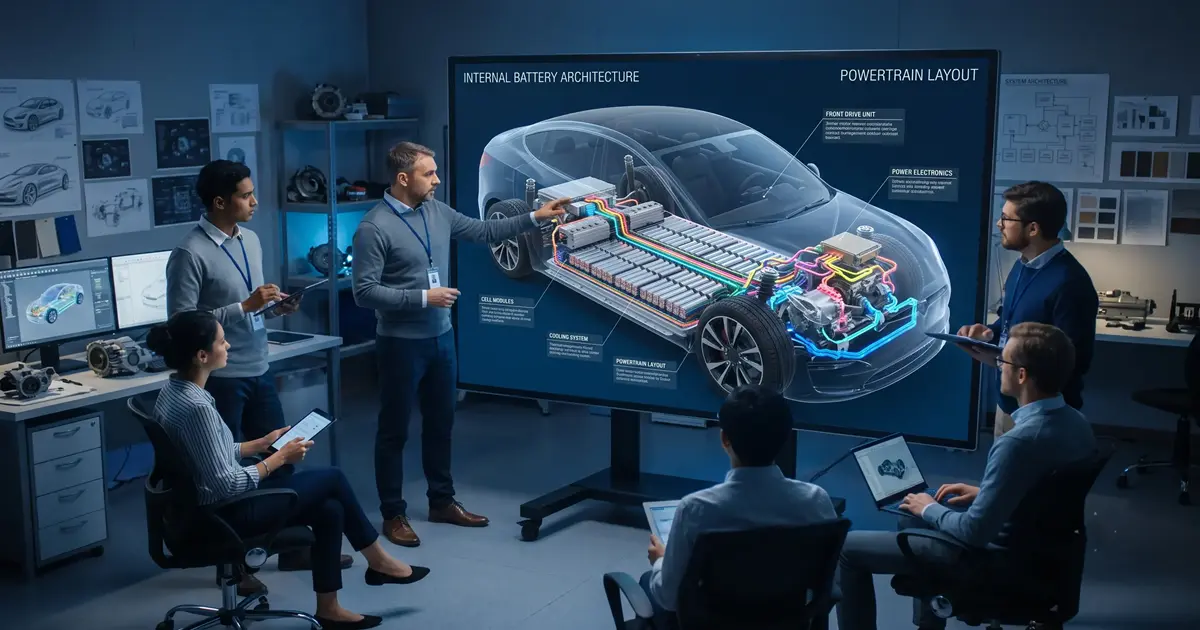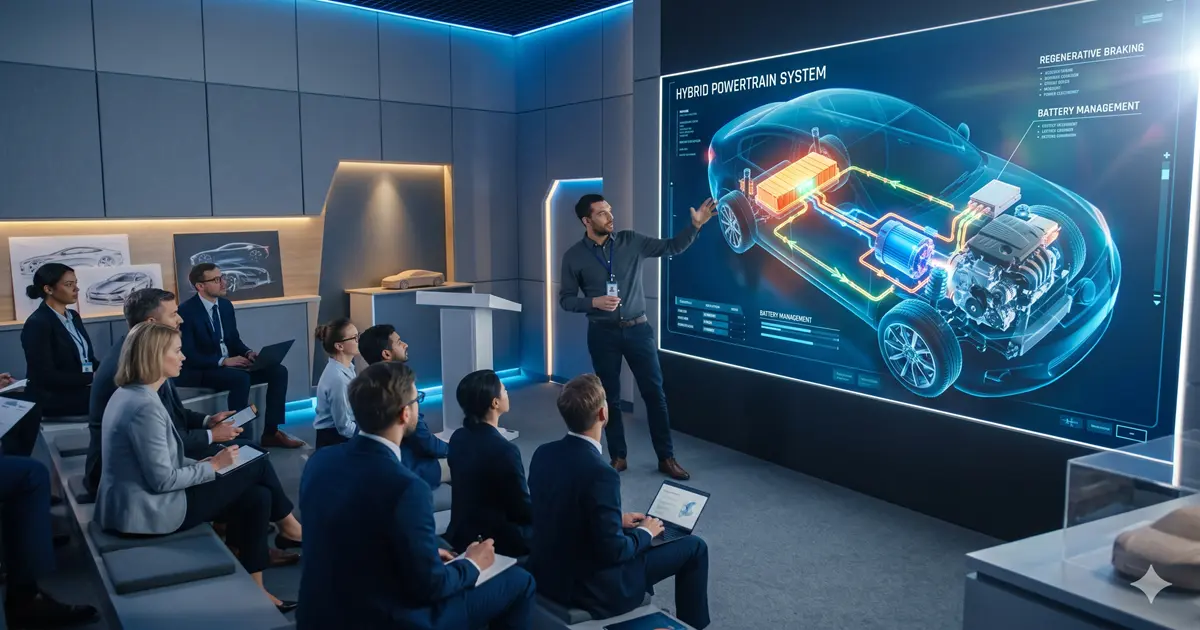
Hybrid electric vehicles combine conventional engine technology with electric propulsion, creating a powertrain that can operate through different combinations of mechanical and electrical energy. Understanding how these systems work requires more than identifying individual components. Learners also need to understand how those components interact under different driving conditions.
The Hybrid Electric Vehicle E-Learning Animation project demonstrates how 3D automotive animation can support the explanation of hybrid vehicle technology through technical visuals, component illustrations, system configurations, and animated explanations.
The educational module explores hybrid vehicle fundamentals, powertrain architecture, engine and electric motor interaction, and the relationship between mechanical and electrical power. By presenting these concepts visually, the content provides a structured way to approach technical subjects that can otherwise be difficult to understand through text and static diagrams alone.
Project Overview: Hybrid Electric Vehicle E-Learning Module
The featured deliverable is a hybrid electric vehicle educational video with an approximate running time of 13 minutes and 37 seconds. Its content combines technical diagrams, component explanations, 3D vehicle visualization, and driving-condition sequences to introduce hybrid powertrain architecture and operation.
The project focuses on explaining hybrid electric vehicle technology coordination between the electric motor and internal combustion engine supported by technical animation and visual demonstrations. Rather than treating a hybrid vehicle as a collection of unrelated components, the module introduces the broader system and explains how different powertrain elements contribute to vehicle operation.
This provides a concrete example of how automotive technical content can be organized into a video-based learning resource.
Client Video: Hybrid Electric Vehicle E-Learning Module Animation
Client Overview:
Name: Toyota
Industry: Automotive manufacturer
About: Toyota Motor Corporation is the world’s largest automaker by volume, generating ¥50.68 trillion in fiscal 2025 sales—the first Japanese company to surpass the ¥50 trillion threshold . Founded in 1937 and headquartered in Toyota City, Japan, the company employs approximately 390,927 consolidated staff globally . Toyota operates through Automotive, Financial Services, and Other segments, producing vehicles under the Toyota and Lexus brands across more than 170 countries and regions. Toyota maintains its leadership through a diversified powertrain strategy, with hybrid vehicles serving as its core volume driver while advancing battery electric vehicles (BEVs), plug-in hybrids (PHEVs), and hydrogen fuel cell technology.
The Challenge: Explaining Hybrid Powertrain Technology
Hybrid electric vehicle technology presents several communication challenges because its operation depends on the interaction of mechanical, electrical, and electronic systems.
An automotive manufacturer may struggle to explain how a hybrid electric vehicle operates, particularly the interaction between its powertrain components and energy flows, and coordination between the electric motor and internal combustion engine. Traditional training materials, such as manuals and static diagrams, could not clearly demonstrate how these systems operate under different driving conditions. Without an engaging automotive e-learning explainer video, technical teams, dealers, and learners found it difficult to understand the system efficiently, making technical training more challenging and time-consuming.
Therefore, company needed a short, engaging video that could:
1. Clearly demonstrate functionality
2. Appeal to non-technical viewers
3. Be used across marketing channels
The project illustrates how an automotive animation studio can present complex powertrain concepts through structured technical visuals and cover the complex relationship between energy flow, and internal combustion engine. With the focus of striking the right balance between technical details and easy-to-understand visuals—something that not every animation production house can deliver effectively.
Solution: How the Hybrid Electric Vehicle E-Learning Animation Explains the Technology?
The Hybrid Electric Vehicle E-Learning Animation combines technical diagrams, component-focused visuals, 3D vehicle imagery, and driving-condition demonstrations to explain hybrid powertrain technology. The video progresses from introductory concepts to individual components and then to system operation.
1. Hybrid powertrain architecture and energy flow
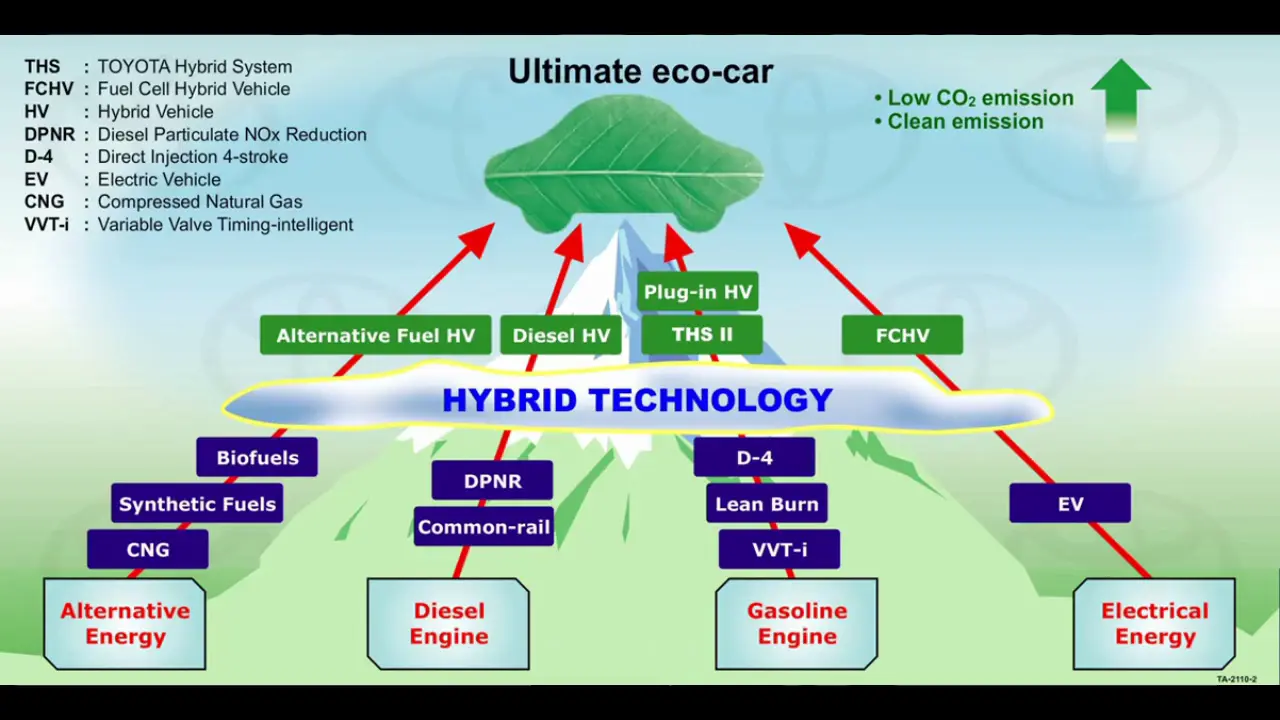
The early sections introduce hybrid technology through diagrams showing the relationships between the engine, generator, battery, inverter, electric motor, and wheels. These illustrations provide a foundation for understanding how mechanical and electrical power can contribute to vehicle propulsion.
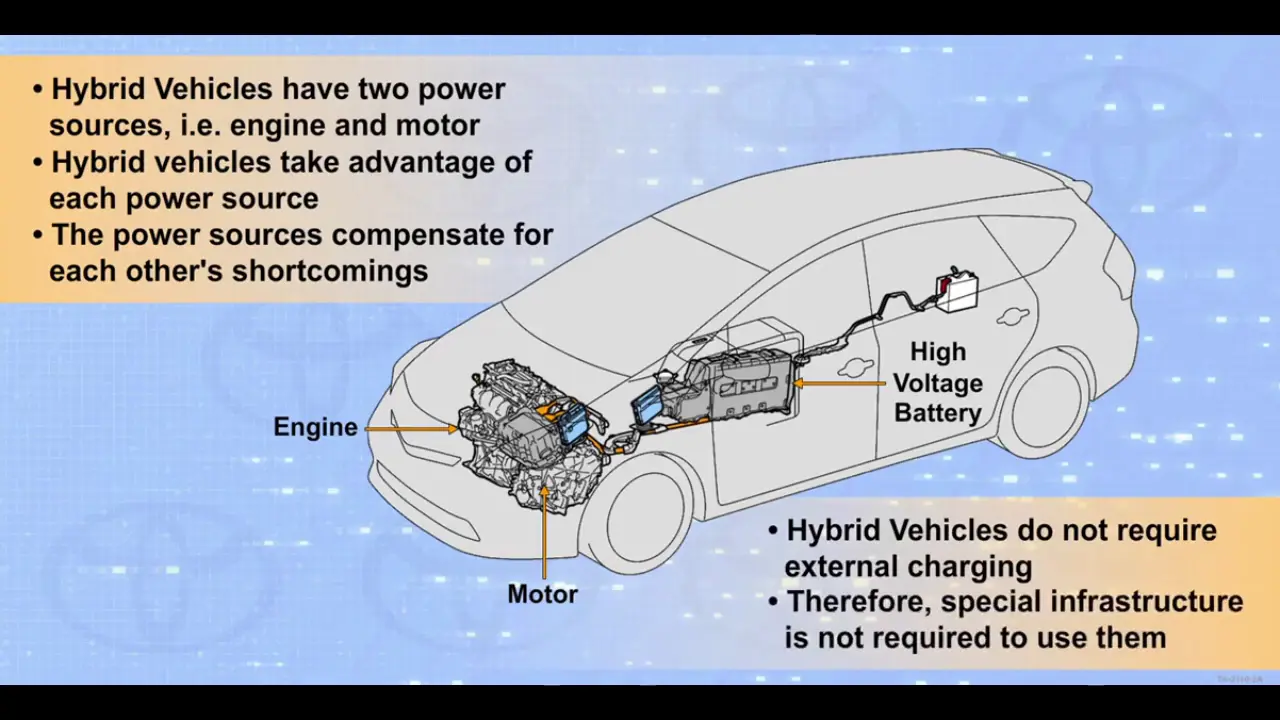
The video also presents different hybrid system configurations, helping distinguish the arrangement of components and their respective roles in power generation and delivery.
2. 3D vehicle cutaway and component visualization
The video transitions from explanatory diagrams to a three-dimensional vehicle visualization, followed by close-up views of mechanical components. This change in visual approach connects the overall vehicle structure with the systems responsible for its operation.
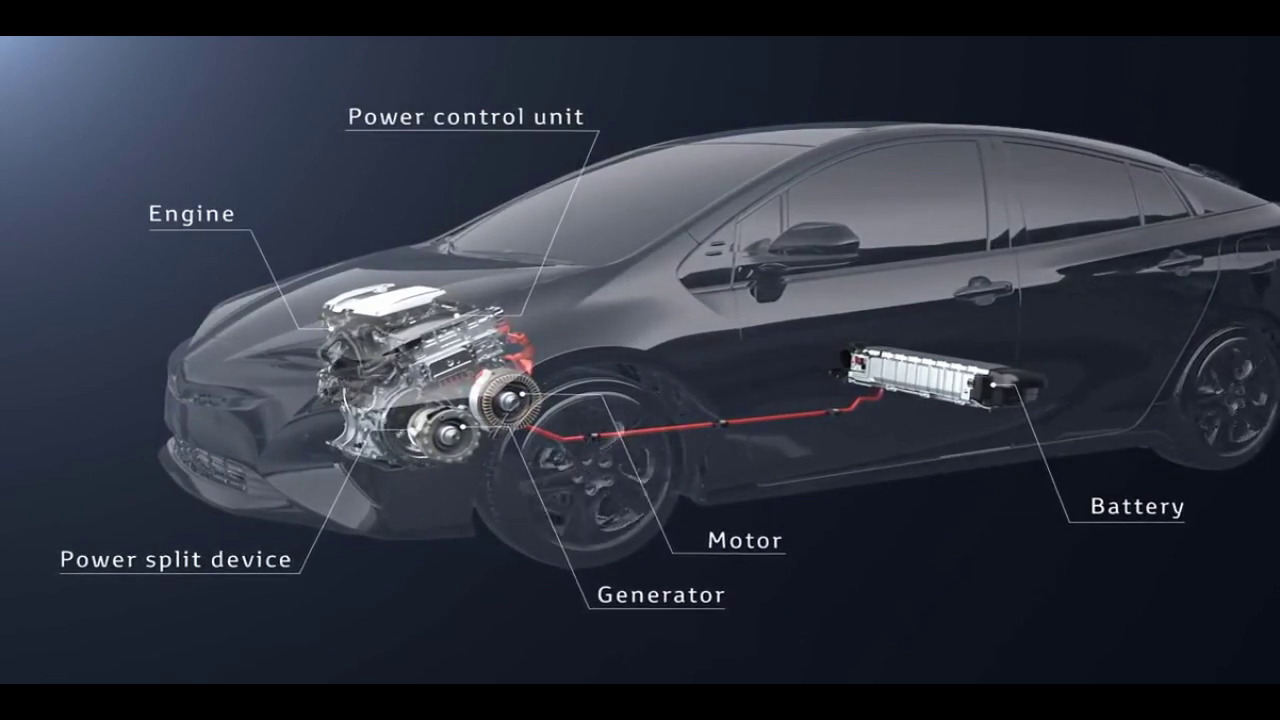
Rather than showing only an exterior vehicle view, the animation brings attention to internal powertrain assemblies and individual components, making the technical subject more tangible for learners.
3. Dedicated explanations of hybrid system components
A substantial part of the module focuses on individual components and their functions. The visible sequences include explanations of the engine, hybrid transaxle, motor-generator assembly, high-voltage battery, inverter and converter assembly, auxiliary battery, and power management control unit.
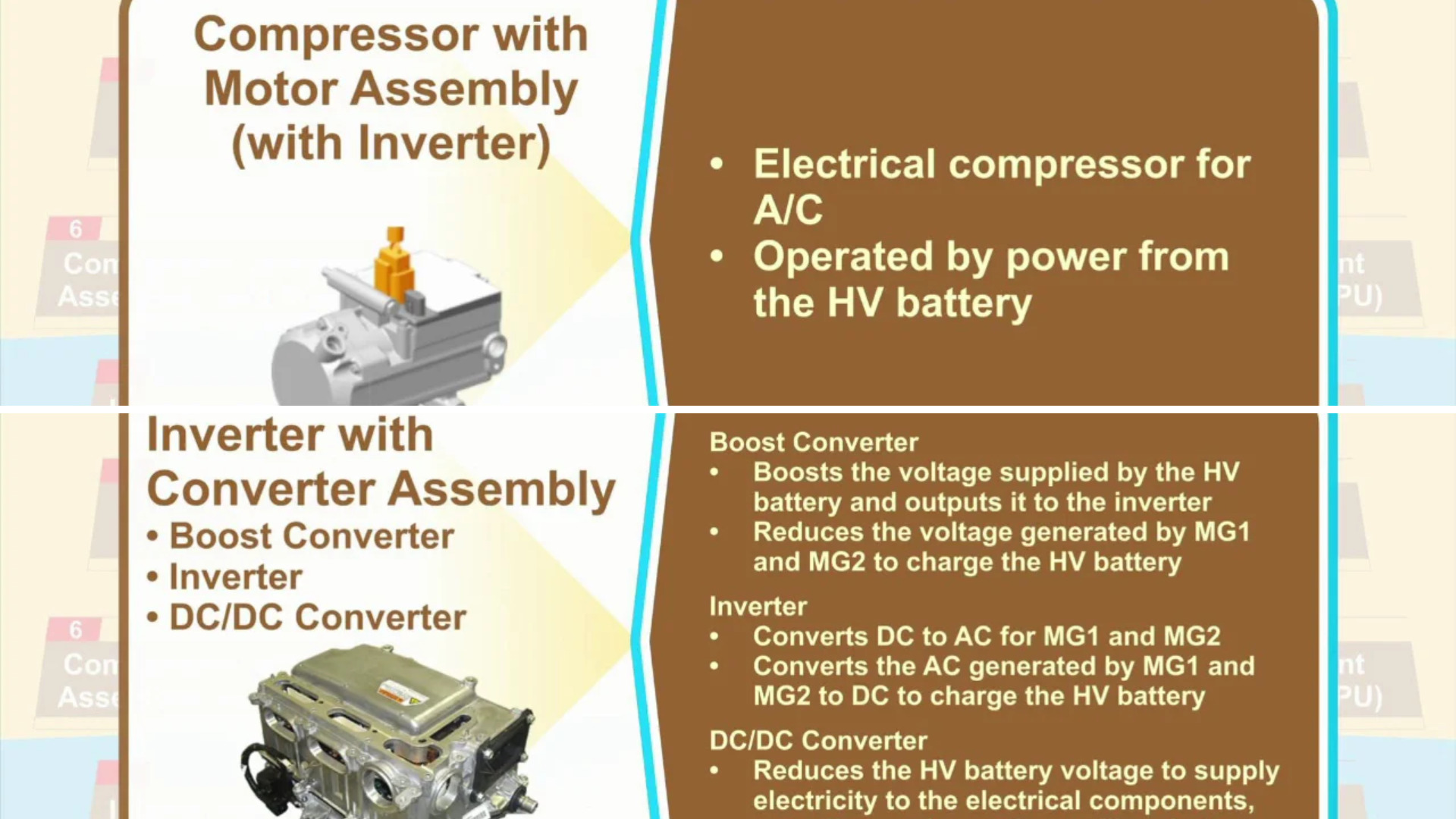
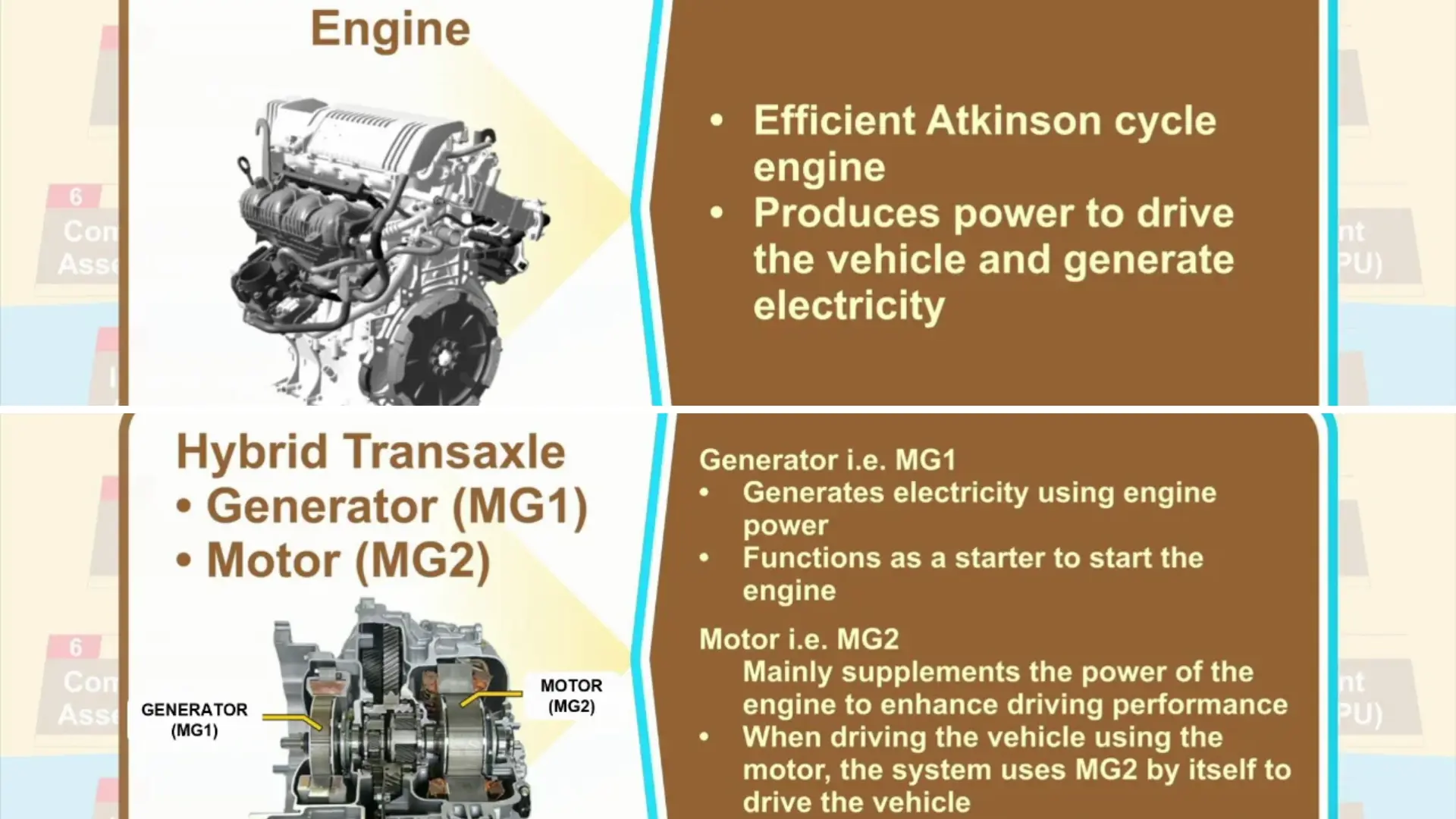
Presenting these components individually helps organize the technical material into smaller learning topics. The explanations also provide context for understanding how the components contribute to hybrid system operation.
4. Toyota Hybrid System overview
The module includes a section identified as the Toyota Hybrid System (THS), connecting individual component functions with broader vehicle operating principles.
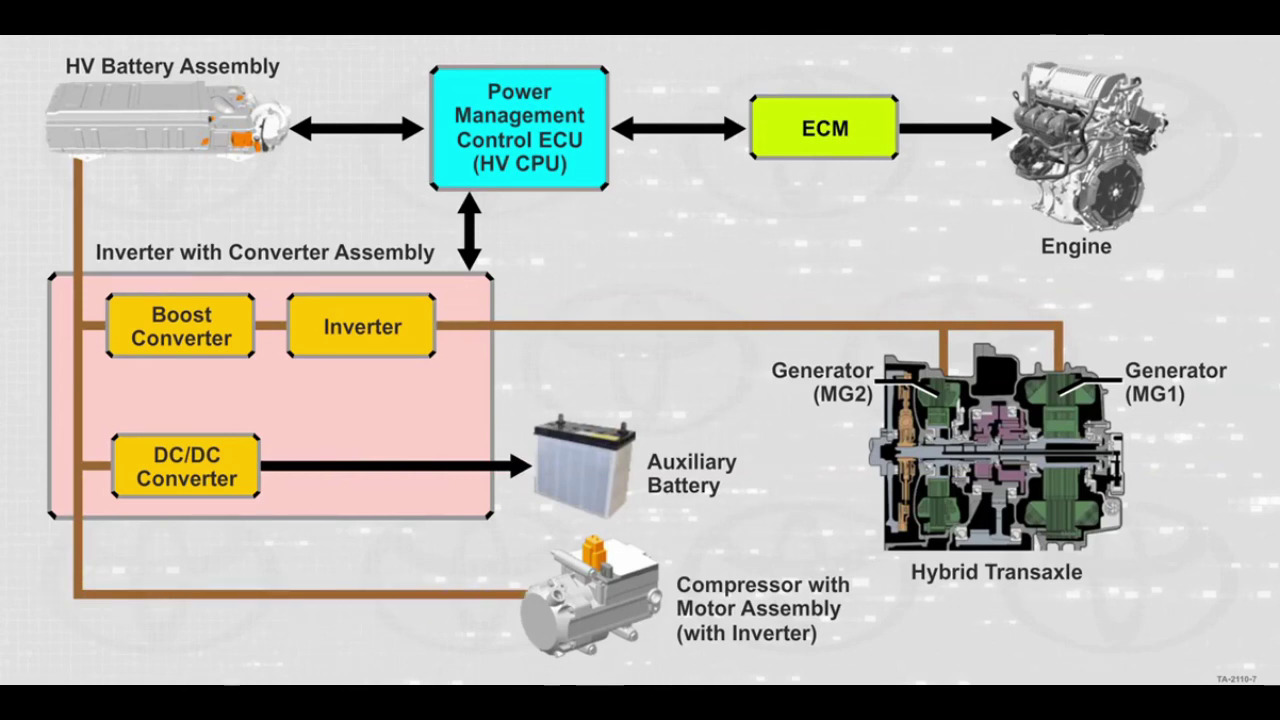
This section illustrates the importance of moving beyond isolated component descriptions. Learners also need to understand how the system manages propulsion, electrical energy, and the interaction between the engine and electric machines.
The inclusion of Toyota-related system material describes the subject matter visible in the video; it should not be interpreted as confirmation that Toyota commissioned the animation unless the project relationship is independently verified.
5. Driving modes and deceleration energy recovery
The closing sequences use 3D vehicle and powertrain visuals to illustrate operating situations, including stopping, low-speed running, and deceleration energy recovery.
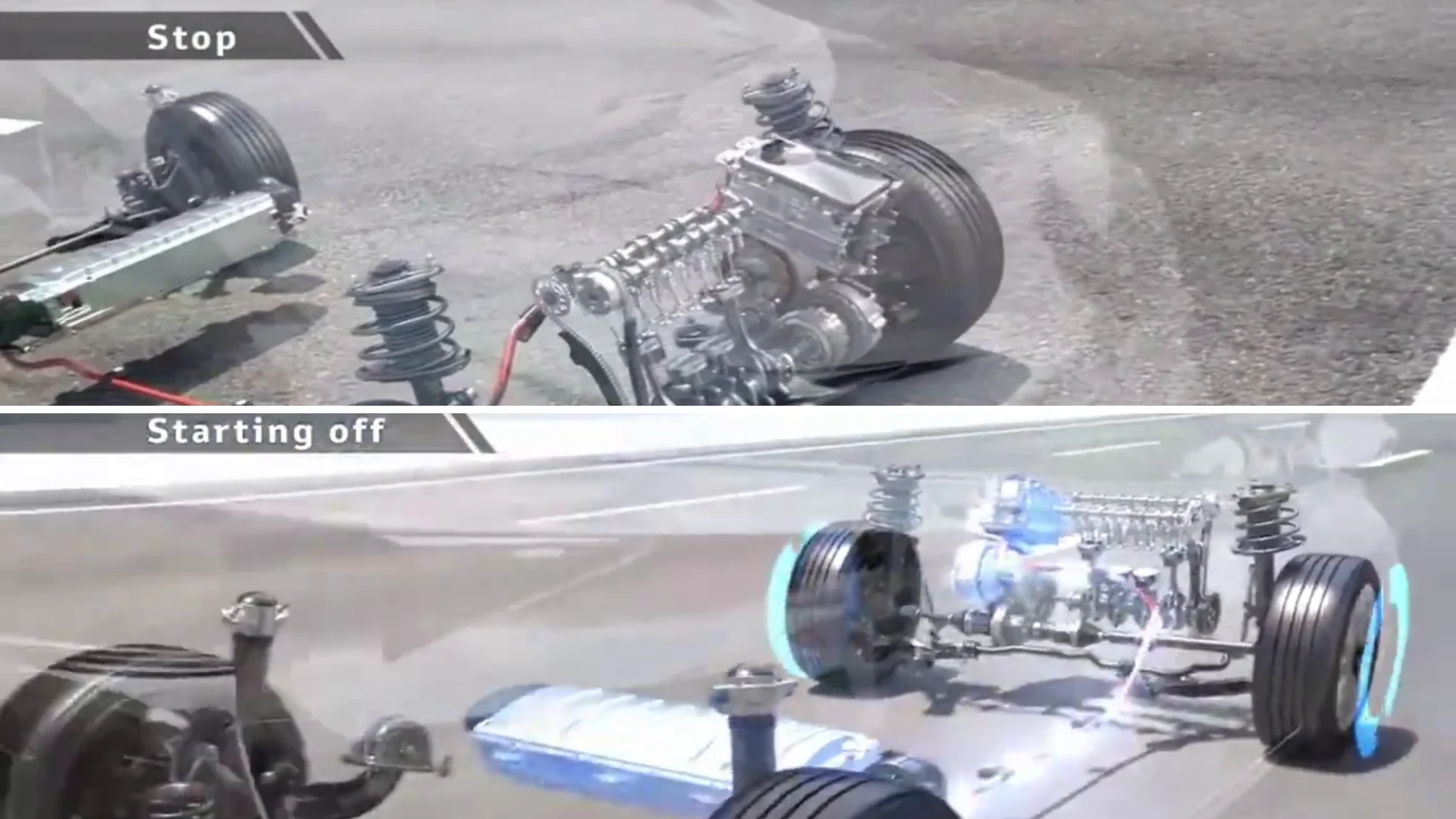
These examples connect the preceding component explanations with vehicle behaviour. They also provide a visual basis for discussing how the hybrid powertrain operates under different conditions and how regenerative braking can recover some kinetic energy during deceleration.
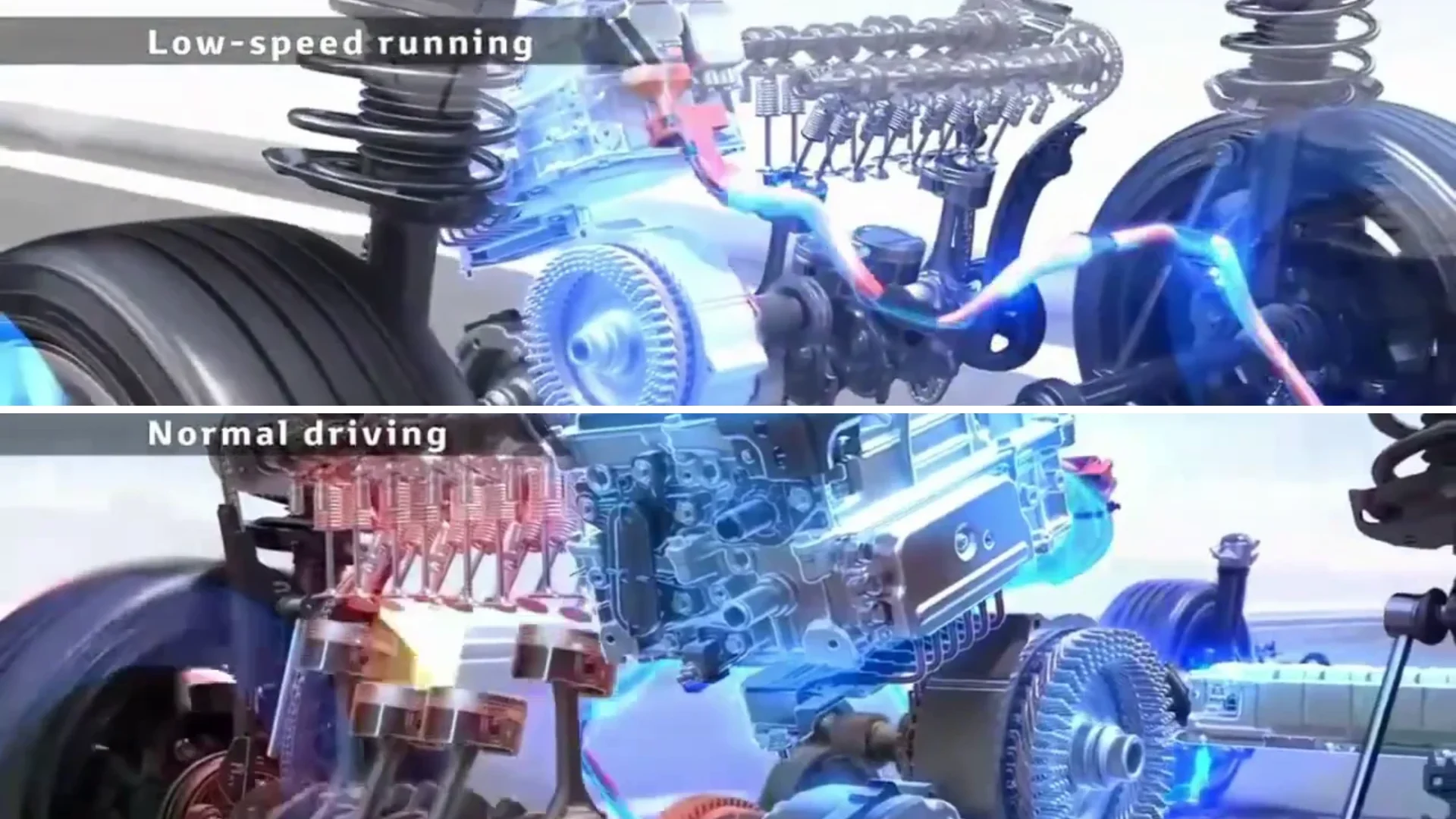
Together, these sequences demonstrate a learning approach that progresses from system fundamentals and component identification to practical operating concepts.
Project Evidence: What the Video Demonstrates
Video evidence | Visible content | Educational purpose |
Hybrid system diagrams | Engine, generator, battery, inverter, motor and power-flow relationships | Introduces hybrid powertrain architecture and energy flow |
3D vehicle visualization | Vehicle cutaway and internal mechanical assemblies | Connects internal components with the overall vehicle |
Component-focused sequences | Engine, hybrid transaxle, motor-generator, battery, inverter/converter and control unit | Identifies major components and explains their roles |
Hybrid system overview | Toyota Hybrid System terminology and system-level illustrations | Connects individual components with overall hybrid operation |
Driving-condition sequences | Stopping, low-speed running and deceleration energy recovery | Demonstrates how hybrid system principles relate to vehicle operation |
What is the Production Process for Automotive E-Learning Animation?
Let's see the typical Production Workflow to develop an effective hybrid vehicle training video which requires coordination between technical subject matter, instructional structure, and visual communication.
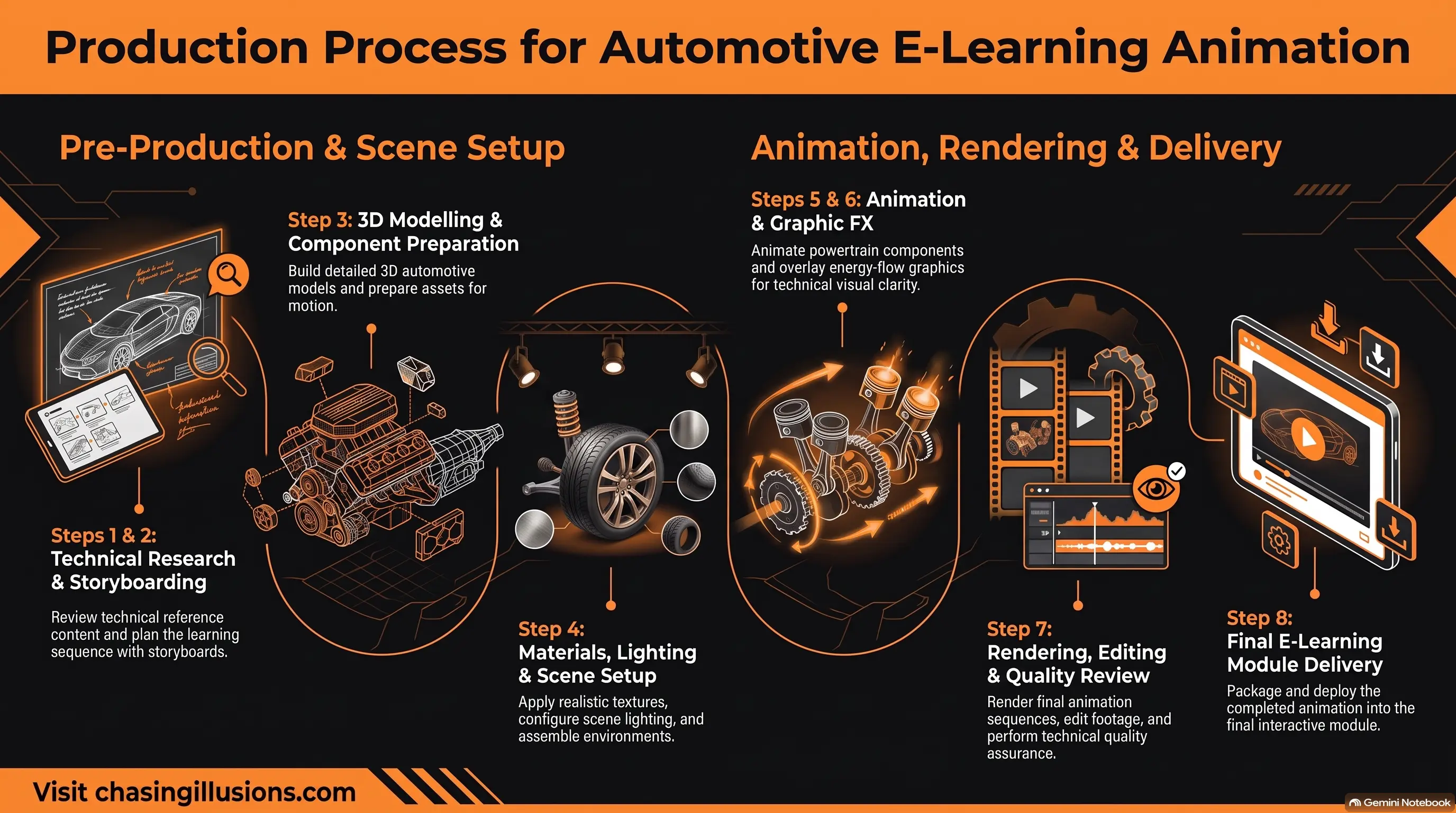
The following workflow describes how the automotive 3D animation process works for such type of project.
1. Technical reference and content review
We consulted the team and reviewed technical references, engineering diagrams, system descriptions, and training documentation—aligning the creative approach with the brand's vision and engineering strengths.
2. Learning sequence and storyboard planning
Next, we organized the technical information into a logical learning sequence and storyboarded into manageable sections—starting with fundamental concepts and progressing to component relationships and system-level operation.
3. 3D modelling and component preparation
We built 3D assets for the engine, electric motor, battery, inverter, transmission, and supporting components—calibrating detail level to each educational objective.
4. Materials, lighting, and scene setup
Materials, lighting, camera positions, and scene composition were set to keep key mechanical assemblies visually distinguishable across transitions from full-vehicle views to individual components.
5. Component and powertrain animation
Animation sequences demonstrated component relationships, movement, and power transmission—including component separation, assembly views, and transitions between system configurations, without introducing misleading engineering relationships.
6. Energy-flow visualization and explanatory graphics
Animated diagrams, directional indicators, and labels clarified how power moves through the hybrid system—distinguishing electrical paths (battery to motor) from mechanical paths through the drivetrain, with consistent visual conventions throughout.
7. Rendering, editing, and quality review
Next, we rendered the sequences and checked for visual clarity, terminology, component identification, animation continuity, and narration synchronization—then reviewed section by section with the marketing team's subject matter expert.
8. Final e-learning module delivery
Finally, delivered for the target platform (LMS, training portal, or video-based learning) at 1080p, 16:9 aspect ratio, English language, with subtitles and accessibility considerations.
Final Results and Demonstrated Capabilities:
The Hybrid Electric Vehicle E-Learning Animation Explainer Video demonstrated an educational treatment of hybrid vehicle technology, including introductory concepts, powertrain configurations, and explanations of component relationships.
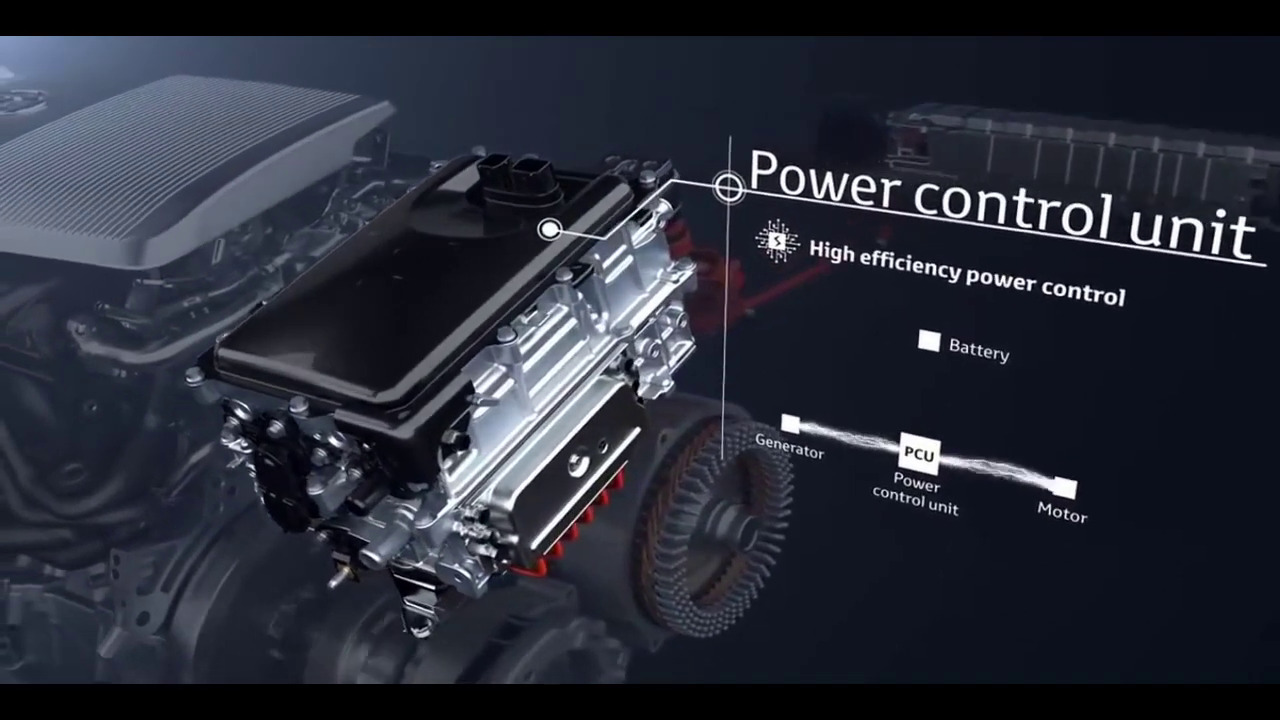
The completed video presents hybrid electric vehicle technology through a sequence of introductory explanations, powertrain diagrams, 3D vehicle visuals, component-focused sections, and driving-condition demonstrations.
The visible deliverable demonstrates the following:
System-level explanation: Diagrams illustrate the relationships between hybrid powertrain components and the movement of mechanical and electrical power.
Component identification: Dedicated sections cover major assemblies, including the engine, hybrid transaxle, motor-generator, battery, inverter/converter, auxiliary battery, and power management control unit.
3D technical visualization: Vehicle and component views connect system diagrams with recognizable mechanical assemblies.
Operating-principle demonstrations: The closing sequences illustrate stopping, low-speed running, and deceleration energy recovery.
Structured educational content: The approximately 13-minute, 37-second video progresses from introductory concepts to component functions and system operation.
Why Choose Chasing Illusions for a Hybrid Electric Vehicle E-Learning Animation Explainer Video?
Chasing Illusions Studio provides animation and video production services for businesses that need to communicate products, processes, and technical concepts visually. We specialize in transforming complex automotive engineering concepts into engaging, easy-to-understand 3D e-learning animations.
For the Hybrid Electric Vehicle E-Learning Animation Explainer Video, we used realistic 3D visuals to demonstrate the Hybrid System, powertrain components, energy flow, and different vehicle operating modes. By combining technical accuracy with structured visual storytelling, we helped automotive manufacturers, training institutes, and e-learning providers simplify complex concepts, improve learner understanding, and deliver effective technical education.
Conclusion:
The Hybrid Electric Vehicle E-Learning Animation case study illustrates how technical animation helped to present complex automotive concepts in a structured visual format.
Hybrid powertrains involve interconnected mechanical and electrical systems, making it important to explain not only what each component does but also how the components work together. Technical illustrations, component-focused visuals, and energy-flow explanations helped learners build a clearer understanding of these relationships.
For automotive manufacturers, engineering educators, technical training departments, and e-learning developers, 3D automotive animation offers a flexible approach to explaining vehicle technologies and supporting digital learning initiatives.
Frequently Asked Questions:
1. What is included in a hybrid electric vehicle e-learning animation project?
A hybrid electric vehicle e-learning animation project combines technical content with visual explanations to help learners understand hybrid powertrain architecture and vehicle operation. Depending on the project scope, deliverables may include 3D component visualization, powertrain diagrams, engine and electric motor interaction, hybrid system configurations, energy-flow explanations, narration, and educational graphics.
2. Can an automotive training animation be developed from engineering references?
Yes. Automotive training animation can be developed using approved engineering drawings, CAD models, component diagrams, technical documentation, and subject matter expert input. These references help establish component relationships, system configurations, and the intended operating principles before animation begins.
3. How do you verify technical accuracy in a hybrid powertrain animation?
Technical accuracy can be supported through approved engineering references, consistent component terminology, documented learning objectives, and reviews by qualified automotive subject matter experts. In a hybrid powertrain animation, the review should check the relationships between the internal combustion engine, electric motor, motor-generator, battery, inverter, and drivetrain. Energy-flow sequences and operating modes should also match the specific hybrid architecture being explained.
4. What determines the cost and production timeline of an automotive e-learning module?
The cost and production timeline of an automotive e-learning animation depend on various factors such as video duration, technical complexity, number of components, availability of CAD models, review cycles, delivery format, etc. A module explaining hybrid powertrain components through existing assets may require a different scope from one needing detailed 3D modelling and complex energy-flow sequences.
5. Can the finished animation be delivered for an LMS or internal training platform?
Yes. Automotive e-learning animations can be prepared for learning management systems (LMSs), internal training portals, digital classrooms, and other corporate learning environments. Delivery requirements depend on the platform and the intended learning experience.
6. What information should an OEM provide before commissioning a hybrid vehicle training animation?
An automotive OEM should provide the training objectives, intended audience, technical reference documents, approved component diagrams or CAD assets, relevant hybrid powertrain architecture, terminology requirements, and preferred delivery format. These inputs help the production team plan the content sequence, determine the required level of 3D detail, and establish a realistic scope for the hybrid electric vehicle e-learning animation.
Discuss Your Automotive E-Learning Animation Project
Need to explain hybrid powertrain technology, automotive components, or complex engineering processes through 3D animation?
Chasing Illusions Studio can discuss your requirements for automotive technical animation, engineering visualization, and e-learning explainer soltion.
Share your subject matter, training objectives, intended audience, and reference materials to explore a suitable production approach or get in touch with us on WhatsApp.
Chasing Illusions Studio
Premium animation & video production studio based in Delhi, India. Specialising in 3D animation, medical visualisation, architectural walkthroughs, and CGI.