Texas added over 475,000 new residents in 2025 — continuing its position as the fastest-growing large state in the country. New residential construction permits in Texas through Q1 2026 reflect that momentum: Austin posted a 29% increase year-over-year, even as Houston and Dallas saw some moderation as builders recalibrate to normalized inventory levels.
For developers and architects working in this market, the visualization decision is not whether to use professional 3D rendering — that question was settled years ago — but which studio is the right fit for a specific project type, metro, and timeline.
This list covers ten studios offering 3D rendering services relevant to the Texas market in 2026, all verified as real and active. Unlike the previous version of this page, none of the studios listed here are fabricated. Each entry covers what the studio actually does, who they are best suited to, and where their limits are. Before choosing based on this list alone, verify current portfolios and timelines directly — production availability and pricing change, and a studio that was right for a project six months ago may not be the right fit today.
One honest market note before the rankings: Texas inventory at the start of 2026 remained 13.7% above the prior year's levels, with over two-thirds of closed sales in late 2025 involving price cuts. This is a market with elevated supply pressure on sellers — which means visualization has to work harder to differentiate a development, not less. For the full picture on what drives visualization ROI and how to brief a project for maximum commercial impact, our ultimate guide to architectural walkthroughs covers the key decisions.
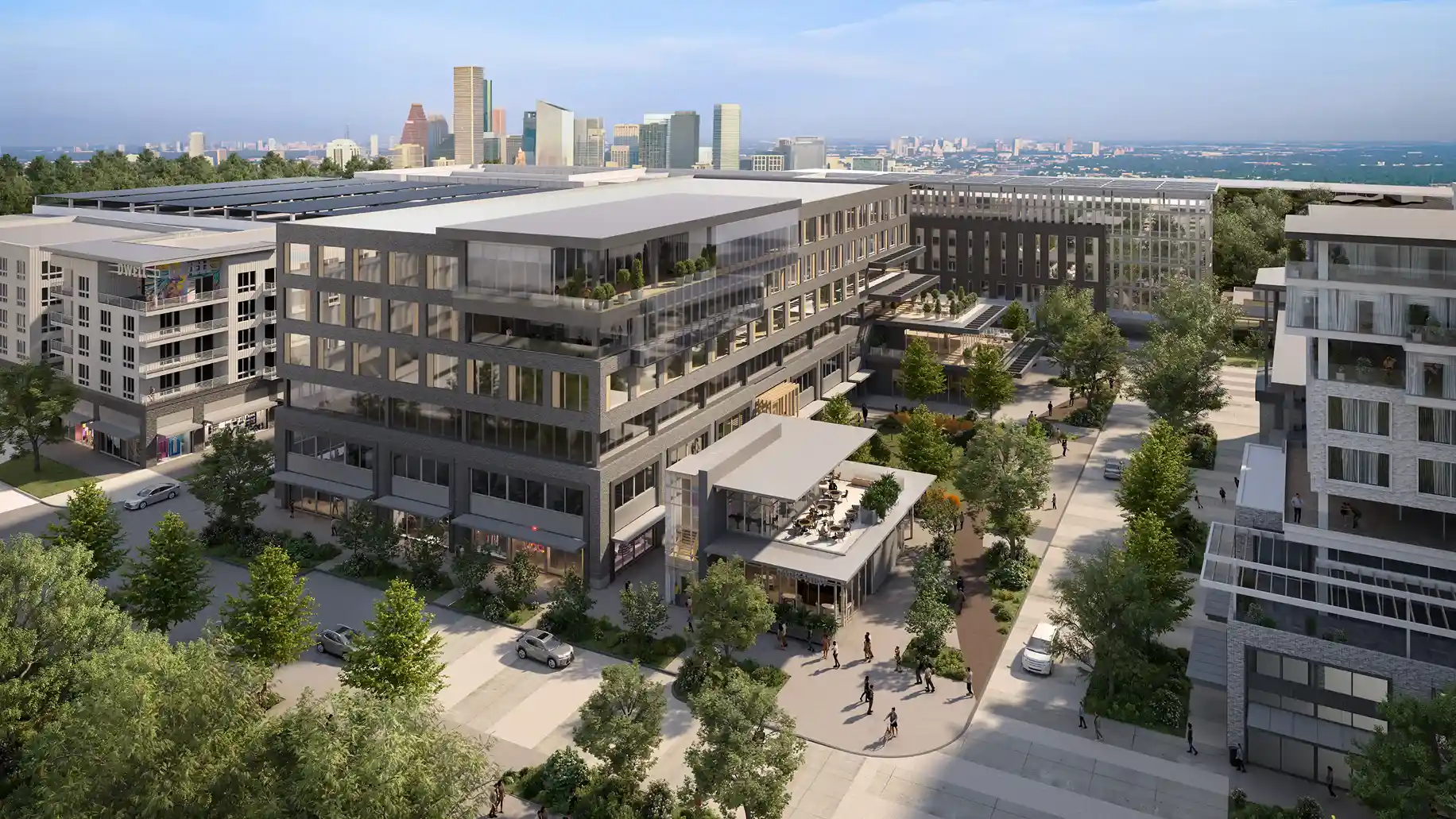
At-a-Glance Comparison
Studio | Base | Best For | Still From | Walkthrough From |
|---|---|---|---|---|
Chasing Illusions Studio | India (US clients) | Walkthroughs, animation, fast delivery | $1,500 | $5,000 |
NoTriangle Studio | Remote (US) | Multifamily, mixed-use, developer marketing | $1,200 | $6,000 |
Rendimension | Remote (US) | Pre-construction marketing CGI, developer campaigns | $1,000 | $5,500 |
RealSpace3D | North America | High volume, residential + commercial range | $800 | $4,500 |
3DHomeMedia | Texas (Austin/Houston/San Antonio) | Women-owned, full deliverable mix, local market | $900 | $5,000 |
Biorev | Irving, TX | Residential + commercial, cost-effective volume | $600 | $4,000 |
Arktek Studio | Fulshear, Houston TX | Houston-area architectural visualization | $700 | $4,500 |
Austin Visuals | Austin, TX | Rendering + animation + product 3D | $800 | $5,000 |
Gone Virtual Studios | Houston, TX | Animation + VR, 800+ projects | $900 | $5,500 |
A2 Visualization | Dallas, TX | Residential walkthroughs, Dallas market | $700 | $4,500 |
How to read the price columns: Still From is the entry-level starting price for a single photorealistic exterior or interior image. Walkthrough From is the starting price for a basic 60–90 second animated walkthrough. Both are indicative — actual project quotes depend on complexity, number of viewpoints, detail level, revision rounds, and timeline. For a full breakdown of what each price tier delivers, our guide to 3D architectural walkthrough pricing covers the US market in detail.
The Full List
1. Chasing Illusions Studio — Best for: animated walkthroughs, fast delivery, international and US developer marketing
An India-based studio with a documented track record across US, UK, and UAE development projects, specialising in 3D animation and architectural walkthrough production. The 24-hour production cycle is how the team sustains 10–14 day turnaround on walkthroughs that comparable US studios typically quote at 4–6 weeks — a meaningful advantage for developers working to pre-sales launch dates or investor presentation deadlines.
The Texas market creates specific visualization demands: developments targeting corporate relocations from California and the Northeast need to convey lifestyle value clearly to buyers who cannot visit in person, and master-planned communities need to show amenity quality and community feel as convincingly as they show unit layouts. Both of those briefs are well served by animated walkthrough production that emphasizes spatial storytelling rather than static renders. For the full picture on working with an offshore studio — time zones, brief quality, IP terms, revision process — our guide to working with offshore visualization studios covers every friction point honestly.
Where it fits best: pre-sales walkthrough animation, investor presentation materials, developer marketing for projects with an international or out-of-state buyer audience, and projects where turnaround time is a constraint. Where it fits less well: local Texas studio presence requirements, or projects that benefit from an in-person site visit and local architect relationship.
Starting price: $5,000 walkthrough | Timeline: 10–14 days standard | Contact: chasingillusions.com
2. NoTriangle Studio — Best for: multifamily, mixed-use, and master-planned community marketing
A fully remote US-based studio working with developers and architects across Austin, Houston, Dallas–Fort Worth, San Antonio, and statewide. Their positioning is explicitly around pre-construction developer marketing — not decoration, but visualization built to support planning submissions, investor decks, leasing strategies, and pre-sales launches. That framing reflects a useful clarity about what rendering is actually for.
NoTriangle covers the full Texas geography without a fixed local office, which works well for developers running multi-city portfolios or projects in markets between the major metros. Their client list spans multifamily and master-planned community work — the two categories that dominate new Texas construction volume.
Best for: Multifamily and mixed-use developers across multiple Texas metros; projects where planning and investor materials need to be as rigorous as marketing visuals.
3. Rendimension — Best for: pre-construction marketing CGI campaigns across Austin, Houston, Dallas, and San Antonio
A studio led by Hugo Ramirez, an international architect, producing photorealistic exterior and interior renders, commercial and luxury visuals for Texas pre-construction marketing. Rendimension publishes individual metro guides for Austin, Houston, Dallas, and San Antonio — which reflects genuine local market knowledge rather than generic "we serve Texas" positioning.
Their explicit focus on done-for-you marketing campaigns — delivering a finished set of exterior, interior, and marketing visuals as a coordinated package rather than individual renders — suits developers who want one studio to cover the full visual suite for a launch rather than briefing different vendors for different outputs.
Best for: Pre-construction marketing campaigns across all four major Texas metros; luxury and commercial visualization with architectural depth.
4. RealSpace3D — Best for: high-volume residential and commercial rendering at competitive rates
One of the larger North American rendering studios by project volume, with a broad range of residential, commercial, and mixed-use visualization work across the US including Texas. Their depth across 19-plus years and a wide range of project types makes them a reliable option for developers who need consistent quality across multiple phases of a scheme, or who need both residential and commercial renders from one studio.
The breadth means less specialization than studios focused purely on Texas or purely on one project type — but for developers running diversified portfolios across asset classes, that breadth is a practical advantage.
Best for: High-volume rendering across residential and commercial; multi-phase developments; developers who need one vendor covering multiple project types.
5. 3DHomeMedia — Best for: full deliverable mix from a Texas-based certified studio
A certified women-owned Texas studio with in-house architects, interior designers, graphic designers, and CG artists — an unusually complete in-house team for a regional studio. Active across Austin, Houston, and San Antonio, with an understanding of local architectural context that out-of-state studios have to work harder to replicate. Their deliverable range covers exterior renders, interior CGI, commercial visualizations, and walkthroughs from one integrated team.
The in-house team structure means a developer briefing 3DHomeMedia gets all visual outputs produced under one roof with design coordination between the rendering and interior design elements — which reduces the inconsistency that can emerge when exterior and interior visualization are briefed to different studios.
Best for: Texas-based developers who want a locally rooted studio; projects where interior design and exterior rendering need to be closely coordinated; diversity certification relevant procurement.
6. Biorev — Best for: cost-effective residential and commercial CGI in the Dallas–Fort Worth area
Headquartered in Irving, Texas, Biorev serves residential and commercial clients across DFW and statewide with exterior rendering, interior CGI, 3D floor plans, and virtual walkthroughs. Their positioning is explicitly around cost-effectiveness without compromising on deliverable quality — which reflects a DFW market where developer budgets across the residential range vary enormously between luxury high-rise and workforce housing.
Best for: DFW residential and commercial developers working across price points; projects needing multiple formats (stills, floor plans, walkthroughs) from one studio.
7. Arktek Studio — Best for: Houston-area architectural visualization
Based in Fulshear in the Houston metro area, Arktek serves architects and developers across the greater Houston market with architectural visualization. The local Houston base gives them direct familiarity with the market's specific architectural vocabulary — the Gulf Coast palettes, energy corridor commercial design language, and the scale of Houston's mixed-use development pipeline.
Best for: Houston-area architects and developers wanting a locally-based studio with specific Houston market knowledge; residential and commercial visualization.
8. Austin Visuals — Best for: rendering combined with animation and product 3D from one Austin studio
An Austin-based studio producing architectural rendering alongside animation and product 3D visualization — a broader capability set than studios focused purely on architectural CGI. The combination is useful for tech-sector and mixed-use Austin projects where product visualization, brand animation, and architectural renders are often needed as part of the same launch campaign.
Best for: Austin tech campuses, mixed-use developments, and clients who need architectural visualization alongside product or brand animation from one vendor.
9. Gone Virtual Studios — Best for: animation and VR with a deep Houston project history
A Houston-based studio with 800-plus projects and 20-plus years of visualization, animation, and virtual tour production. That depth of Texas project history translates into genuine familiarity with Houston's development patterns, buyer expectations, and the specific staging decisions that work for Gulf Coast residential marketing.
The VR tour capability — letting buyers explore a development interactively via a browser link without specialist hardware — is increasingly relevant for Houston's significant international and out-of-state investor buyer pool.
Best for: Houston-area developers wanting VR tour capability; projects targeting international or out-of-state buyers who cannot visit in person; clients who want a long-established local studio relationship.
10. A2 Visualization — Best for: residential walkthroughs in the Dallas–Uptown market
A Dallas-based studio serving the Uptown Dallas and wider DFW residential market, covering 3D rendering walkthroughs, visualization, and residential CGI. Their positioning in the Uptown submarket reflects specific familiarity with the design language and buyer expectations of Dallas luxury residential — useful for developers positioning above the standard suburban spec.
Best for: Dallas luxury residential developers; Uptown and inner-ring Dallas submarket projects.
The Texas Market Context That Shapes Every Rendering Brief
Understanding what the Texas market actually looks like in 2026 matters for how you brief a rendering project — because the same development that would be easy to sell off-plan in 2021 is operating in a different competitive environment today.
Texas residential construction rebounded in 2024 and has continued upward, with 41,586 new permits issued through the first half of 2025 alone — a 4% increase year-over-year. But inventory at the start of 2026 remained 13.7% above the prior year across the state, and two-thirds of closed sales in late 2025 involved price cuts. Houston and Dallas ranked among the top US metros for new construction activity through 2024 and into 2025, which means the supply pipeline remains strong even as demand normalizes.
This matters for visualization because it defines the competitive context. A development launching into a market with 13 months of competing inventory needs visualization that creates genuine emotional preference — not just a competent render that looks like every other development on the same listing page. The studios on this list that understand this brief the best are the ones whose work is built around commercial outcomes rather than visual craft for its own sake.
The metro-level variation is also significant. Austin posted a 29% increase in Q1 2026 permits — the only major Texas metro showing year-over-year growth in early 2026, suggesting renewed momentum. Houston's market is larger by volume but showing some moderation. Dallas recorded a 25% decrease in Q1 2026 versus the prior year — a recalibration as builders adjust to inventory normalization. San Antonio remains the smallest volume market among the four metros.
How to Choose the Right Studio for Your Texas Project
Match the studio to your project type, not your metro. A studio that has produced excellent luxury Houston high-rise visualizations is not automatically equipped to render a Hill Country estate development with a completely different architectural language, buyer psychology, and staging requirement. Ask for portfolio examples specifically matching your project type — not the studio's best work overall.
Distinguish marketing renders from planning renders. Texas planning processes vary considerably by municipality — Austin's development review process is different from Houston's (which has no traditional zoning), and both are different from DFW suburban municipality permitting. If your rendering has to do specific work in a planning or entitlement context, ask which studios have produced visualization specifically for that type of submission.
Turnaround matters when your launch date is fixed. In a market where competing developments are launching continuously, a pre-sales campaign that slips six weeks because the visualization wasn't delivered on time has a real cost. Get a specific delivery commitment — not an estimate — before signing. Studios with offshore production (Chasing Illusions) and those with larger in-house teams (RealSpace3D, 3DHomeMedia) tend to have more reliable timeline commitments than smaller single-studio operations.
Verify that the brief includes what you actually need. An animated walkthrough for a pre-sales website has different technical requirements than one for an investor presentation or a sales center display wall. Format, resolution, file type, and whether you need social media cuts all need to be specified before production starts — not discovered as add-ons after the base fee is agreed.
US Pricing Context for Texas Projects in 2026
Texas rendering prices broadly track the US national market, with some variation by metro — Austin and Houston luxury work commands a modest premium over suburban residential. For a full breakdown of what each price tier delivers in practice — what changes between a $5,000 brief and a $25,000 brief, what drives the cost of a walkthrough versus a still, and what questions to ask before signing — our architectural walkthrough pricing guide covers the US market comprehensively.
The short version for Texas:
Output Type | Typical US Range |
|---|---|
Single exterior still | $500–$3,000 |
Interior render (per room) | $400–$2,500 |
Animated walkthrough (60–90 sec) | $5,000–$15,000 |
Full cinematic walkthrough | $12,000–$28,000 |
Interactive / VR experience | $15,000–$35,000+ |
Studios with offshore production (Chasing Illusions) consistently deliver toward the lower end of these ranges without a proportional reduction in output quality — the difference is operating cost, not ceiling. Studios with in-house Texas teams (3DHomeMedia, Biorev, Arktek) add local market knowledge and easier real-time communication; whether that premium is worth paying depends on whether your project specifically benefits from in-person collaboration.
FAQs:
What should I look for in a Texas 3D rendering studio?
Texas project specificity first — ask for portfolio examples that match your project type (luxury condo, master-planned community, commercial mixed-use) and your metro. Generic renders that could be anywhere don't demonstrate the local market understanding that differentiates good Texas visualization from technically competent work that misses buyer expectations.
How long does 3D rendering take for a Texas project?
Static exterior or interior renders: 1–2 weeks from most studios. Animated walkthroughs: 3–5 weeks from US-based studios, 10–14 days from studios with offshore production. Full VR experiences: 5–8 weeks. Rush delivery is available from most studios at a 20–35% premium.
Is it better to use a Texas-based studio or a remote studio?
For most rendering briefs, the location of the studio matters less than the quality of the output and the reliability of the timeline. The exception is projects where in-person site visits, local planning authority relationships, or real-time collaboration with a Texas-based architecture team are genuinely part of the brief. For standard pre-sales marketing visualization, remote studios — including offshore — consistently deliver comparable output at lower cost.
What formats should a Texas rendering package include?
At minimum: high-resolution stills for print and web, web-optimized video for listing pages and social, and source files you own. For developments targeting digital-first marketing: social media-optimized cuts (vertical for Instagram/TikTok), VR-compatible formats if a sales center or virtual showroom is planned, and platform-specific versions for major real estate listing sites. Specify all of these before signing — they are frequently add-ons if not included upfront.
What's the difference between a 3D rendering and a walkthrough?
A 3D rendering is a single photorealistic still image. A walkthrough is a video or interactive experience that moves through the building in sequence — showing how spaces connect, how light changes through the day, how the development relates to its surroundings. For when each format is appropriate and what each adds commercially, our ultimate guide to architectural walkthroughs covers both in full.
Book a discovery 20-minutes strategy call.
📞 +91-9910911696 | +91-9910660851
📩 info [@] chasingillusions [.] in
Written by Deepak, Content Strategist at Chasing Illusions Studio, who leads content for clients including Ambler Surgical, Practo, Bayer, SMT, Novartis, and 100+ brands across India, USA, Thailand, and the UK.
Last Updated: Aug 05 2026 | Chasing Illusions Studio
Chasing Illusions Studio
Premium animation & video production studio based in Delhi, India. Specialising in 3D animation, medical visualisation, architectural walkthroughs, and CGI.