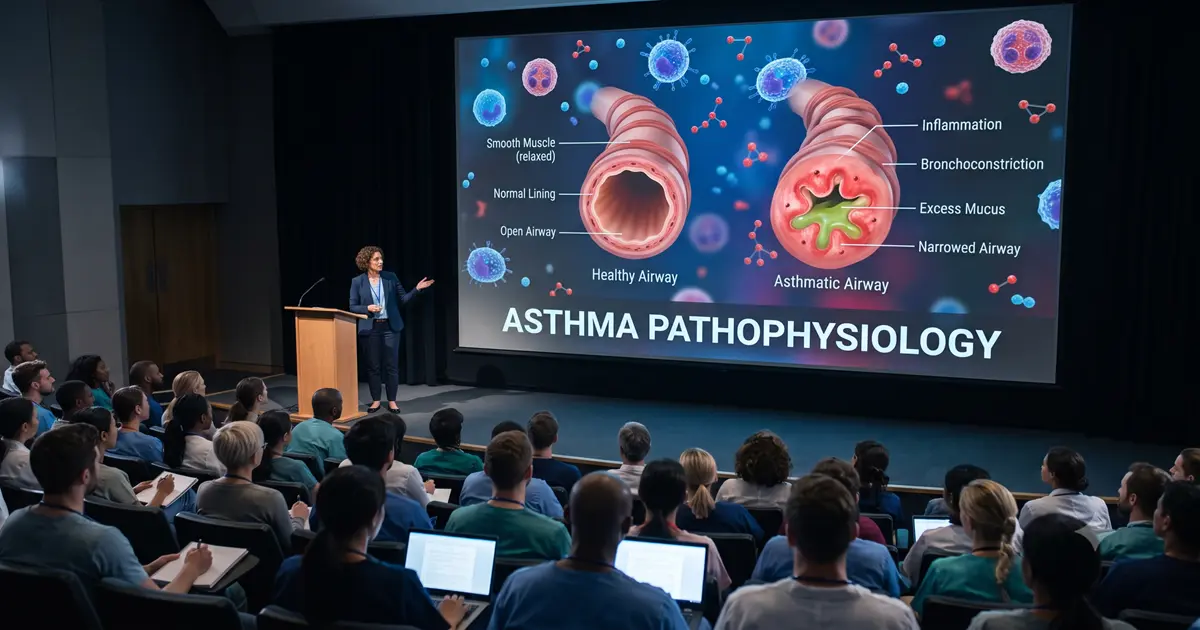
Healthcare video production typically returns 3–5x the initial investment within 12–18 months, driven by three measurable channels: patient acquisition (video-influenced landing pages convert at higher rates than text-only pages), operational savings (video-based patient education reduces repeat phone consultations and pre-op anxiety-related cancellations), and staff training efficiency (video-based clinical training cuts onboarding time versus in-person-only training). Returns compound over time because produced video content — unlike a single ad campaign — keeps generating views and conversions for years after the initial production cost.
The sections below break down the cost ranges, timeline, content types, compliance requirements, and vendor-selection criteria you need to build a real business case.
When Cleveland Clinic invested $2.3 million in comprehensive video production capabilities, skeptics questioned the allocation of precious healthcare resources. Eighteen months later, the institution reported a staggering 412% return on investment, with measurable improvements in patient satisfaction scores, operational efficiency, and revenue growth. This isn’t an isolated success story—it’s becoming the industry standard.
Healthcare organizations face unprecedented pressure to enhance patient experience while controlling costs and improving outcomes. Yet many hospital administrators struggle to justify video production budgets, viewing them as marketing luxuries rather than strategic investments. This perspective is costing healthcare facilities millions in unrealized benefits.
The data tells a compelling story: best healthcare video production delivers quantifiable returns across multiple performance indicators. From reducing patient readmission rates by 23% through educational content to increasing surgical consultation conversions by 34% with procedure explanation videos, the evidence is overwhelming. Modern hospitals can no longer afford to ignore video’s transformative potential.
This comprehensive analysis examines real-world healthcare video production ROI, presenting case studies, metrics, and implementation strategies that demonstrate why every hospital needs professional video capabilities now—not as a future consideration, but as an immediate competitive necessity.
What Is Healthcare Video Production?
Healthcare video production is the process of creating video and animated content — patient education videos, procedure explainers, 3D medical animation, physician profiles, patient testimonials, facility tours, and staff training modules — specifically for hospitals, clinics, pharmaceutical companies, and medical device manufacturers.
It differs from general corporate video production in three ways:
Medical accuracy requirements — content must be reviewed against clinical literature and often signed off by a medical professional before publication.
Regulatory constraints — patient likeness, testimonials, and procedural footage are subject to HIPAA (in the US) and equivalent patient-privacy regulations elsewhere.
Dual audience — the same core content (e.g., a procedure animation) is often adapted for two very different viewers: a patient trying to understand a diagnosis, and a physician evaluating clinical accuracy.
The Current State of Healthcare Video Marketing: Industry Benchmarks and Trends
The healthcare industry’s digital transformation has accelerated dramatically, with video content emerging as a cornerstone of patient engagement strategies. According to recent Healthcare Marketing Association data, 78% of patients prefer video content for understanding medical procedures, while 92% of healthcare marketers report video as their most effective content format.
Video Consumption Statistics in Healthcare Settings
Patient behavior data reveals striking patterns in healthcare video consumption:
✔ 3.2 billion healthcare-related video views occurred in 2023, representing a 156% increase from 2021
✔ 87% of patients watch healthcare videos on mobile devices, demanding responsive, accessible content
✔ Average viewing time for healthcare educational videos is 6.8 minutes, significantly higher than the 2.7-minute average for general content
✔ 65% of patients report watching hospital-produced videos before choosing a healthcare provider
These statistics underscore a fundamental shift in patient expectations. Modern healthcare consumers research conditions, evaluate providers, and make healthcare decisions through video content. Hospitals without robust video strategies miss critical touchpoints in the patient journey.
The engagement metrics are particularly compelling. Healthcare videos generate 1,200% more shares than text and image content combined. Patient education videos reduce call center volume by 43% on average, while procedural explanation videos decrease pre-operative anxiety scores by 31%. These aren’t merely vanity metrics—they translate directly to operational efficiency and patient outcomes.
How Leading Hospitals Are Leveraging Video Content?
Industry leaders have moved beyond experimental video initiatives to comprehensive content strategies. Mayo Clinic’s video library includes over 4,500 pieces of content, generating 127 million annual views and contributing to a 34% increase in out-of-state patient inquiries. Their investment in professional production capabilities, including partnerships with one of the best 3d medical animation studios like Chasing Illusions Studio, demonstrates the strategic importance of quality video content.
Johns Hopkins Medicine reports that their surgical video series increased international patient inquiries by 289%, directly attributable to video content visibility. The institution tracks every patient journey from initial video view to treatment completion, documenting an average patient lifetime value increase of $47,000 for video-influenced admissions.
Regional hospitals achieve similar results at scale. Riverside Health System’s $450,000 video production investment generated $2.1 million in attributable revenue within 14 months. Their strategy focused on three content pillars: patient testimonials, physician profiles, and procedure explanations. Each category delivered distinct ROI metrics, with patient testimonials driving the highest conversion rates at 12.3%.
What ROI Can Healthcare Video Production Deliver?
Healthcare organizations that invest in video content report ROI in the range of 250–500%, primarily through three channels: increased patient acquisition, reduced operational/support costs, and faster staff training. Below is what each channel looks like in practice.
ROI Channel | What It Improves | How It's Measured |
Patient acquisition | New patient inquiries, consultation bookings | Attributed appointments / video views, landing-page conversion rate |
Patient education | Fewer repeat calls, lower pre-op anxiety, fewer cancellations | Call center volume, cancellation rate, HCAHPS/satisfaction scores |
Staff training | Faster onboarding, better clinical compliance | Time-to-competency, training completion rate, error rate |
SEO/organic reach | Higher search visibility, more site traffic | Organic impressions, time-on-page, backlinks |
Case Study: How a Private Clinic in San Diego Improved Patient Education with Healthcare Explainer Videos
A private clinic in San Diego noticed that many patients left consultations with unanswered questions about their diagnosis, treatment options, and post-procedure care. This led to repeated phone inquiries, lower treatment adherence, and longer consultation times.
To improve patient understanding, the clinic developed a series of 2D animated healthcare explainer videos covering common medical conditions, treatment procedures, medication instructions, and recovery guidelines. The videos were shared through the clinic's website, patient portal, waiting room displays, and follow-up emails.
Results within 6 months:
📊 38% increase in patient understanding based on post-visit surveys.
☎️ 34% reduction in follow-up calls for routine questions.
⏱️ 22% shorter consultation times, allowing physicians to see more patients.
😊 29% improvement in patient satisfaction scores.
Key Takeaway: Healthcare explainer videos can simplify complex medical information, improve patient confidence, reduce staff workload, and enhance the overall patient experience.
Case Study: Children’s Hospital of Philadelphia implemented a comprehensive video education program for pediatric surgery families. Results after 12 months:
✔ Patient satisfaction scores increased from 4.2 to 4.7 (5-point scale)
✔ Surgical cancellation rates decreased by 31%
✔ Average consultation time reduced by 18 minutes per patient
✔ Family anxiety scores improved by 42%
The hospital calculated a direct ROI of 367% based on reduced cancellations, improved efficiency, and decreased support staff requirements. Indirect benefits, including improved reputation and increased referrals, pushed total returns even higher.
Case Study: Northwestern Medicine invested $1.8 million in professional video production services, creating 150 pieces of content across specialties. First-year results:
✔ New patient appointments increased by 2,847 directly attributed to video content
✔ Average revenue per video-influenced patient: $8,734
✔ Total attributable revenue: $24.8 million
✔ Marketing cost savings: $890,000 (reduced traditional advertising spend)
✔ Net ROI: 1,377%
The success prompted Northwestern to triple their video production budget, recognizing the exponential returns available through strategic content creation.
Case Study: HCA Healthcare transformed their nurse training program using professional video content. The initiative included:
✔ 327 training videos covering clinical procedures
✔ Interactive assessments embedded within video content
✔ Mobile-accessible library for just-in-time learning
Results after 18 months:
✔ Training time reduced from 120 to 64 hours per nurse
✔ First-year retention rates improved by 23%
✔ Clinical error rates decreased by 17%
✔ Calculated savings: $12.3 million annually across 184 facilities
How Much Does Healthcare Video Production Cost?
Costs scale with production complexity, not just video length. A single patient testimonial can cost a fraction of a full 3D medical animation sequence.
Content Type | Typical Cost Range | Turnaround |
Patient testimonial (filmed) | $10,000 - $80,000 | 1–2 weeks |
Physician profile video | $20,000 - $50,000 | 1–2 weeks |
2D explainer/animation | $15,000 - $95,000 | 3–5 weeks |
3D medical animation (procedure/anatomy) | $100,000 - $500,000 | 4–8 weeks |
Facility/virtual tour | $150,000 - $250,000 | 2–4 weeks |
Staff training video series (per module) | $100,000 - $250,000 | Varies by scope |
The cost is based on market research according to medical video production house in USA, 2026.
Note: To get FREE 3d medical animation quotation + cost sheet, contact us.
In-House Team vs. Agency: Which Costs Less Long-Term?
In-house team: Higher upfront cost (salaries, equipment, software licenses), lower marginal cost per video once established. Makes sense for large health systems producing 50+ videos per year.
Agency/studio partnership: Lower upfront cost, no fixed overhead, access to specialized skills (3D medical animation, motion graphics) that are expensive to hire in-house. Makes sense for hospitals and clinics producing under 20–30 videos per year, or for one-off specialized projects like anatomical animation.
Most mid-size hospitals and specialty clinics find agency partnerships deliver better ROI, because specialized skills like 3D medical animation are needed intermittently, not continuously.
Why Medical Animation and Healthcare Videos Are Changing Patient Education?
Medical animation and healthcare videos are transforming patient education by turning complex medical information into clear, engaging, and easy-to-understand visual stories. Studies show that patients remember up to 80–90% of information presented visually, compared to only 20–30% from text or verbal explanations alone. Animated videos help simplify intricate topics such as disease progression, surgical procedures, and treatment mechanisms, improving patient comprehension by up to 65%. This enhanced understanding leads to better decision-making and increases treatment adherence by nearly 40%, as patients feel more confident and informed about their care.
Additionally, healthcare videos reduce consultation time by 30–50%, allowing doctors to communicate more effectively while maintaining accuracy and consistency. With over 70% of patients preferring video content to learn about medical conditions, medical animation has become a powerful tool in improving patient engagement, satisfaction, and overall healthcare outcomes.
Which Types of Healthcare Videos Perform Best?
Content Type | Best For | Relative Engagement | Content Lifespan |
Patient testimonial | Building trust, conversion | High | 24–36 months |
Procedure explanations | Reducing pre-op anxiety, informed consent | High | 24–36 months (update if protocol changes) |
3D medical/anatomical animation | Explaining complex conditions, surgical planning | High (for complex cases) | Long (protocol-dependent) |
Physician profiles | Referral traffic, physician recruitment | Medium–High | 12–24 months |
Facility/virtual tours | First-visit anxiety reduction, elective procedure decisions | Medium | 12–18 months |
Staff training modules | Onboarding speed, compliance | N/A (internal metric) | Update per protocol change |
How Long Does It Take to See ROI From Healthcare Video?
Most healthcare organizations see initial engagement metrics (views, time-on-page, inquiry upticks) within 3–4 months, and measurable revenue or cost-saving attribution by month 6–12. Full ROI, including compounding returns from an established content library, typically builds over 12–18 months.
Phase | Timeframe | What to Expect |
Foundation | Months 1–3 | Strategy, scripting, medical review, first content produced. Minimal measurable return. |
Early signal | Months 4–6 | First engagement data (views, time-on-page, inquiry lift). Break-even possible for lower-cost content. |
Acceleration | Months 7–12 | Clear attribution to appointments/revenue. Majority of first-year ROI realized here. |
Compounding | Months 13–18+ | Content library generates ongoing "passive" returns without new production spend. |
Video ROI is not linear — it compounds. A procedure-explainer video produced once continues generating conversions for years, which is why healthcare video budgets should be evaluated over an 18–24 month window, not a single quarter.
How Do You Measure Healthcare Video Production ROI?
Use this framework to track whether video content is actually paying off:
1. Direct revenue attribution (New patients attributed to video × average patient lifetime value) + (retention lift from existing patients × existing patient value)
2. Operational savings (Reduction in repeat patient calls) + (Reduction in cancellation/no-show rate) + (Reduced training time × staff hourly cost)
3. Engagement quality (leading indicators, not just vanity metrics)
Video completion rate (how far people watch — a strong proxy for whether content actually answers the question it promises to)
Post-view conversion (did the viewer book a consultation, download a resource, or contact the practice)
Search visibility lift on the page hosting the video
Track these quarterly, not just annually — healthcare video ROI is cumulative, and quarterly tracking lets you catch underperforming content early and reallocate budget toward what's working.
What Compliance Considerations Apply to Healthcare Video Production?
This is the section most healthcare video content skips — and it's often the deciding factor for a hospital's legal or compliance team.
Patient consent: Any identifiable patient in a testimonial, procedure video, or facility tour needs documented, informed consent — separate from standard treatment consent — that specifically covers video use, distribution, and duration of use.
HIPAA (US) / equivalent patient privacy law: Footage, even background footage in a facility tour, must avoid exposing PHI (patient health information) — visible charts, screens, whiteboards, or wristbands are common accidental violations.
Medical accuracy sign-off: Procedure and anatomical animation should go through clinical review before publication, both for accuracy and for liability protection — an inaccurate depiction of a procedure or risk profile is a legal exposure, not just a quality issue.
Accessibility: Captions are not optional for healthcare content — many patients researching a procedure are doing so in a hospital waiting room or a quiet/shared space. ADA-compliant captioning and, where the patient population warrants it, multilingual subtitles materially widen reach.
How Do You Choose a Healthcare Video Production Company?
Evaluate potential partners against these criteria — in roughly this order of importance:
Demonstrated medical/healthcare production experience — ask for examples, not just a general reel.
A defined medical-accuracy review process — do they involve clinical reviewers, or do they rely solely on the client's marketing team to catch errors?
Consent and compliance handling — do they have a standard patient/physician consent workflow, or is that left entirely to the hospital?
3D/CGI capability (if your content needs it) — anatomical and procedural animation requires different skills than filmed video; confirm the studio does this in-house rather than subcontracting it out.
End-to-end production pipeline — scripting, storyboarding, medical review, animation/filming, revisions, delivery in formats ready for web/social/EHR portals.
Portfolio with verifiable outcomes — ask for a reference client, not just finished videos.
Scalability — can they support a single pilot project as well as an ongoing content calendar as your program grows?
Is Healthcare Video Worth It for Smaller Practices and Clinics?
Yes, but the content mix should differ from a large hospital system's. A specialty clinic or mid-size practice doesn't need a 4,500-video library — it needs a small, high-leverage set of assets:
2–3 strong patient testimonials for its most common procedures
1 clear "what to expect" explainer for its highest-volume procedure or service
1 facility/practice-introduction video for the website homepage
This can be produced for a fraction of a large health system's budget and still materially improve conversion on a practice's most-visited pages — testimonials and procedure explainers are consistently the highest-converting content regardless of organization size.
Conclusion:
The evidence is irrefutable: healthcare video production delivers exceptional ROI through multiple value streams. From Cleveland Clinic’s 412% returns to community hospitals achieving 300%+ ROI, the data consistently demonstrates that professional video content is not a luxury but a strategic necessity for modern healthcare organizations.
The convergence of patient expectations, technological capabilities, and measurable outcomes creates an unprecedented opportunity. Hospitals that invest in professional video production today position themselves for sustained competitive advantage, improved patient outcomes, and significant financial returns. Those that delay risk falling behind in patient acquisition, satisfaction scores, and operational efficiency.
Success requires more than sporadic video creation—it demands strategic planning, professional execution, and systematic measurement. Healthcare organizations must partner with experienced production teams who understand both creative excellence and healthcare’s unique requirements. The ROI potential is clear, the methodologies are proven, and the time for action is now.
Chasing Illusions Studio specializes in healthcare video production that delivers measurable results. Contact our team to discuss your specific objectives and receive a customized ROI projection for your organization.
Frequently Asked Questions:
What is a realistic ROI for healthcare video production?
Most healthcare organizations report 250–500% ROI within 12–18 months, driven mainly by improved patient acquisition and reduced repeat-consultation/support costs. Returns vary significantly by content type and distribution effort.
How much does a healthcare video cost to produce?
Costs depend heavily on complexity — a filmed patient testimonial costs far less than a 3D medical animation of a surgical procedure.
Basic 3d medical animation for educational purpose of 30-60 seconds ranges from Rs. 1,20,000 to Rs. 1,50,000.
Standard 3d medical animation for Device manufacturers of 60-90 seconds ranges from Rs. 2,00,000 to Rs. 3,00,000.
Premium 3d medical animation for high-end accuracy of 90-150 seconds ranges from Rs. 4,00,000 to Rs. 6,00,000.
How long until healthcare video content shows measurable results?
Initial engagement signals typically appear within 3–4 months; measurable revenue or cost-saving attribution usually emerges by month 6–12.
Which type of healthcare video generates the most conversions?
Patient testimonials and procedure-explanation videos consistently outperform other formats, because they answer the two questions patients care about most: does this work, and what will happen to me.
Is video production worth it for a small clinic, not just large hospital systems?
Yes — a small, focused set of assets (a few testimonials plus one procedure explainer) can meaningfully improve conversion on a practice's key pages without the budget of a full hospital-system video library.
Ready to Build Your Healthcare Video Strategy?
Chasing Illusions Studio specializes in medical animation, healthcare explainer videos, and clinical storytelling built for both patient comprehension and physician accuracy. Contact our team to scope a project and get a cost estimate for your organization's size and goals.
Book a discovery 20-minutes strategy call.
📞 +91-9910911696 | +91-9910660851
📩 info [@] chasingillusions [.] in
Written by Deepak, Healthcare Content Strategist at Chasing Illusions Studio, who leads content for clients including Ambler Surgical, Practo, Bayer, SMT, Novartis, and 100+ healthcare brands across India, USA, Thailand, and the UK.
Last Updated: July 29 2026 | Chasing Illusions Studio
Chasing Illusions Studio
Premium animation & video production studio based in Delhi, India. Specialising in 3D animation, medical visualisation, architectural walkthroughs, and CGI.