An online 3D suit visualizer is interactive software that lets a user design and preview a custom suit in three dimensions before it is made or purchased. The user selects fabrics, cuts, lapels, buttons, and other details, and the tool renders the result in real time — showing how each combination looks from different angles, under different lighting, sometimes on a model that approximates their own measurements.
That is the straightforward definition. What makes the topic worth a proper guide in 2026 is that this technology has moved from a novelty to a commercial necessity for made-to-measure brands, and the gap between what the best tools do and what most of the industry still offers is significant.
This guide covers how 3D suit visualizers work, which real platforms exist and what they actually offer, what brands need to know if they are considering building a custom tool, and the verified data on what this technology does for return rates and conversion.
Why This Exists: The Return Rate Problem in Online Menswear
Online apparel returns average 25–30%, according to data aggregated across NRF, Narvar, and Shopify reports through 2025–2026. Fit uncertainty accounts for roughly 52% of those returns, and style mismatch for another 23% — meaning approximately 75% of returns in fashion e-commerce happen for reasons that better visualization could directly address.
For made-to-measure suiting specifically, the stakes are higher on both sides. A custom suit that doesn't match expectations is harder to resell than a standard garment, which means the return cost per unit is significantly higher. And a buyer who invests $400–$900 in a custom garment they cannot try on in advance needs considerably more confidence than someone buying a $60 shirt.
Virtual try-on technology is delivering return rate reductions of 20–40% depending on implementation quality, according to published case studies from brands using AI-powered AR try-on integrations in 2024–2026. Shopify merchants using AR try-on specifically report approximately 40% fewer returns on equipped product pages, while simpler 2D overlay solutions achieve 15–20%.
The business case for investing in visualization — whether by choosing a platform that has it built in, or by commissioning a custom tool — is increasingly quantifiable, not just directional.
How a 3D Suit Visualizer Works
The technology stack behind a suit visualizer has three main layers.
3D Modeling: The suit itself is built as a 3D mesh — a geometric model of the garment that responds to changes in fabric weight, cut, and detailing. Good visualizers use physically-based rendering (PBR) materials, which simulate how different fabrics — wool, linen, tweed, structured canvas — behave under light. The difference between a realistic wool render and a flat texture overlay is immediately visible, and it directly affects whether the buyer's expectation matches what arrives.
Configurator Logic: This is the layer that connects the user's choices — lapel width, button stance, lining pattern, cuff style — to the 3D model. A well-built configurator changes the model in real time rather than swapping between a library of pre-rendered images. The technical difference matters: a pre-rendered image library requires generating and storing thousands of combinations upfront; a true real-time configurator renders the current combination on demand, which means it can handle virtually unlimited combinations without a storage ceiling.
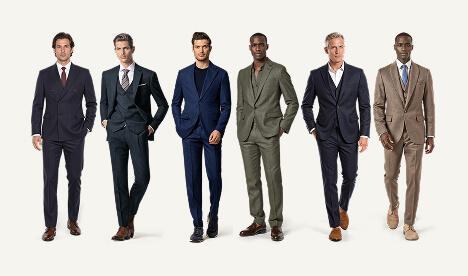
Fit and Measurement Integration: The most commercially meaningful layer. Basic visualizers show the suit on a standard model. Better tools allow the buyer to input measurements and see the garment proportioned to those dimensions. The most advanced implementations launched in 2026 — including Hockerty's Virtual Try-On feature released in May 2026 — allow the buyer to upload a photo of themselves and see their specific garment combination rendered on their actual body.
Real Platforms with 3D Suit Configurators in 2026
The following are verified, active platforms with genuine 3D configurator or virtual try-on capabilities as of mid-2026.
Hockerty
A Spain-based made-to-measure brand that has been running a 3D configurator for over a decade. In May 2026, Hockerty launched a full Virtual Try-On feature that renders the buyer's exact configured garment — their chosen fabric, cut, lapels, lining, monogram — on a photo the buyer uploads. According to their announcement, the system accounts for every configuration option selected and shows the result on the buyer's actual body proportions.
Hockerty describes the feature as closing "the last remaining gap between designing a garment online and trying it on in a physical store." Entry suits start at approximately $299. The configurator is free to use.
Relevant for: Buyers wanting a consumer-grade MTM experience with genuine 3D and photo-based VTO capability. Not positioned as luxury — construction reviews consistently describe fused rather than canvassed builds at the entry price point.
Sartoro
A US-based MTM brand (St. Petersburg, FL) that launched a real-time 3D suit builder in July 2026. The tool renders the configured suit in three dimensions before the buyer places an order, with 140+ fabric options and customization across jacket style, lapels, buttons, pockets, lining, and more. An AI-powered Digital Tailor handles measurements in approximately 60 seconds. Standard shipping is three weeks; rush options available.
The Sartoro configurator is free to use and requires no account to explore. This is a recent launch — the tool is genuinely new as of the time of writing, and review volume is still accumulating.
Relevant for: Buyers wanting real-time 3D preview on a US-based MTM platform at accessible price points.
StudioSuits
A browser-based 3D configurator that has been operating since 2019. Renders suits in the browser using a real-time engine with 100+ style options. Does not currently offer photo-based try-on, but the configurator is functional and well-established. Entry price around $250.
Relevant for: Budget-conscious buyers who want a 3D preview without a high minimum spend.
CLO Virtual Fashion / CLO-SET
Not a consumer-facing suit configurator, but the industry-standard 3D garment design platform used by fashion brands, manufacturers, and designers to develop and visualize garments before production. CLO produces realistic fabric simulation — drape, weight, grain — that consumer configurators typically approximate rather than match. CLO acquired Swatchbook in 2024 to strengthen digital material management.
Relevant for: Fashion brands building internal visualization workflows; not a consumer try-on tool.
What a Custom-Built 3D Suit Visualizer Costs and What It Delivers
Consumer platforms like Hockerty and Sartoro solve the visualization problem for buyers. For fashion brands, tailoring chains, or bespoke studios that want their own branded configurator — embedded in their own website, tailored to their specific product range, integrated with their ordering and CRM systems — the relevant question is what a custom build costs and whether it justifies the investment.
A custom 3D suit configurator built for a fashion brand typically involves:
3D modeling of the brand's actual garments, in their actual fabrics and constructions
Configurator front end (browser-based, mobile-responsive, connected to the brand's product options)
Measurement integration (form-based, AI-sizing, or photo upload depending on budget)
E-commerce integration (connecting the configured result to cart, ordering, and production systems)
Optional AR layer (allowing the buyer to see the configured garment on a photo or camera feed)
Cost ranges for a production-ready custom tool: $15,000–$60,000 depending on scope, the number of garment types covered, fabric library size, and whether AR is included. Simpler configurators with a static avatar and limited fabric options land at the lower end; full photo-based VTO with comprehensive fabric simulation is at the higher end.
The return on that investment depends on the scale of the business. For a brand doing $2M+ annually in online MTM sales, a 20–30% reduction in returns — consistent with published industry data — represents a meaningful and measurable financial return within 12–18 months of deployment, even before accounting for conversion uplift.
For smaller operations, the consumer platforms (Hockerty, Sartoro) offer the visualization capability without the custom development cost, at the trade-off of operating within someone else's brand and product constraints.
The Four Things Buyers Actually Want From a Suit Visualizer
Based on what drives return rates and purchase confidence in made-to-measure apparel, the features that matter most are:
Fabric realism. A buyer choosing between a charcoal flannel and a mid-grey tweed needs to see the textural difference, not two similarly-shaded flat colour swatches. PBR rendering that captures weave, drape, and sheen under multiple lighting conditions is the baseline for a visualizer that meaningfully reduces the "looked different in person" return reason.
Accurate proportioning. A slim-cut suit on a 6'1" model preview tells a 5'8" buyer almost nothing useful about how the jacket will fall on their frame. The platforms that have invested in measurement-based avatar scaling — or photo-based personalization — are the ones that address fit uncertainty directly rather than just offering visual choice.
Realistic detail preview. Lapel width, button stance, ticket pocket, working buttonholes — the details that distinguish a well-finished suit from a generic one. A visualizer that renders these accurately at zoom allows a buyer to evaluate craftsmanship elements before purchase. One that approximates them or omits them is less useful for the buyer who cares most.
Speed. A configurator that takes 8–12 seconds to re-render after each selection creates friction that reduces engagement. Real-time (under 2 seconds) is the standard buyers expect after years of instant-preview e-commerce.
The AI Integration Reality: What It Does and What It Doesn't
Several platforms and articles in this space describe AI as transforming the suit configurator experience. The accurate version of that is narrower.
What AI genuinely does in 2026 suit visualization:
Photo-based measurement inference: Estimating body measurements from a photo, which Hockerty and similar platforms use to proportionate the avatar
Fabric upscaling and denoising: Improving render quality efficiently without full re-render cycles
Style recommendation: Suggesting complementary combinations based on the buyer's stated occasion, body type, or colour selections
Size prediction: Inferring a starting MTM specification from height, weight, and posture data
What AI does not yet do reliably:
Replace a trained tailor's eye for fit problems at the measurement stage
Accurately simulate how a specific fabric will drape on a specific body type across all viewing angles
Generate a fully accurate try-on from a single photograph in complex or non-standard lighting
The EU's AI Act, which classified virtual try-on as "limited risk" AI in 2026, requires transparency obligations — meaning platforms offering AI-powered try-on must disclose that the result is AI-generated rather than a photograph. For consumer trust, this transparency requirement is likely positive rather than negative: a buyer who understands they are seeing an AI-generated preview calibrates their confidence appropriately.
For Fashion Brands: What to Evaluate Before Commissioning a Custom Tool
If you are a fashion brand, tailoring chain, or bespoke studio considering a custom-built 3D visualizer rather than directing buyers to a consumer platform, these are the questions that determine whether the investment makes sense and who you should be working with.
Does your product range justify the modeling investment?
A custom visualizer for a brand with three suit silhouettes and 40 fabric options is a manageable scope. A brand with 15 silhouettes, seasonal fabric rotations, and shirt and shoe integration is a substantially larger project. Scope it against your actual product catalogue, not an aspirational one.
What does your ordering system need to receive?
A visualizer that produces a beautiful preview but outputs an unstructured configuration summary is only half a tool. The back end needs to produce something your production team can work from — ideally a structured specification connected to your pattern system and fabric inventory.
Where do your returns actually come from?
Before commissioning visualization as a return-reduction investment, pull your own return reason codes. If your returns are predominantly driven by fabric disappointment (color, texture) rather than fit uncertainty, the visualization investment should prioritize fabric realism over measurement tools, and vice versa.
Is mobile the primary channel?
A 3D configurator that performs well on desktop but lags on mobile is effectively unavailable to a significant share of buyers. Confirm mobile performance benchmarks — load time, re-render speed, touch interaction — before committing to a specific technical approach.
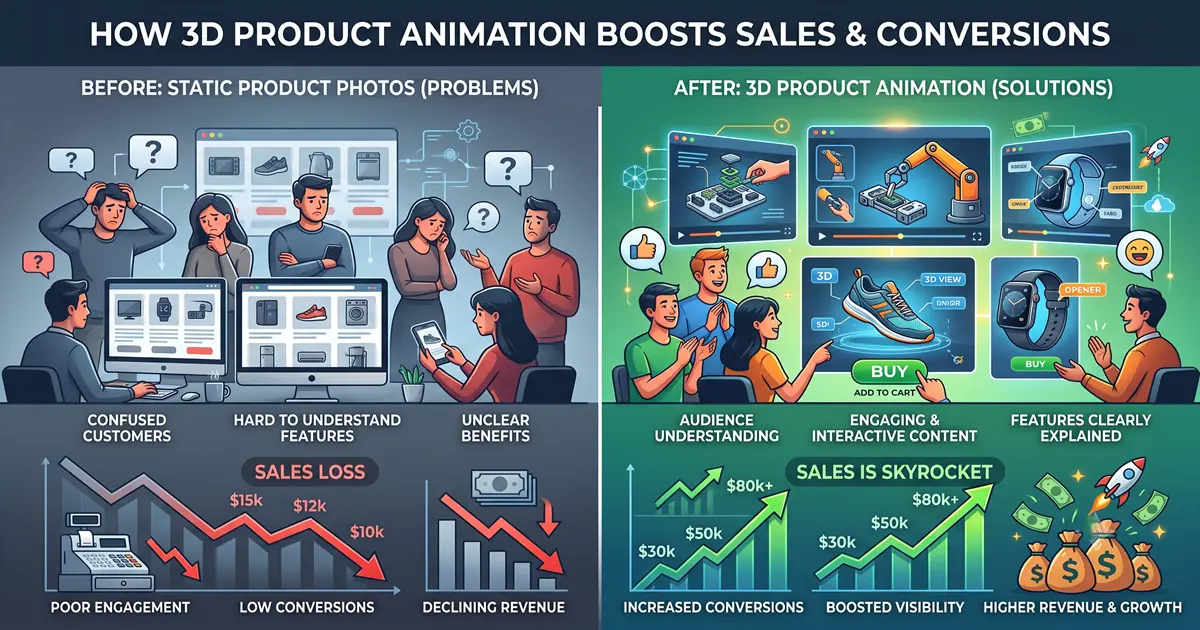
For a broader view of how 3D visualization works across product categories beyond garments, our guide to 3D product animation for fashion and retail covers what changes between a product visualization brief and an architectural one, and where the technical requirements overlap.
Frequently Asked Questions
What is an online 3D suit visualizer?
Software that lets a buyer or designer configure a custom suit and preview the result in three dimensions before it is produced. The buyer selects fabric, cut, and detailing options, and the tool renders the configured garment in real time — showing how it looks from different angles and, in advanced implementations, on the buyer's own body proportions.
Which platforms have a real 3D suit configurator in 2026?
Hockerty (launched full photo-based VTO in May 2026), Sartoro (launched real-time 3D builder in July 2026), and StudioSuits (browser-based 3D since 2019) are the verified consumer-facing platforms with genuine 3D configurator capability. CLO Virtual Fashion is the industry-standard tool for brand-side garment development, not consumer use.
Do 3D suit visualizers actually reduce returns?
Yes — virtual try-on technology reduces apparel return rates by 20–40% depending on implementation quality, according to published case studies from brands using AR-enabled try-on in 2024–2026. The reduction is largest when the visualizer addresses the specific return reasons for that brand's products, which is why checking your own return reason data before investing matters.
What does a custom 3D suit configurator cost to build?
$15,000–$60,000 for a production-ready custom tool, depending on scope, garment coverage, fabric library size, and whether photo-based AR try-on is included. Simpler configurators with a standard avatar land at the lower end; full personalized VTO with comprehensive fabric simulation is at the higher end.
Can a small tailoring business use a 3D visualizer without building a custom tool?
Yes. Consumer platforms like Hockerty and Sartoro offer 3D configurator and virtual try-on capability without requiring custom development. The trade-off is that the buyer experience is within the platform's brand and product constraints, not the tailoring business's own. For smaller operations, directing buyers to a well-chosen consumer platform is often a better-ROI starting point than commissioning a custom build.
How accurate are AI-powered suit try-ons from a photo?
Modern AI try-on systems achieve 85–95% accuracy across diverse body types, according to published benchmarks from 2025–2026. Accuracy varies with photo quality, lighting, and the complexity of the garment being rendered. The EU AI Act requires transparency disclosure for AI-generated try-on images, which is a positive step for managing buyer expectations.
Book a 20-minute discovery strategy call.
📞 +91-9910911696 | +91-9910660851
📩 info [@] chasingillusions [.] in
Written by Deepak, Content Strategist at Chasing Illusions Studio, who leads content for clients including Ambler Surgical, Practo, Bayer, SMT, Novartis, and 100+ brands across India, USA, Thailand, and the UK.
Last Updated: Aug 04 2026 | Chasing Illusions Studio
Chasing Illusions Studio
Premium animation & video production studio based in Delhi, India. Specialising in 3D animation, medical visualisation, architectural walkthroughs, and CGI.