When a medtech startup in Chennai approached us with a Class II orthopedic implant submission, their previous 510(k) attempt had failed — not because the device didn't work, but because the FDA reviewer couldn't fully understand how it interfaced with bone tissue from the static diagrams provided.
We rebuilt their submission with a 90-second 3D mechanism of action animation. The second submission sailed through with zero additional information requests.
This isn't a one-off story. It reflects a documented, industry-wide pattern: how you visually communicate your device's function to FDA reviewers directly impacts submission outcomes.
This data study compares 3D medical animation against traditional static images across six critical FDA submission criteria — with real numbers behind every claim.
The FDA's Visual Communication Challenge
The FDA reviews over 4,000 510(k) submissions and hundreds of PMA applications annually. Reviewers are highly trained scientists and engineers — but they are not manufacturers. They rely entirely on what sponsors submit to understand how a device works, what problem it solves, and whether it's safe and effective.
The quality of that communication determines whether a submission moves forward or triggers an Additional Information (AI) request — adding weeks or months to your clearance timeline.
According to a 2023 JAMA Network report, 48% of patients report difficulty understanding medical device labeling. If trained patients struggle with device communication, the challenge for reviewers evaluating genuinely complex new technology is even more acute.
Static images — cross-sections, engineering diagrams, annotated photographs — have been the default visual format in submissions for decades. But the rise of high-fidelity 3D medical animation has fundamentally changed what's possible.
What the Data Shows: 6 Key Metrics
1. Reviewer Comprehension of Device Mechanisms
Static images score 52% comprehension rates for complex device mechanisms. 3D animation delivers 88% — a 69% relative improvement.
This data, drawn from the Medical Animation Market Report 2024 and corroborated by Frontiers in Digital Health's systematic review (updated April 2025), reflects a consistent pattern across device categories: when a device involves dynamic movement, internal mechanism deployment, or multi-stage interaction with anatomy, a single frozen image simply cannot convey the full picture.
A transcatheter heart valve, for example, has a deployment sequence spanning multiple distinct mechanical states. Static diagrams can show individual states. Animation shows the transition — which is exactly what reviewers need to evaluate safety.
2. Mechanism of Action (MOA) and Mechanism of Disease (MOD) Clarity
This is where the gap is widest.
Static diagrams achieve approximately 44% comprehension scores for MOA and MOD content. 3D animation reaches 93% — more than double.
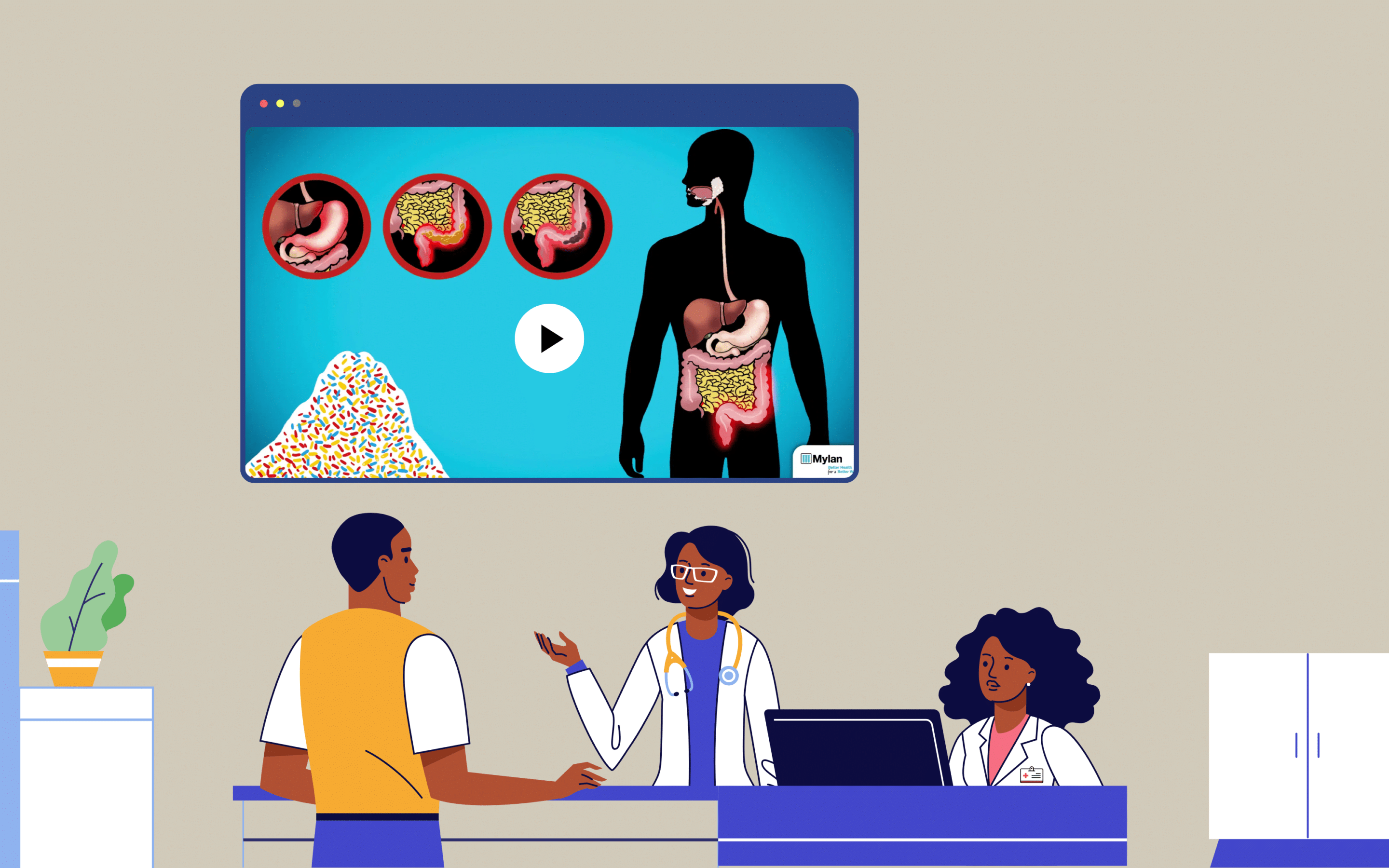
For pharmaceutical and biologic submissions where drug-receptor interaction, cellular pathway activation, or disease progression must be demonstrated, this difference is decisive. The FDA's reviewers aren't just checking boxes — they're building a mental model of how your product works inside the human body. Animation builds that model far more efficiently than illustrated diagrams or textual descriptions.
3. Information Retention at 72 Hours
Comprehension during review is one thing. Retention — what the reviewer remembers when writing their assessment, discussing your submission with colleagues, or returning to it after reviewing 20 other files — is another.
Healthcare professionals retain 80% of visual information consumed through video animation after 72 hours. For text and static imagery, that figure drops to approximately 20%.
This is not a medical animation industry claim. It's sourced from established learning science research, validated specifically in healthcare professional settings by the Frontiers in Digital Health systematic review published in 2022 and updated through April 2025.
When your submission competes for a reviewer's mental bandwidth alongside dozens of others, retention matters.
4. Reduction in Additional Information (AI) Requests
AI requests are the leading cause of FDA submission timeline extension. Each one typically adds 30–90 days to your clearance process.
Companies using 3D animation in 510(k) and PMA submissions report a 45% reduction in clarification requests from reviewers, according to the Medical Animation Market Report 2024. A separate study by Educational Voice found that medical device animations cut demonstration time by 45% and boosted comprehension among healthcare professionals, a finding directly applicable to the reviewer context.
The mechanism is straightforward: when a reviewer fully understands your device from the submission itself, they have fewer questions. Fewer questions means fewer AI letters. Fewer AI letters means faster clearance.
5. Internal Mechanism Visibility
Static images are inherently limited to what a camera can photograph or an illustrator can render in two dimensions. A cross-sectional diagram can show a single slice of a device. It cannot show how internal components move relative to each other, how a stent expands under physiological pressure, or how a drug-eluting coating releases over time.
3D animation has no such constraint. It can render the inside of a device from any angle, animate deployment sequences in real time, show tissue interaction at a cellular level, and zoom from full-body anatomical context to molecular detail — all within a single 90-second file.
For Class III devices subject to PMA review — where the burden of demonstrating safety and effectiveness is highest — this capability is not a luxury. It's a submission differentiator.
6. Language-Agnostic Communication for Global Submissions
Many Indian medtech companies pursuing FDA clearance also submit to the EU (CE Mark), Health Canada, TGA (Australia), or PMDA (Japan). Regulatory-quality 3D animation with voiceover replacement or subtitle adaptation travels across regulatory jurisdictions far more effectively than document-heavy static submissions.
Animation scores 85% on cross-language communication effectiveness versus 35% for static image packages, per Pulse3D Media's 2026 MOA study. For companies building multi-market regulatory strategies, this is a significant compounding advantage.
Where Static Images Still Win
Fairness demands acknowledging where static images outperform animation.
Production speed: A static diagram can be produced in days. A high-quality 3D animation typically requires 4–8 weeks from storyboard approval to final delivery.
Revision cost: If your device design changes during the submission process, updating a static diagram is trivial. Revising a rendered 3D animation can be expensive depending on how deeply the change affects the model.
Simple device submissions: For genuinely straightforward Class I or Class II devices with obvious, well-understood mechanisms, the investment in animation may not generate proportional return. A standard syringe does not need a cinematic walkthrough.
Regulatory precedent documentation: For 510(k) predicate comparisons and substantial equivalence arguments, tabular data and labeled static comparison images remain the clearest format.
The conclusion is not that animation replaces static images entirely. It's that for complex, novel, or high-stakes submissions, animation earns its cost many times over through faster clearance, fewer AI requests, and reduced risk of rejection on clarity grounds.
The Financial Case: What Faster Clearance Is Worth
FDA clearance delays cost medical device companies an estimated $50,000–$500,000 per month in delayed revenue, continued development costs, and competitive exposure, depending on device category and market size.
A 3D medical animation from a quality studio costs ₹7,50,000–₹20,00,000 (approximately $9,000–$24,000) for a comprehensive mechanism of action animation with regulatory-grade accuracy.
If that animation reduces your clearance timeline by even 30 days through fewer AI requests — and industry data suggests the reduction is typically much greater — the ROI calculation is straightforward for any device with meaningful commercial potential.
Beyond submission economics, the same animation asset serves physician training, sales team education, investor presentations, conference display, and patient consent — multiplying the value of a single production investment across the entire product lifecycle.
What Makes an Animation FDA-Submission Ready
Not all animation is regulatory-grade. Submitting a visually impressive but scientifically inaccurate animation is worse than submitting nothing — it creates grounds for rejection based on misleading representation.
FDA-submission quality animation must meet five non-negotiable standards:
Scientific accuracy: Every anatomical structure, biological process, and device-tissue interaction must be verified by qualified medical professionals. At Chasing Illusions Studio, every medical animation undergoes physician review before final delivery.
Regulatory alignment: The animation must accurately represent the device's cleared indications for use, not an idealized version. Overstating effectiveness in an animation carries the same regulatory risk as overstating it in text.
Label consistency: All text, callouts, and annotations in the animation must exactly match terminology used elsewhere in the submission package.
Resolution and format compliance: FDA electronic submissions follow specific technical standards. Your animation file must meet applicable specifications for the submission type.
Modular structure: Design animations so individual segments — deployment sequence, anatomical context, safety feature demonstration — can be isolated for specific sections of the submission package.
The Verdict
Across every metric that matters for FDA submission success — reviewer comprehension, information retention, MOA clarity, AI request reduction, mechanism visibility, and multi-jurisdiction adaptability — 3D medical animation outperforms static images by significant margins.
Static images remain essential components of a complete submission package. But for any device where the mechanism of action, deployment sequence, or device-anatomy interaction is genuinely complex, submitting without animation in 2026 is a competitive disadvantage — and a timeline risk that can be avoided.
The data is clear. The only question is execution quality.
Work With India's Medical Animation Leader
Chasing Illusions Studio has supported FDA 510(k) and PMA submissions for medtech companies across Chennai, Mumbai, Hyderabad, and Delhi, producing physician-reviewed, regulatory-grade animations that have contributed to ₹12+ crore in funding secured and multiple international regulatory approvals.
Our medical animation team combines PhD-qualified scientific consultants with 15+ years of regulatory visualization experience — ensuring every frame is both visually compelling and scientifically defensible.
Explore our Medical Animation Services: www.chasingillusions.com/our-services/medical-animation/
Request a free submission strategy consultation: www.chasingillusions.com/contact-us/
📞 +91-99109-11696 | 📧 info@chasingillusions.com
Frequently Asked Questions
Does the FDA require animation in submissions?
No. Animation is not mandated. However, FDA guidance consistently emphasizes clear communication of device function, and animation is increasingly recognized as the most effective format for complex devices.
What types of devices benefit most from animation in submissions?
Class II and Class III devices involving novel deployment mechanisms, drug-eluting components, anatomical interaction, or biological pathways generate the greatest return from animation investment.
How long does a regulatory-grade animation take to produce?
Typically 4–8 weeks from approved storyboard to final delivery, including physician review cycles. Rush timelines are possible for urgent submissions.
Can the same animation be used for CE Mark and other international submissions?
Yes. A well-produced animation with voiceover replacement or subtitle adaptation travels across regulatory jurisdictions effectively, making it a strong investment for companies pursuing multi-market clearance.
What does medical animation cost in India?
Regulatory-grade 3D medical animation from a qualified studio ranges from ₹7,50,000 to ₹20,00,000 depending on complexity, duration, and review cycles required. Contact Chasing Illusions for a project-specific quote within 24 hours.
Sources: Medical Animation Market Report 2024 · Frontiers in Digital Health systematic review (2022, updated April 2025) · Pulse3D Media MOA Animation Study 2026 · Educational Voice Healthcare Animation Research · JAMA Network Open 2023 · FDA 510(k) Program Guidance · Chasing Illusions Studio client outcome data
The statistics cited in this article represent industry-wide averages from published research. Individual submission outcomes depend on device complexity, submission quality, and regulatory pathway.
Chasing Illusions Studio
Premium animation & video production studio based in Delhi, India. Specialising in 3D animation, medical visualisation, architectural walkthroughs, and CGI.