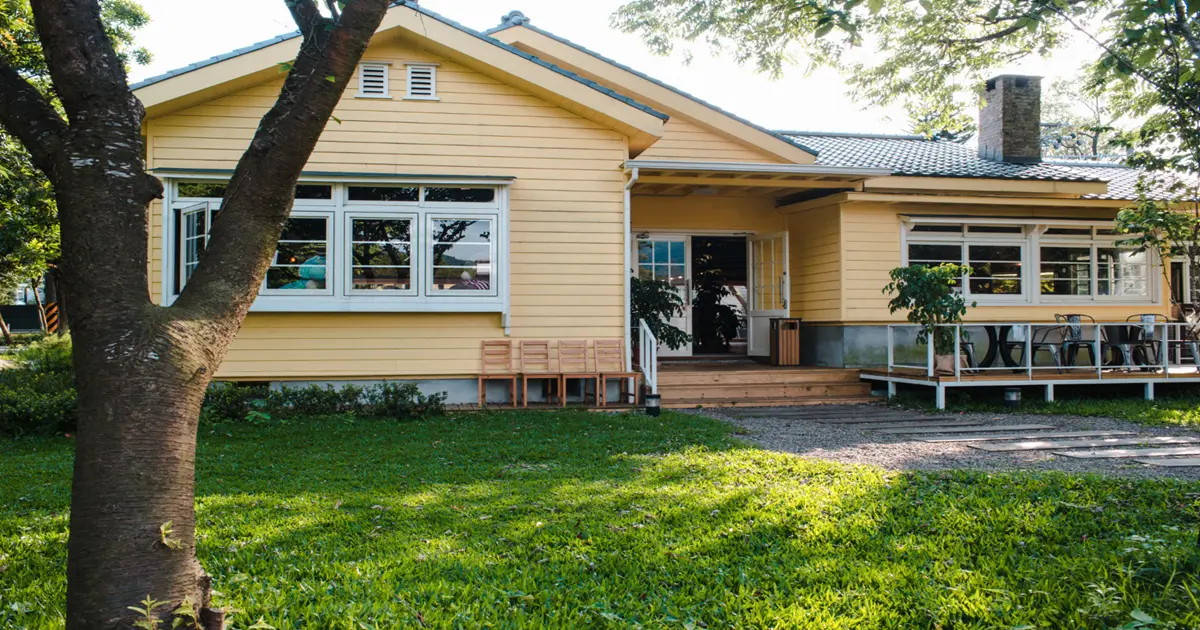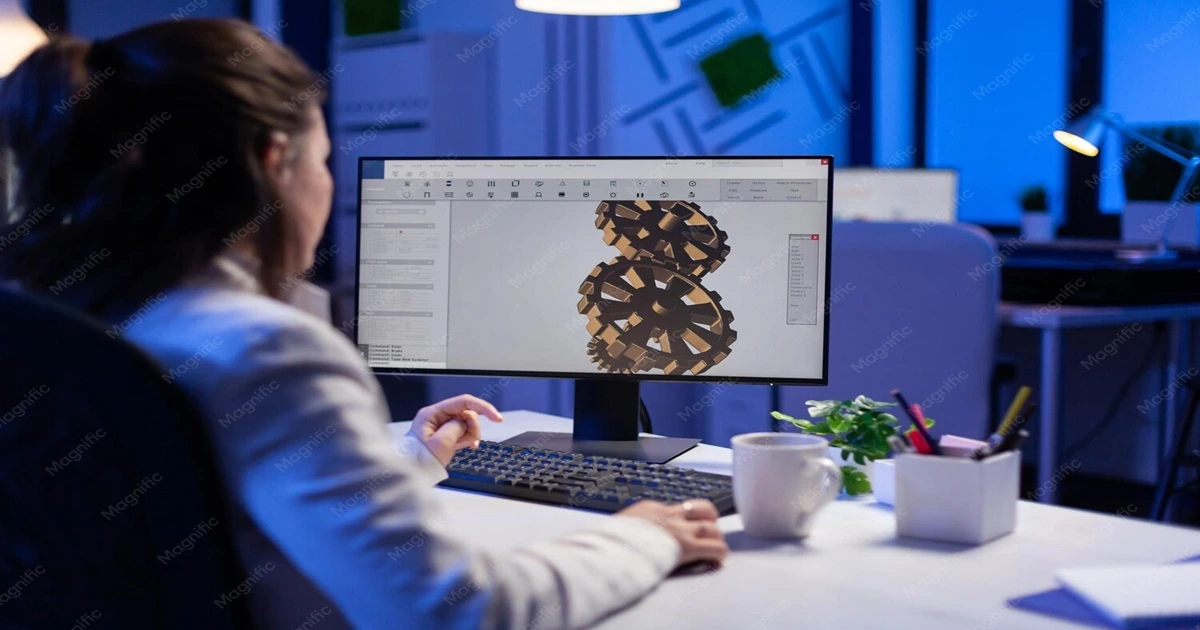
Modern houses — clean lines, open-plan layouts, glass facades, indoor-outdoor flow — tend to demand more from a rendering than a traditional home does, since so much of the design's impact depends on light, transparency, and material precision. Cantilevered rooflines, floor-to-ceiling glazing, and minimalist interiors are unforgiving of small errors in the render — a slightly off reflection or an unnaturally flat shadow reads immediately as "fake" in a way it wouldn't on a more traditional, texture-heavy design. If you're budgeting for a render of a modern house, here's what actually drives the cost and what to expect at each stage.
Why Modern Houses Specifically Cost More to Get Right
Traditional homes have more forgiving surfaces — brick, pitched roofs, textured render — that hide small imperfections. Modern design leans on the opposite: smooth concrete, expansive glass, exposed structural lines, and open interiors with very little visual clutter to distract the eye. That means:
Glass and reflections take longer to get right. Realistic glazing has to reflect its surroundings convincingly, which is more computationally demanding and more time-intensive to art-direct than a brick or stucco facade.
Open floor plans expose more of the model at once. There's nowhere for a rough model to hide — sightlines run through multiple rooms, so every visible surface needs to hold up.
Minimalism raises the bar on lighting. With fewer decorative elements to soften a scene, lighting quality does more of the work of making a space feel real and inviting.
This is why a modern house project often costs somewhat more than a similarly-sized traditional home render, even though the floor plan itself might be simpler.
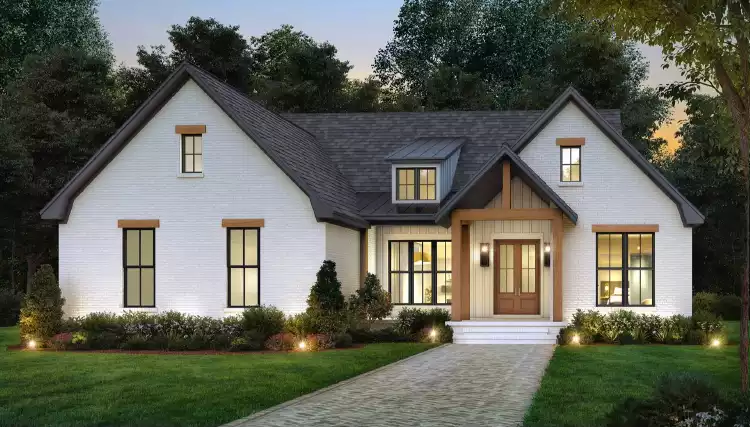
What a Modern House Render Typically Costs, By Scope
Pricing depends heavily on scope. Based on general 2026 industry benchmarks (confirm your studio's actual rates — these are a general guide, not a quote):
Per-Room and Per-View Pricing
Render Type | Basic / Stylized | Standard Photoreal | High-End / Complex |
|---|---|---|---|
Single interior room | $150 – $500 | $500 – $1,200 | $1,200 – $2,500 |
Single exterior view | $200 – $500 | $500 – $1,500 | $1,500 – $4,000 |
Per-room bundle (furnished, multi-room) | $150 – $400/room | $400 – $900/room | $900 – $1,800/room |
Full-Project Packages
Package | What's Typically Included | Cost Range |
|---|---|---|
Basic static package (5-10 images) | Unfurnished shells, standard lighting, minimal landscaping | $1,500 – $4,000 |
Mid-tier photoreal package (10-20 images) | Furnished interiors, site context, 1-2 revision rounds | $4,000 – $9,000 |
Premium animation package | 30-90 second walkthrough, high-resolution stills included | $8,000 – $18,000+ |
VR/AR add-on | Interactive walkthrough experience | +$3,000 – $10,000, project-dependent |
Again: these are general industry ranges, not your studio's confirmed rates. Replace with your real numbers before publishing — and if your actual pricing differs meaningfully from these ranges, that's worth knowing before this goes live, not after.
What Actually Drives the Cost Up or Down
Complexity. A simple single-story home with flat surfaces and standard furnishings is faster to model than a house with curved facades, parametric cladding, water features, or intricate landscaping. Unusual geometry and custom elements genuinely take longer to build, and that shows up directly in the price — not as an arbitrary markup, but as real additional modeling hours.
Level of realism. A quick concept render is cheaper and faster than a fully photorealistic image with accurate reflections, global illumination, and precise material behavior (glass, brushed metal, concrete, wood grain). Photorealism requires more render time and more careful art direction, and that cost is usually proportional to how convincing the final image needs to be — a concept render for internal discussion doesn't need the same fidelity as a marketing image meant to sell a unit.
Turnaround time. Rushed timelines almost always cost more, since they require a studio to reprioritize your project ahead of others already in its pipeline, sometimes with overtime or a smaller revision buffer. Standard timelines (roughly 2-4 weeks for a multi-room project) keep costs at baseline; compressed timelines of a week or less typically carry a premium.
Revisions. Most studios include 1-2 rounds of revisions in an initial quote. Requests beyond that — especially structural changes rather than lighting/material tweaks — typically incur additional fees. Get this spelled out before work starts, not after the first draft comes back.
Input quality. Providing clear CAD files or detailed architectural blueprints reduces back-and-forth significantly. Vague references, incomplete plans, or "figure it out from these photos" briefs generally mean more assumptions on the studio's part, which means more revision cycles, which means more cost — not because of any hidden fee, but because ambiguity is genuinely more time-consuming to resolve.
Studio location and expertise. Rates vary meaningfully by studio location and experience level — this is a real factor, but it's not a simple "cheaper is worse" or "more expensive is better" relationship. It's worth evaluating a studio's actual portfolio relevance to modern residential work specifically, not just their day rate.
A Few Practical Ways to Manage the Budget
Prioritize key spaces first — living room, kitchen, and the main exterior view usually carry the most weight for a listing or client presentation. Render those first and expand once you're happy with the direction, rather than commissioning the full house at once.
Ask about package pricing. Many studios offer a lower per-room rate for bundled multi-room projects than for one-off individual renders — worth asking about directly rather than assuming.
Provide complete files upfront. Clear blueprints or CAD files reduce the guesswork that drives revision costs; a quick call to clarify scope before work starts is almost always cheaper than a round of revisions after.
Avoid rush timelines where you can plan ahead. Booking a few weeks before you actually need the final render, rather than requesting an expedited turnaround, can meaningfully lower the price.
Clarify revisions in writing before you start. Knowing exactly how many rounds are included — and what counts as a "revision" versus a "new request" — avoids surprise costs later.
Common Mistakes to Avoid
Choosing a studio based on price alone. A very low quote often means less time spent per render, which shows up in lighting quality, material realism, or how many revision rounds are actually included. Compare quotes against what's included, not just the number.
Skipping the brief. A short call or written brief covering the target audience (buyer vs. investor vs. internal design review), the required views, and the deadline saves real money by reducing revision cycles.
Underestimating how much a modern design depends on lighting. Because minimalist interiors have less visual complexity to fall back on, poor lighting reads as "unconvincing" faster than it would on a more ornate design. Don't treat lighting as an afterthought in your brief.
Not clarifying usage rights upfront. If the renders will be used across multiple platforms — a listing site, social media, a printed brochure — confirm that's covered in the quote, since usage scope sometimes affects pricing.
Waiting until the last minute. Rush pricing is real, and it's avoidable with a bit of lead time.
Getting an Accurate Quote
The fastest way to get a real number for your project is to have your floor plans or CAD files ready, along with a sense of which rooms or views matter most, and a realistic sense of your timeline. From there, most studios can give you an accurate scope and quote within a day or two — anything that promises an "instant" quote without seeing your actual project details is likely giving you a generic estimate, not a real one.
Ready to get a quote for your modern house render? [Get a Quote →]
Book a discovery 20-minutes strategy call.
📞 +91-9910911696 | +91-9910660851
📩 info [@] chasingillusions [.] in
Written by Deepak, Content Strategist at Chasing Illusions Studio. Our clients include Ambler Surgical, Practo, Bayer, SMT, Novartis, and 100+ healthcare brands across India, USA, Thailand, and the UK.
Chasing Illusions Studio
Premium animation & video production studio based in Delhi, India. Specialising in 3D animation, medical visualisation, architectural walkthroughs, and CGI.