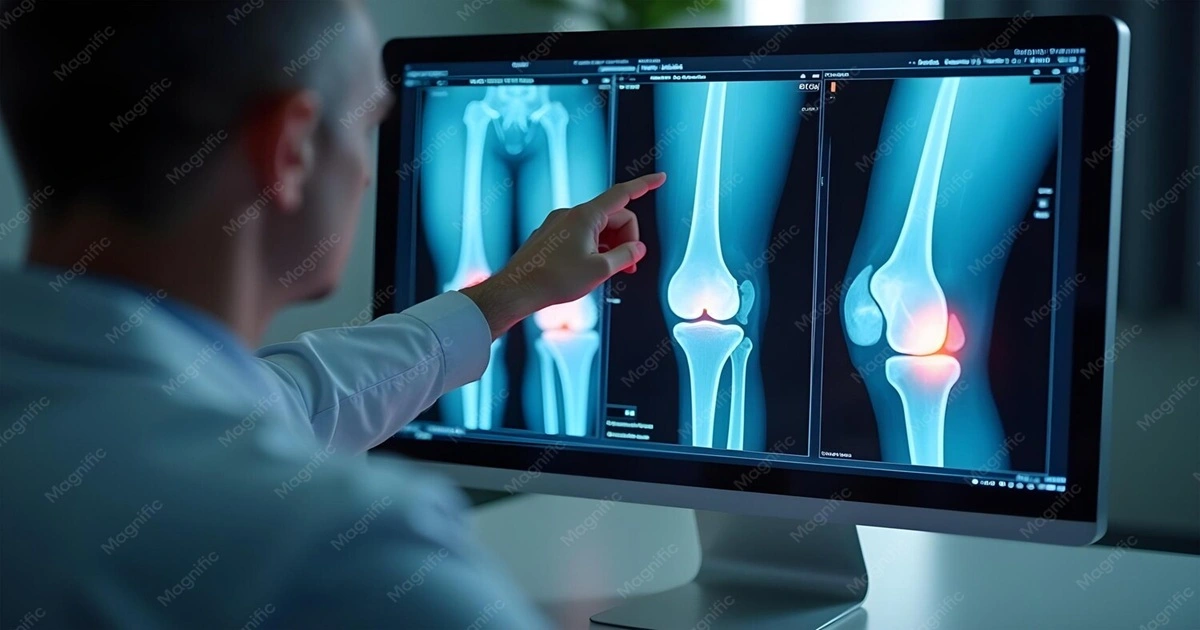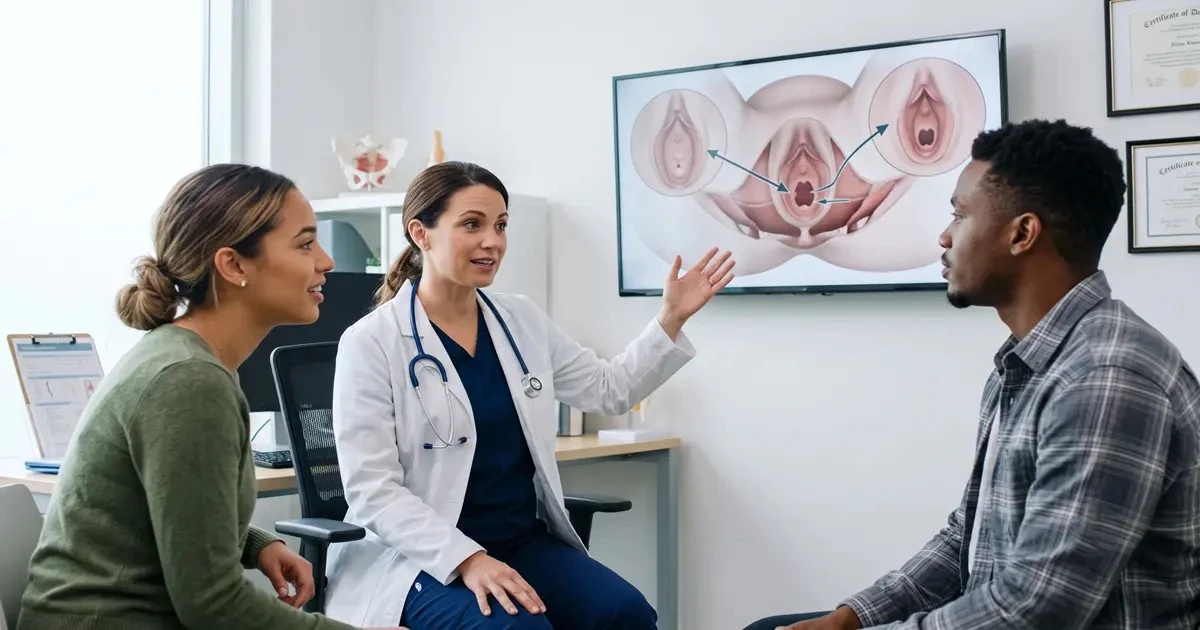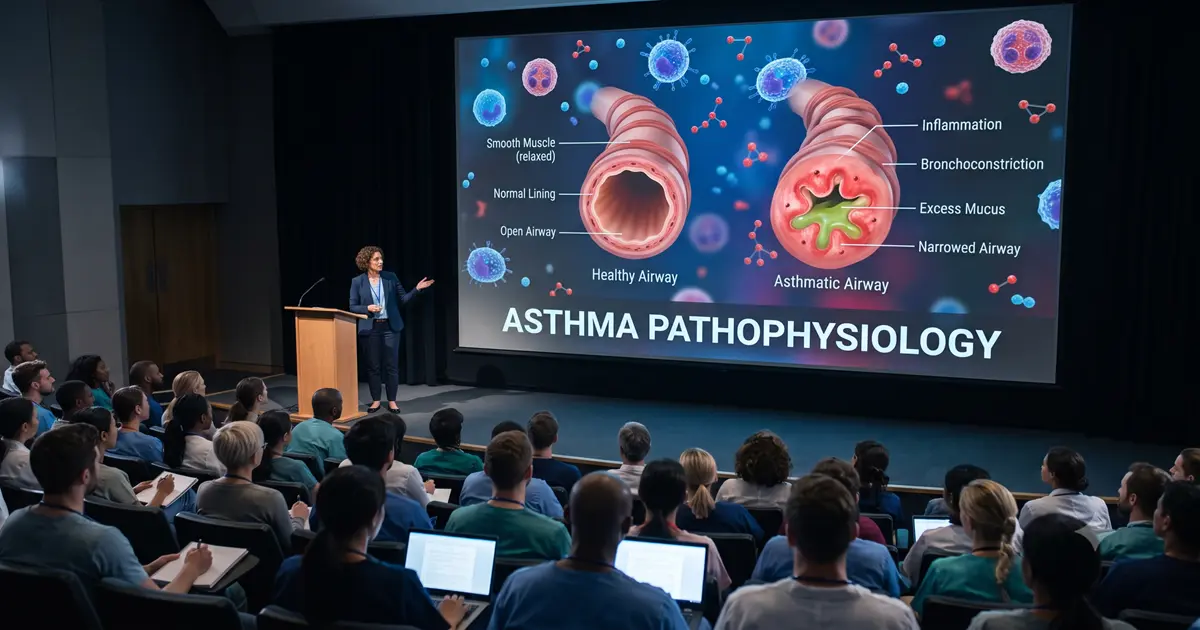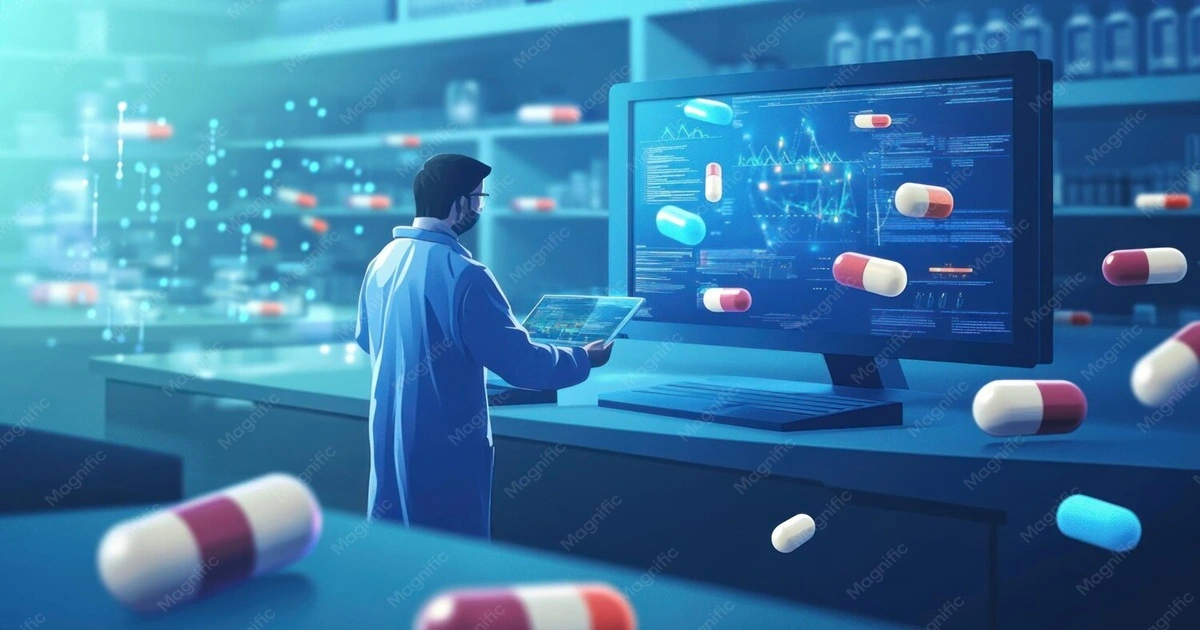
An AI animated explainer video for pharma brands is a short animated video — typically 60–150 seconds — produced using AI tools for scripting, animation, and voiceover, then reviewed by medical and regulatory teams before release. It cuts production time from 4–6 weeks to under 2 weeks and cost by an estimated, while still requiring the same CDSCO/MLR compliance as traditional pharma video.
Key Takeaways
AI animated explainer videos cut pharma video production from 4–6 weeks to 5–10 business days for a standard 60–90 second video.
The most common use cases are MOA (mechanism of action) videos, patient education, HCP training/CME, product launches, and disease awareness campaigns.
Regulatory requirements do not change with AI production — every video still needs CDSCO, OPPI, and internal MLR sign-off before release.
A single master video can be localized into 12+ Indian languages using AI voice synthesis without re-animating any scenes.
Scientific accuracy still requires human medical review — AI generates visuals, it does not validate them.
Imagine a medical representative walking into a doctor's clinic with a 60-second animated video on a tablet — one that explains a complex drug mechanism with crystal-clear visuals, accurate molecular diagrams, and a compelling narrative, all produced in under 48 hours. This is not a vision from 2030. This is what an AI animated explainer video makes possible for pharma brands across India right now.
With India's pharmaceutical industry valued at over $50 billion and projected to reach $130 billion by 2030, the race to communicate drug value, educate patients, and stand out at the point of prescription has never been more intense. The brands that win will be the ones telling their story the clearest — and fastest.
This guide covers everything a pharma marketing team, brand manager, or medical affairs professional needs to know: what these videos are, how they are made, what they cost, how to stay compliant, and what mistakes to avoid.
What Is an AI Animated Explainer Video?
An AI animated explainer video is a short-form video that uses AI tools to accelerate scripting, storyboarding, animation rendering, and voiceover — with a human team still handling medical review, regulatory approval, and final creative direction. In pharma, these videos typically run 60–150 seconds and explain a specific concept: a drug's mechanism, a treatment journey, or a disease state.
Unlike traditional animation — which relies on manual frame-by-frame work across a 4–6 week production cycle — AI-assisted workflows use generative tools at the scripting, storyboard, and rendering stages, with humans reviewing and approving each stage rather than building it from scratch.
In pharma specifically, these videos are used for:
Drug mechanisms of action (MOA)
Patient compliance and treatment journeys
Clinical trial data and outcomes
Disease awareness for patients and caregivers
Healthcare professional (HCP) education and CME modules
Product launches and brand campaigns
MOA (Mechanism of Action): How a drug produces its effect in the body at a cellular or molecular level.
MLR (Medical, Legal, and Regulatory) review: The internal approval process every pharma promotional asset must pass before distribution in India.
CDSCO (Central Drugs Standard Control Organisation): India's national regulatory body for pharmaceuticals and medical devices.
OPPI (Organisation of Pharmaceutical Producers of India): Industry body whose Code of Pharmaceutical Marketing Practices governs HCP-directed promotion.
CME (Continuing Medical Education): Ongoing training content for practicing healthcare professionals.
Why Indian Pharma Brands Need This Now?
Because doctors and patients are overloaded with static, text-heavy content, and traditional animation is too slow and expensive to produce at the volume modern pharma marketing requires. AI-assisted production removes both barriers without changing what regulators require.
The Communication Problem
India's pharmaceutical market is valued at approximately $60 billion according to India Brand Equity Foundation (IBEF) and is projected to grow significantly $130 billion by 2030 according to IBEF.
India has over 1.3 million registered pharmaceutical companies and MSMEs. The average doctor receives 6–8 product pitches per day. Static brochures, text-heavy visual aids, and dense PDFs are no longer cutting through.
Research shows that viewers retain 95% of a message delivered via video compared to just 10% through text alone. In complex therapeutic areas like oncology, cardiology, or rare diseases, a well-produced animated explainer video is not a nice-to-have — it is a clinical communication necessity.
The Cost and Time Barrier Has Been Removed
Factor | Traditional Animation | AI-Assisted Animation |
Cost per minute | ₹80,000–₹3,00,000 | ₹1,50,000–₹5,00,000 |
Typical delivery time | 3–6 weeks | 5–10 business days |
Multilingual versions | Re-produced per language (high cost) | Generated from one master video |
Best suited for | Flagship brand films, testimonials | MOA videos, HCP training, patient education, product launches |
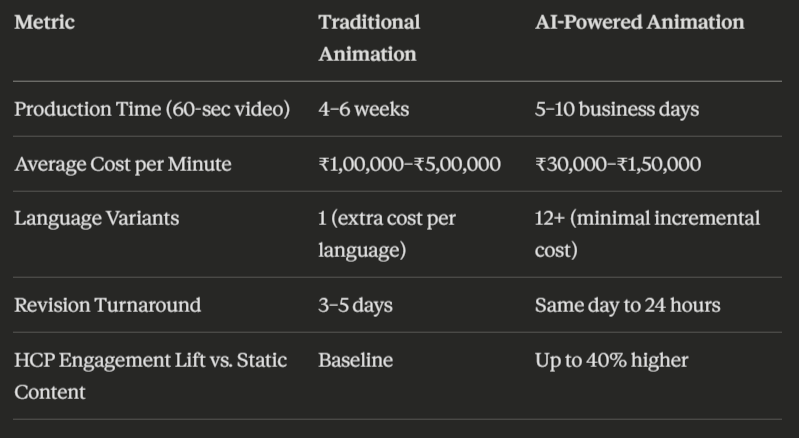
Note: This price is defined based on market research of medical animation studios in Delhi NCR, for exact quotation and cost guidelines, contact us.
How Is an AI Animated Pharma Explainer Video Actually Made?
Production runs in six stages — brief and scientific input, script development, storyboarding, animation and voiceover, MLR review, and final delivery — typically completed in 5–10 business days for a standard video, or up to 3 weeks for complex 3D molecular animation.
A well-structured AI animated explainer video for a pharma brand follows these steps:
Stage | Timeline | What Happens |
1. Brief & scientific input | Day 1–2 | Brand/medical affairs submits approved product monograph, MOA summary, target audience, and key messages |
2. Script development | Day 2–3 | AI drafts a script (90–150 words per 60 seconds); a medical writer reviews against approved label claims |
3. Storyboard & visual direction | Day 3–4 | AI generates a scene-by-scene storyboard; brand approves style, palette, and rendering approach |
4. Animation & voiceover | Day 4–7 | AI renders animation; AI or human voiceover is recorded; regional-language versions generated in parallel |
5. MLR review | Day 6–8 | Medical accuracy, legal sign-off, and CDSCO compliance check; revisions made |
6. Final delivery | Day 9–10 | Files delivered for digital, WhatsApp/field tablets, social cuts, and conference screens |
The entire cycle runs in under two weeks for a standard 60–90 second video. Complex MOA animations with detailed 3D cell biology may take up to 3 weeks.
What Are the Best Use Cases for AI Animation in Pharma?
The five highest-ROI use cases are MOA (mechanism of action) videos, patient education and adherence content, product launch assets, HCP training/CME modules, and disease awareness campaigns — in roughly that order of engagement impact.
Mechanism of Action (MOA) Videos
MOA videos are the most high-value application. An AI animated explainer video can visualize intricate cellular and molecular processes — receptor binding, enzyme inhibition, gene expression — with scientific accuracy that static slides cannot match. MOA videos have been shown to increase HCP engagement by up to 40% at medical conferences.
Patient Education and Medication Adherence
Non-adherence to medication costs the global healthcare system an estimated $500 billion annually. In India, literacy gaps, language barriers, and medical complexity make patient education videos a genuine public health tool — not just a marketing asset. AI-generated content can be adapted to regional languages and simplified vocabulary levels at scale.
Product Launches
Speed-to-market is critical in a launch window. AI animation allows marketing teams to produce detail aids, social media snippets, and conference presentations in parallel rather than sequentially — compressing an 8-week content cycle to under 3 weeks.
HCP Training and CME Modules
Interactive animated CME modules see completion rates 3x higher than text-based e-learning formats. Field force training, new product induction modules, and therapeutic area education are all high-ROI applications for AI animation.
Disease Awareness Campaigns
Patient-facing disease awareness content — for conditions like diabetes, hypertension, COPD, or cancer — requires culturally sensitive, language-appropriate visuals. AI makes it economically viable to produce awareness content for multiple regional audiences without multiplying production budgets.
Case Study: How AI Animated Explainer Videos Improved Pharma Product Education
A mid-sized pharmaceutical company launching a new prescription therapy struggled to explain its complex mechanism of action to healthcare professionals. Traditional brochures and presentations generated limited engagement, making it difficult for sales teams to communicate the product's value effectively.
To address this, the company created a 90-second AI-powered animated medical explainer video featuring scientifically accurate 3D visuals, simplified biological processes, professional voice-over, and multilingual versions for different markets. The video was used in doctor meetings, digital campaigns, medical conferences, and internal sales training.
Results within 4 months:
📈 42% increase in healthcare professional engagement.
🎯 31% higher product recall during follow-up interactions.
⏱️ 48% reduction in time spent explaining complex medical concepts.
💰 Improved marketing efficiency by repurposing the same AI animation across multiple channels.
Key Takeaway: AI animated explainer videos help pharmaceutical companies simplify complex science, improve communication with healthcare professionals, and accelerate product education while reducing content production time and costs.
How AI Is Changing Explainer Video Production?
Three shifts matter most: content can now be personalized per audience segment from one base video, a single master video can be localized into 12+ Indian languages without re-animating, and AI-trained biomedical visualization tools bring premium-studio scientific accuracy to mid-sized budgets.
Personalization at Scale
A cardiologist and a diabetologist can see different data visualizations pulled from the same base video architecture, rather than two fully separate productions.
Multilingual Output Without Re-Production
India has 22 scheduled languages. AI voice synthesis and lip-sync allow one master video to be localized into 12+ Indian languages — including Hindi, Tamil, Telugu, Marathi, Bengali, Kannada, and Malayalam — without re-animating a single scene.
Scientific Precision at Accessible Cost
AI tools trained on biomedical datasets can now generate anatomically accurate visualizations and pharmacokinetic graphs that previously required specialist medical illustrators — bringing that level of detail within reach of mid-sized brands.
What Are the Regulatory Requirements for AI Pharma Videos in India?
AI does not change India's regulatory framework — it only changes production speed and cost. Every video, AI-produced or not, must still comply with CDSCO promotional guidelines, the Drugs and Magic Remedies Act, the OPPI Code, and internal MLR approval before distribution.
CDSCO Promotional Guidelines — no unsubstantiated efficacy or safety claims
Drugs and Magic Remedies (Objectionable Advertisements) Act, 1954 — restricts certain disease claims in consumer-facing content
OPPI Code of Pharmaceutical Marketing Practices — standards for HCP-directed promotion
Internal MLR approval — mandatory before any promotional content is distributed
Compliance Checklist for AI-Produced Pharma Video
All claims are referenced to the approved package insert or published clinical evidence
Voiceover scripts pass the same review as printed visual aids
Required Important Safety Information (ISI) superimpositions appear where mandated
Patient-facing versions use lay language with no implied off-label claims
AI-generated anatomical or scientific visuals are reviewed by a medical professional before MLR submission
What Are the Limitations of AI Animation for Pharma?
AI animation is not the right choice for every pharma video. It's less suited to content where authenticity of real human presence matters — patient testimonials, leadership brand films — and to highly complex surgical simulations or extended scientific documentaries where traditional studio craft still has an edge.
Human authenticity content: Testimonials and brand films depend on real human presence — AI animation isn't the right tool here.
Highly complex simulations: Extended surgical or procedural simulations with fine anatomical detail may still require specialist traditional studios.
Still requires human medical review: AI generates visuals; it does not validate scientific accuracy. Skipping medical review to save time is the most common way AI production goes wrong.
Quality varies by vendor: Not every AI animation studio has pharma-specific experience or MLR workflow familiarity — vendor selection matters more than the technology itself.
5 Common Mistakes Pharma Brands Make With Explainer Videos
The most common mistakes are animating before the script is locked, making videos too long, prioritizing visual style over scientific accuracy, producing one version for every audience, and finalizing production before deciding on distribution.
Starting with animation before finalizing the script. Animation built on an unreviewed script almost always needs expensive rework after MLR. Lock the script and get preliminary medical sign-off first.
Making the video too long. HCPs won't watch a 4-minute explainer. If the message doesn't fit in 90 seconds, tighten the brief — not the runtime.
Prioritizing visual style over scientific accuracy. A visually stunning but inaccurate MOA video is worse than no video. Accuracy is non-negotiable; style is secondary.
Producing one version for every audience. Specialists, general physicians, and patients need different messaging — one video trying to serve all three serves none well.
Ignoring distribution before production. A video built for a conference screen looks poor on a field rep's phone. Decide where it will be used before deciding how it's produced.
How Should a Pharma Brand Choose an AI Animation Partner?
Evaluate any partner on five criteria: pharma-specific experience, MLR workflow integration, in-house medical review capability, multilingual delivery, and regulatory awareness of CDSCO, OPPI, and the Drugs and Magic Remedies Act.
Pharma-specific experience — have they produced MOA videos, patient education, or HCP materials before?
MLR workflow integration — can they deliver in a format that fits your internal review process?
Medical review capability — do they have medical writers or life sciences professionals on the team?
Multilingual capability — can they deliver regional-language versions without a separate production cycle?
Regulatory awareness — do they understand CDSCO, OPPI, and the Drugs and Magic Remedies Act?
AI Animated Video vs. Traditional Pharma Video: Which Should You Choose?
For most pharma use cases — MOA videos, patient education, product launches, HCP training, disease awareness — AI animated video delivers comparable or better results faster and at lower cost. Traditional production still holds an edge for brand films, testimonials, and content depending on real human presence.
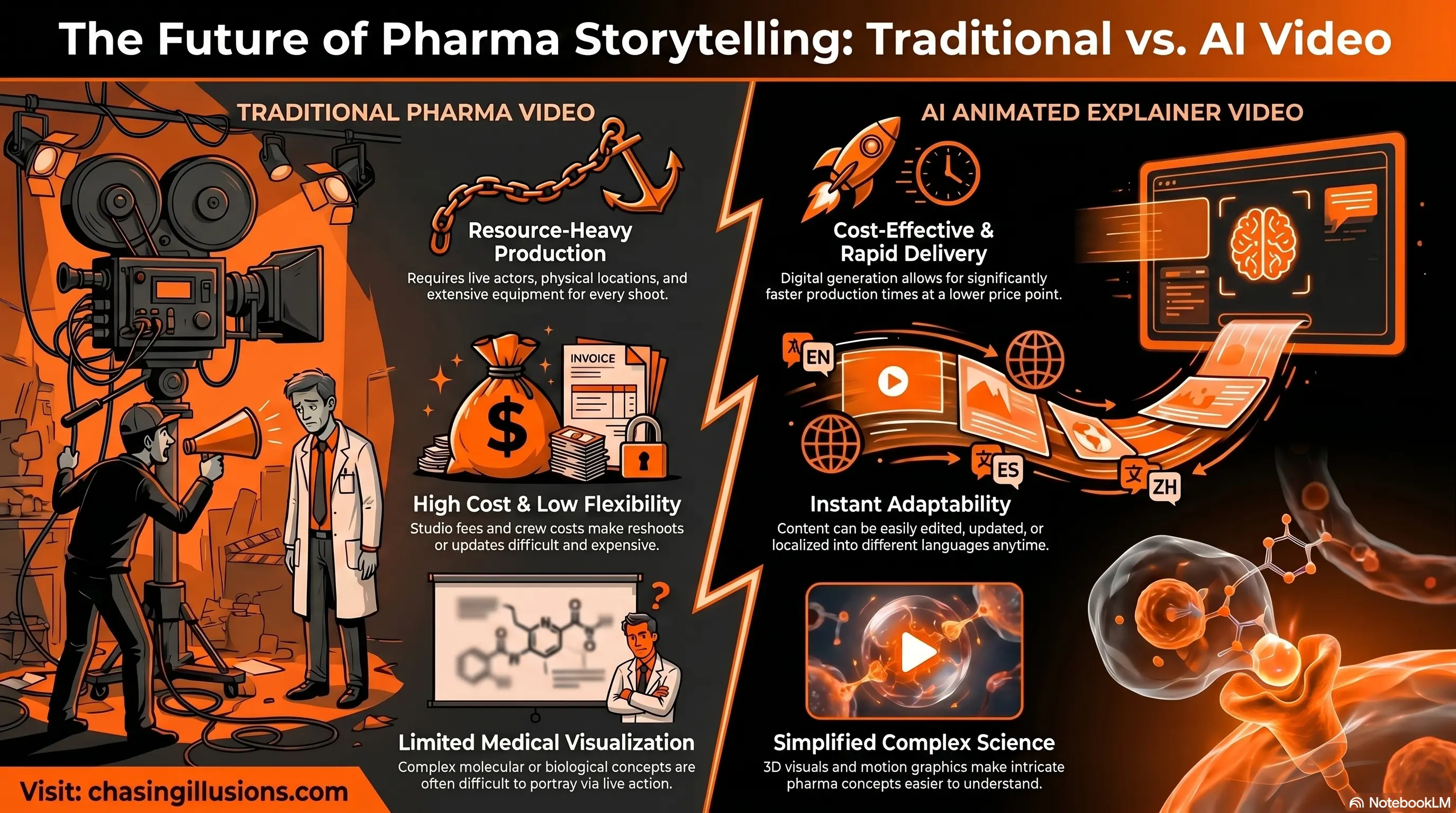
Stage | Traditional Animation | AI Animated Video |
Production method | Live-action/manual frame-by-frame by specialist teams | AI-accelerated scripting, animation, and voiceover with human oversight |
Typical timeline | 3–6 weeks | 5–10 business days |
Best for | Brand films, testimonials, complex simulations | MOA videos, patient education, HCP training, launches, disease awareness |
Multilingual scaling | Re-produced per language | One master video, 12+ language versions |
Explore our 3D Medical Animation Videos Portfolio for Pharma Brands
Frequently Asked Questions:
How long does it take to produce an AI animated explainer video for a pharma brand?
A standard 60–90 second video takes 5–10 business days from approved brief to delivered draft, with MLR review adding time depending on internal processes. Complex 3D molecular animations may take up to 3 weeks.
What is the ideal video length for pharma content?
60–90 seconds for HCP-facing promotional content, 90–150 seconds for patient education with simplified narration, and 15–30 second cuts for social/digital, edited from the master video.
Can AI animated videos meet pharma's scientific accuracy standards?
Yes, provided medical review is built into the workflow — AI generates the visuals, and a qualified medical professional validates the science before MLR submission.
Are AI-produced videos compliant with CDSCO promotional guidelines?
Production method doesn't change regulatory requirements. Content — claims, safety information, indication statements — must meet the same standards as any printed material and pass the same MLR review.
How do AI explainer videos compare to traditional animation for pharma?
AI-assisted production is generally faster and lower-cost, with easier scaling across language variants. Traditional animation retains an edge for extended surgical simulations and content depending on real human presence.
Which pharma content types deliver the best ROI from AI animation?
MOA videos, disease awareness campaigns, patient education modules, product launch assets, and HCP CME content — high-frequency, high-stakes communication needs where video quality directly affects prescription behavior.
Can one video be adapted into multiple regional language versions?
Yes. AI voice synthesis allows a master video to be localized into 12+ Indian languages — including Hindi, Tamil, Telugu, Marathi, Bengali, Kannada, and Malayalam — without re-animating.
Conclusion:
India's pharma industry is investing more in clear, fast, and regulation-compliant video communication than ever before. AI animated explainer videos close the gap between scientific complexity and audience understanding — provided medical review and regulatory compliance stay built into the workflow, not bolted on afterward.
Ready to produce your next pharma explainer video?
Chasing Illusions Studio builds AI-powered pharmaceutical animation for India's regulatory and linguistic requirements.
Book a discovery 20-minutes strategy call.
📞 +91-9910911696 | +91-9910660851
📩 info [@] chasingillusions [.] in
Written by Deepak, Healthcare Content Strategist at Chasing Illusions Studio, who leads content for clients including Ambler Surgical, Practo, Bayer, SMT, Novartis, and 100+ healthcare brands across India, USA, Thailand, and the UK.
Last Updated: July 29 2026 | Chasing Illusions Studio
Chasing Illusions Studio
Premium animation & video production studio based in Delhi, India. Specialising in 3D animation, medical visualisation, architectural walkthroughs, and CGI.