Quick Answer
3D product rendering is the process of creating photorealistic digital images of products using 3D modelling software — no physical sample, no photography studio, no location shoot required. UK businesses use it to visualise products before manufacture, generate unlimited colour and material variants from a single model, and maintain consistent imagery across e-commerce, print, and social channels at significantly lower cost than traditional photography. This guide covers how it works, what it costs in GBP, when it makes sense, and what to look for in a studio.
What Is 3D Product Rendering?
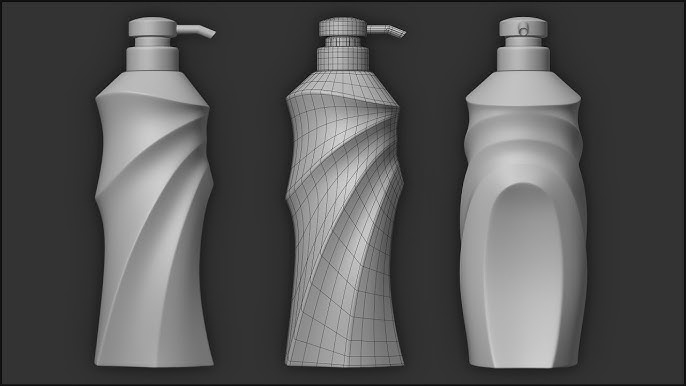
3D product rendering is the creation of photorealistic still images, 360-degree spins, or animated videos of a product using computer-generated three-dimensional models rather than physical photography.
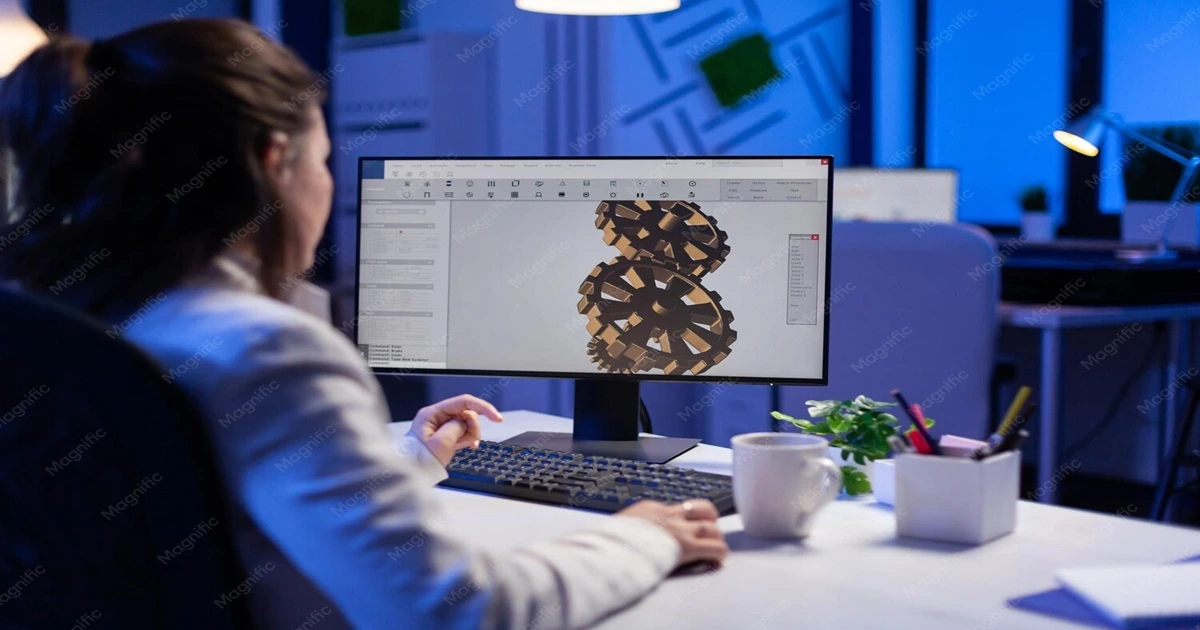
The process begins with a digital model of the product — built from CAD files, technical drawings, or reference photography — which is then given accurate materials, textures, and lighting in a virtual environment before being rendered into a final image or video sequence.
The output is visually indistinguishable from studio photography for most commercial purposes, but with capabilities that photography cannot match: the ability to show a product in any colour, material, or environment without manufacturing a new sample; the ability to generate hundreds of image variants from one model; and the ability to produce marketing visuals before the product physically exists.
What the Production Process Looks Like
Stage 1 — Model creation. A 3D artist builds a precise digital replica of the product from your CAD files, technical drawings, or detailed reference images. The geometry is accurate to the product's real dimensions and detail level.
Stage 2 — Materials and textures. Surfaces are assigned physically accurate materials — brushed aluminium, woven fabric, matte ceramic, high-gloss lacquer — using texture mapping and material libraries that replicate real-world surface behaviour under light.
Stage 3 — Lighting and environment. The scene is lit using simulated studio lighting, natural light, or a specific environmental context. Lighting significantly affects how the final render reads — a softbox setup reads differently from directional sunlight or an interior lifestyle environment.
Stage 4 — Rendering. The software processes the 3D scene and generates the final image frames. Resolution, shadow quality, reflection accuracy, and depth of field are all controllable at this stage.
Stage 5 — Post-production. Colour grading, background compositing, and any motion graphic overlays are applied before final delivery.
Once the 3D model exists, every subsequent variant — a different colour, a different material, a different background, a different angle — is generated from the same file. This is the economic foundation of 3D rendering: the cost of the first image is higher than a photograph, but the cost of the hundredth variant is close to zero.
Why UK Businesses Are Adopting 3D Product Rendering
Cost Efficiency at Scale
Traditional product photography in the UK involves studio hire, photographer fees, stylist costs, sample preparation, travel, and post-production retouching — for each product and each variant separately.
For a product range with multiple colourways, sizes, or configurations, the cost of photography scales linearly: more variants means more shoot days, more samples shipped, and more retouching hours.
With 3D rendering, the model is built once. Every additional colour, material, or angle is generated from that model without a new shoot. For product ranges with high variant counts — furniture with multiple fabric options, consumer electronics with multiple colourways, apparel with seasonal material updates — the cost efficiency of 3D rendering versus photography becomes substantial at scale.
Typical UK photography costs for a single product with studio setup run £500 – £2,500 per product per session. 3D rendering for the same product runs £800 – £2,500 for the initial model, with additional variants at significantly reduced cost. The economics shift decisively in favour of rendering once a product has more than three or four variants.
Pre-Launch and Pre-Manufacture Visualisation
You cannot photograph a product that does not yet exist. For UK businesses launching via crowdfunding, pre-order campaigns, or trade shows ahead of manufacture, 3D product rendering is the only way to generate marketing-quality imagery before the product is built.
This is particularly relevant for hardware startups using platforms like Kickstarter and Crowdfunder, for furniture and homewares brands launching at trade shows such as Spring Fair at the NEC Birmingham or Clerkenwell Design Week, and for fashion and accessories brands needing lookbook imagery ahead of seasonal production runs.
The UK Intellectual Property Office notes that design registration before public disclosure is an important step in protecting original product designs — and 3D renders produced from CAD files pre-manufacture can support design registration applications by providing clear visual documentation of the design as filed.
Variant Generation for E-Commerce
UK e-commerce is one of the most developed markets in the world. According to the Office for National Statistics, internet sales consistently account for over 25% of total UK retail sales, making high-quality product imagery a commercial priority for any brand selling online.
Major UK and international marketplaces — Amazon UK, ASOS, John Lewis, Marks and Spencer, Wayfair UK — have specific image quality and format requirements for product listings. Amazon UK, for example, requires main product images on a pure white background at minimum 1,000 pixels on the longest side to enable the zoom function. 3D rendering produces images that meet these specifications by default and can be adjusted to meet any platform's requirements without a reshoot.
For products with many variants — a sofa available in 30 fabrics, a trainer available in 12 colourways — generating consistent, studio-quality images of every combination through photography is prohibitively expensive. 3D rendering makes it practical.
Brand Consistency Across Channels
UK brands typically distribute product imagery across websites, marketplaces, social media, print catalogues, and in-store displays simultaneously. Ensuring visual consistency across all of these channels is straightforward when every image originates from the same 3D model and the same lighting setup — and extremely difficult when images come from multiple photoshoots conducted at different times, with different equipment and different lighting conditions.
Sustainability Considerations
The UK government's Net Zero Strategy sets out the UK's commitment to reaching net zero greenhouse gas emissions by 2050, and many UK businesses have made voluntary commitments ahead of that timeline. Traditional product photography generates carbon through travel, studio energy consumption, sample shipping, and prop production and disposal.
3D product rendering eliminates most of these — the product does not need to be physically transported, no studio space needs to be heated and lit, and no physical props or sets are produced and discarded. For UK businesses with sustainability reporting requirements or ESG commitments, this reduction in scope 3 emissions from marketing activity is a genuine and documentable benefit.
The UK Companies Act 2006 and associated regulations require certain UK companies to report on environmental matters in their strategic reports. For larger UK businesses, demonstrating a reduction in marketing-related environmental impact through the adoption of digital visualisation is an auditable contribution to sustainability reporting.
When 3D Rendering Makes Sense — and When It Does Not
When 3D Rendering Is the Better Choice
High variant counts. Any product range with more than four or five colour, material, or configuration variants will typically be more cost-effective to render than to photograph. The break-even point depends on the complexity of the model, but for most product categories with standard variant structures, rendering becomes cheaper than photography at somewhere between three and eight variants.
Pre-manufacture marketing. If you need imagery before the product exists, rendering is the only option.
Complex internal mechanisms. Products where the selling proposition involves internal components — an engine, a medical device, a piece of electronic equipment — can be shown in cutaway, exploded, or transparent views that are impossible to create in photography without physically destroying a sample. Our 3D product animation service covers animated versions of this type of content.
International and remote clients. UK businesses with products manufactured overseas can commission renders directly from factory CAD files without shipping samples to a UK photography studio. This eliminates both cost and delay.
Configurable or customisable products. For products sold with customer configuration options — bespoke furniture, personalised gifts, made-to-measure items — rendering allows you to show every possible configuration without manufacturing every possible option.
When Photography Is Still the Better Choice
Texture and tactility as the primary selling point. For products where the tactile quality of a material is central to the purchase decision — high-end leather goods, artisan ceramics, hand-finished textiles — skilled photography of the real material can convey qualities that rendering, however accurate, does not fully replicate.
Lifestyle and human-centred imagery. Photography is still the more practical choice for imagery that centres on people interacting naturally with a product — a family at a dining table, a model wearing a garment in motion, a chef using a kitchen tool. Rendered lifestyle imagery with human figures is possible but significantly more expensive and complex than equivalent photography.
Single products with few variants and immediate availability. If you have one product, one colourway, and it already exists — photography is faster and cheaper than commissioning a 3D model.
3D Product Rendering Costs for UK Clients
The following ranges are our 2026 pricing for UK clients quoted in GBP, all-inclusive of modelling, texturing, lighting, rendering, and two rounds of revision.
Deliverable | Cost (GBP) | What Is Included |
|---|---|---|
Single product still render | £800 – £1,800 | Model build, 1 colourway, 3 angles, white background |
Product with variants | £1,200 – £3,000 | Model build, up to 8 colourways, 5 angles per variant |
Lifestyle render | £1,500 – £3,500 | Product in scene with environment and props |
360-degree spin (24 frames) | £1,500 – £3,500 | Web-ready, compatible with major e-commerce platforms |
Product animation (15–30 sec) | £3,000 – £8,000 | Animated sequence, suitable for social and website |
Exploded or cutaway view | £2,000 – £4,500 | Internal component visualisation |
What affects cost:
Geometric complexity of the product — a simple rectangular box costs less to model than a mechanical assembly with many components. Surface complexity — a plain matte surface is less expensive to texture than a knitted fabric or embossed leather. Number of unique environments — each distinct lifestyle background increases cost. Turnaround — standard timelines are three to six weeks; expedited production carries a premium.
For product ranges with high variant counts, we price modelling and scene setup once and charge per variant batch rather than per image, which significantly reduces the per-image cost for larger projects. Contact us directly for a product-range quote.
UK E-Commerce Platform Image Requirements
Different UK and international e-commerce platforms have specific image requirements that product renders must meet. We produce renders to the specifications of the platforms your products will be listed on as standard.
Amazon UK requires main product images on a pure white background (RGB 255,255,255), with the product occupying at least 85% of the image frame, at minimum 1,000 pixels on the longest side. Additional image slots accept lifestyle, infographic, and detail images with no background restriction. Full image requirements are published in the Amazon Seller Central image guidelines.
ASOS requires images that meet their vendor image guide specifications, which include consistent lighting, white or off-white backgrounds for product shots, and specific aspect ratios for category consistency. Vendor guidelines are available through the ASOS partner portal.
Wayfair UK requires product images at minimum 2,000 × 2,000 pixels, on white backgrounds, with specific padding and cropping requirements per category. Lifestyle images are encouraged in additional image slots.
John Lewis & Partners requires images that meet their supplier brand guidelines, which specify consistent lighting, background, and angle standards across the product range.
All of these requirements are met as standard in our UK e-commerce product render packages. If your target platform is not listed here, provide us with the platform's image specification document and we will produce to those requirements.
How to Brief a 3D Product Rendering Studio
The quality of a 3D product render is directly related to the quality of the brief and reference materials provided. The following information allows us to produce accurate, efficient renders that require minimal revision.
CAD files or technical drawings. The most accurate starting point. We accept STEP, IGES, OBJ, FBX, and most standard CAD formats. If you do not have CAD files, detailed photographs from multiple angles — front, back, both sides, top, bottom, and any key detail areas — are a workable alternative, though the model-building phase takes longer and may require additional rounds of revision to achieve accuracy.
Material and colour specifications. For each colour and material variant, provide either a physical sample (which we can photograph for texture mapping), a Pantone or RAL reference, or a detailed description with reference images. The accuracy of material rendering is directly dependent on the quality of material reference provided.
Brand guidelines. If images will be used in branded contexts, provide your brand colour palette, preferred background treatment, and any existing imagery you want the renders to be consistent with.
Platform specifications. Tell us where the images will be used — Amazon, your own website, printed catalogue, trade show display — and we will produce to the appropriate resolution, aspect ratio, and background treatment for each channel.
Timeline. Tell us your launch date or deadline. Standard production runs three to six weeks from receipt of complete reference materials. If you have a hard deadline, tell us at briefing stage and we will confirm whether it is achievable.
For clients new to commissioning 3D renders, we offer a free thirty-minute briefing call to walk through the reference materials required and answer questions about the production process before a quote is issued.
How 3D Product Rendering Fits Into a Broader Visual Strategy
3D product rendering works best as part of an integrated visual content strategy rather than as a wholesale replacement for all photography. The most effective approaches we see from UK clients combine the two formats:
3D rendering for hero product images, variant generation, pre-launch content, and e-commerce listings — where consistency, scalability, and variant coverage are the priority.
Photography for lifestyle campaigns, human-centred brand imagery, and content where the authenticity of a physical shoot is commercially important.
The 3D model built for product rendering can also be used to generate additional content types beyond still images. Our 3D product animation service produces animated sequences from the same models — 360-degree spins, feature callout animations, and product launch videos. Our CGI and anamorphic video service uses product CGI within larger brand campaign contexts.
For UK brands producing physical catalogues or brochures alongside digital content, print-ready CMYK versions of all renders are delivered as standard. For brands investing in augmented reality shopping — allowing customers to place a product in their own environment via a smartphone — we deliver models in GLB and USDZ formats compatible with major AR platforms.
If your brand is also exploring architectural or spatial visualisation — for retail store design, showroom planning, or property development — our architectural walkthrough service applies the same CGI approach to built environments.
For UK pharma and healthcare brands needing 3D rendering of medical devices or pharmaceutical packaging, see our medical animation service.
Frequently Asked Questions
What is 3D product rendering?
3D product rendering is the process of creating photorealistic images or animations of a product using computer-generated three-dimensional models, without physical photography. A digital model of the product is built from CAD files or reference photography, given accurate materials and lighting in a virtual environment, and rendered into a final image or video. The output is used for e-commerce listings, marketing campaigns, trade catalogues, pre-launch visualisation, and brand content.
How much does 3D product rendering cost in the UK?
Single product still renders start at £800 – £1,800 including the 3D model build, one colourway, three angles, and white background delivery. Product ranges with multiple colourways run £1,200 – £3,000 depending on variant count. Lifestyle renders run £1,500 – £3,500. 360-degree spins run £1,500 – £3,500. Product animations run £3,000 – £8,000 for a 15-to-30-second sequence. Contact us for a project-specific quote with your product's specifications.
How long does 3D product rendering take?
Standard production runs three to six weeks from receipt of complete reference materials — CAD files or detailed photography, material specifications, and platform requirements. Simple products with clear reference materials sit at the faster end of this range. Complex products with many components, or projects requiring multiple lifestyle environments, sit at the longer end. Expedited production is available for deadline-critical projects. Once the 3D model is built, additional colour and material variants can be turned around in two to five working days.
What files do I need to provide?
The most useful starting materials are CAD files in STEP, IGES, OBJ, or FBX format, or detailed photographs of the product from all angles if CAD files are not available. For material and colour variants, physical samples, Pantone or RAL references, or detailed reference images are required. Platform specifications — the image size and background requirements of the e-commerce channels where images will be used — should also be provided at briefing stage.
Can 3D renders be used for Amazon UK listings?
Yes. Amazon UK requires main product images on a pure white background with the product occupying at least 85% of the frame, at minimum 1,000 pixels on the longest side. We produce renders to these specifications as standard. Additional image slots on Amazon accept lifestyle images, infographics, and detail shots, all of which we can produce from the same 3D model. Full Amazon image requirements are published in the Amazon Seller Central image guidelines.
Is 3D rendering better than photography for UK e-commerce?
It depends on the product and the use case. For products with high variant counts, pre-manufacture launch timelines, or the need for consistent imagery across many channels, 3D rendering is typically more cost-effective and more flexible than photography. For single products with immediate physical availability and lifestyle content centred on people, photography may be faster and more suitable. Most UK brands use both — rendering for product imagery and variant coverage, photography for lifestyle and campaign content.
Can you produce 3D renders of products not yet manufactured?
Yes. 3D rendering is frequently used by UK businesses to produce marketing-quality imagery before manufacture — for crowdfunding campaigns, pre-order listings, trade show presentations, and investor materials. We work from CAD files, technical drawings, or detailed sketches. This allows marketing campaigns to launch weeks or months ahead of the product's physical availability.
Do you offer 3D rendering services to UK clients remotely?
Yes. All of our UK client projects are managed remotely. We are based in Delhi (GMT+5:30), which means UK morning feedback reaches us before our working day ends, and revised deliverables are typically ready for UK clients to review the following morning. All file transfers use encrypted delivery. NDAs are standard on all commercial projects.
Work With Us on Your UK Product Rendering Project
We work with UK retailers, e-commerce brands, manufacturers, and product designers across furniture, consumer electronics, jewellery, fashion accessories, industrial equipment, and consumer goods.
Book a discovery 20-minutes strategy call.
📞 +91-9910911696 | +91-9910660851
📩 info [@] chasingillusions [.] in
Written by Deepak, Content Strategist at Chasing Illusions Studio, who leads content for clients including Ambler Surgical, Practo, Bayer, SMT, Novartis, and 100+ brands across India, USA, Thailand, and the UK.
We offer a free thirty-minute briefing call to discuss your product range, reference materials, and timeline before any quote is issued.
© 2026 Chasing Illusions Studio Pvt. Ltd. — 3D Product Rendering Studio | Delhi | USA | Thailand
Chasing Illusions Studio
Premium animation & video production studio based in Delhi, India. Specialising in 3D animation, medical visualisation, architectural walkthroughs, and CGI.