Choosing a 3D animation agency is harder than it looks. The work is expensive, the quality varies enormously between studios, and — unless you commission animation regularly — you're often making the decision without a clear way to tell a genuinely capable studio from a well-marketed one. A wrong choice costs you not just the fee, but weeks of timeline and a deliverable that doesn't do its job.
This guide walks through what a 3D animation agency actually does, the different types you'll encounter, the questions that separate strong studios from weak ones, and the warning signs worth taking seriously. It's written to help you make a good decision, not to push a particular one.
What a 3D animation agency does
A 3D animation agency creates animated visual content — product animations, architectural walkthroughs, explainer videos, medical or industrial animation, character work, and more. Depending on the studio, that can span the full pipeline: concept and scripting, storyboarding, 3D modeling, texturing, animation, lighting, rendering, sound, and final delivery.
The key thing to understand is that "3D animation" is not one skill. A studio that excels at photorealistic product rendering may be weak at character animation; one that produces beautiful architectural walkthroughs may have never done medical animation. Matching the agency's actual strengths to your specific need is the single most important part of choosing well.
Types of 3D animation agencies
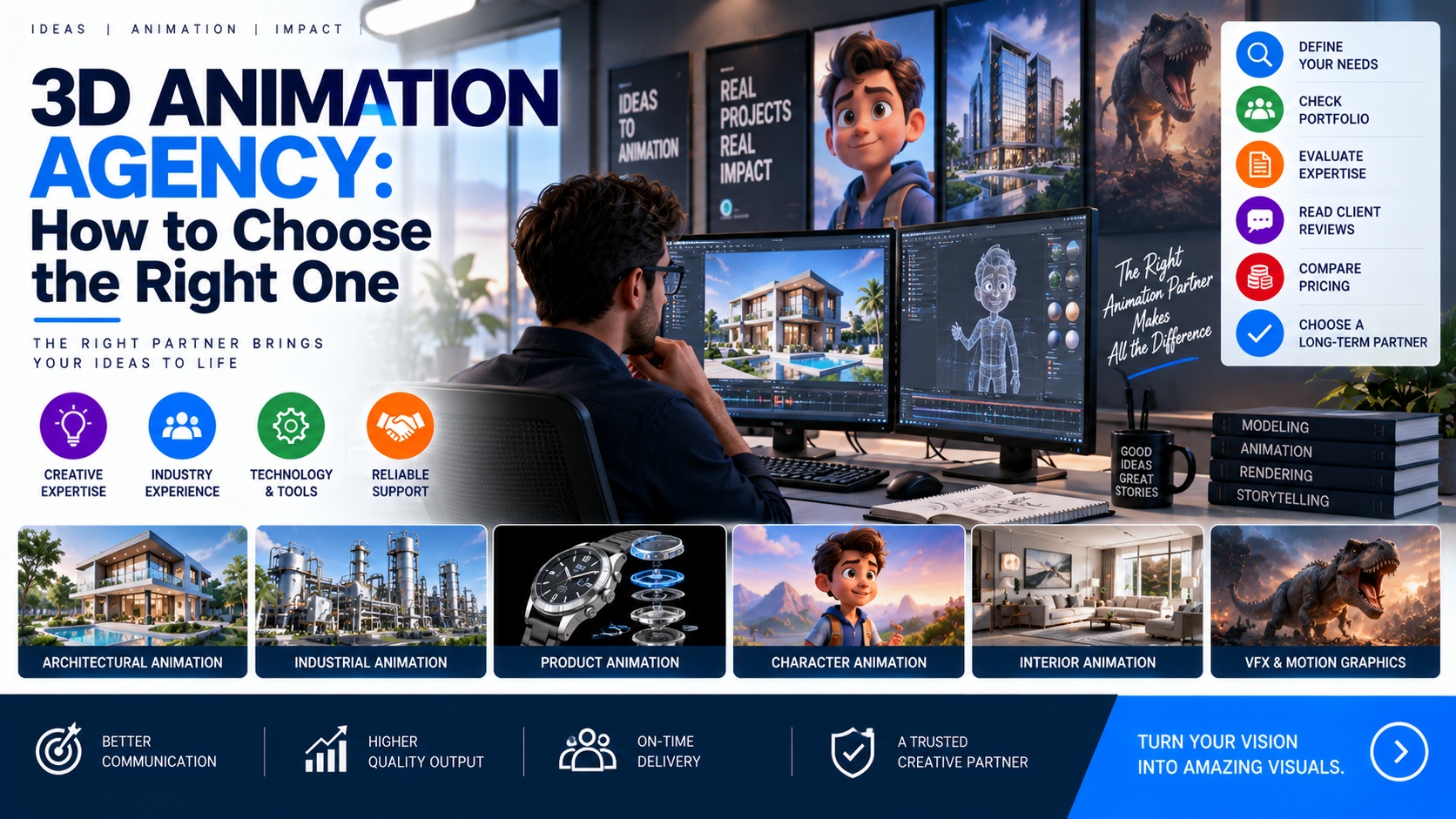
Agencies tend to specialize. Knowing which kind you need narrows the field fast:
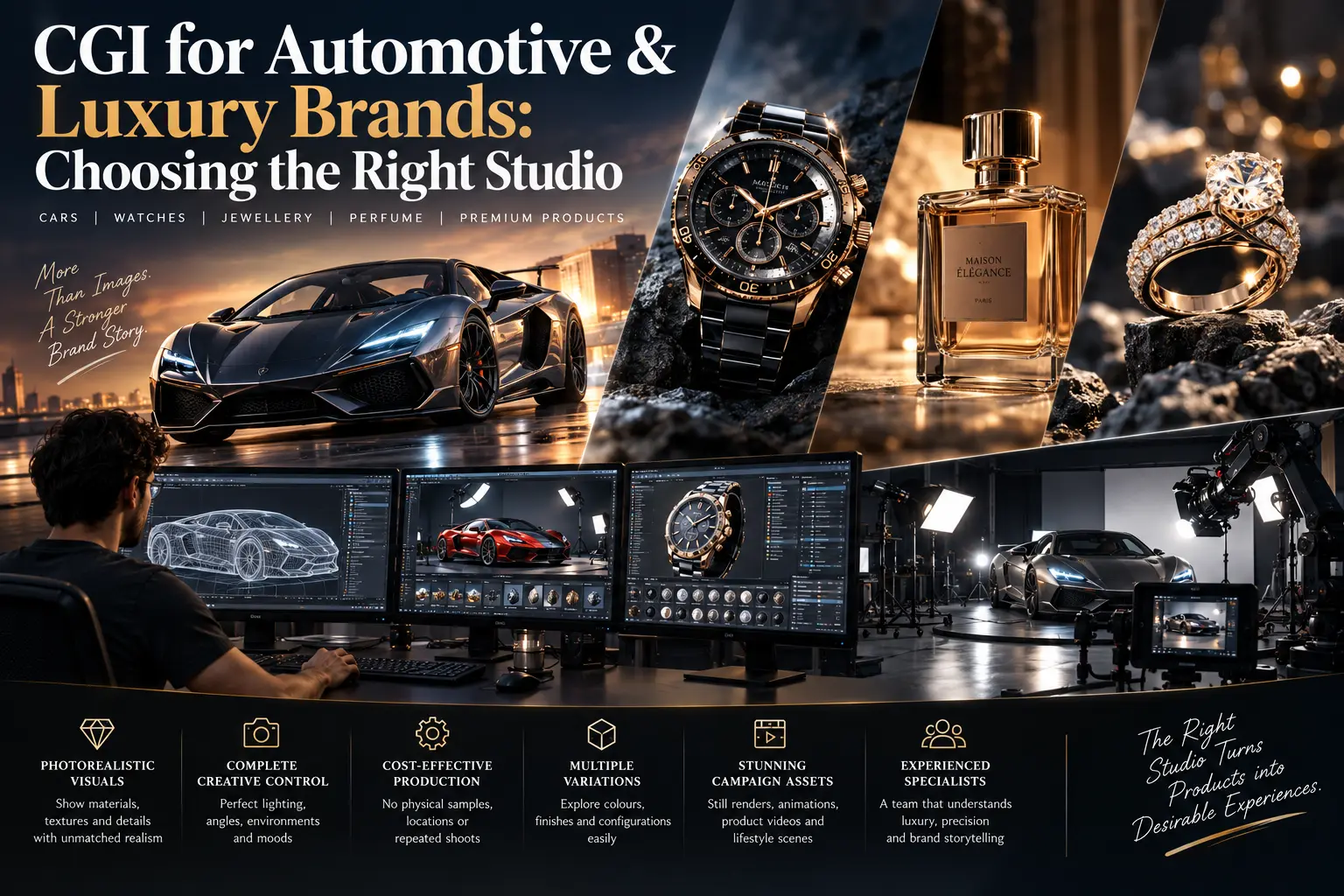
Product and commercial animation. Studios focused on showing products — for marketing, e-commerce, and launches. If this is your need, look at work like 3D product animation that boosts sales and CGI animation for product marketing.
Architectural and real estate. Studios that produce building walkthroughs and property visualization — a distinct discipline covered on our architectural walkthroughs service page.
Industrial and technical. Agencies that handle factories, plants, machinery, and industrial animation, including safety and training animation. This work demands technical accuracy on top of visual skill.
Medical and scientific. A highly specialized niche requiring accuracy alongside artistry — see medical animation. You would not commission general-purpose studios for this.
Character and explainer. Studios strong in 2D/3D character animation and explainer videos, used for storytelling, brand, and education.
Full-service agencies cover several of these; boutique studios go deep on one. Neither is better in the abstract — a specialist often beats a generalist for niche work, while a full-service studio is simpler if your needs span categories.
The questions that actually matter
When you're evaluating an agency, these questions separate strong from weak far better than a polished website does:
"Can I see work specifically like what I need?" A strong portfolio in general means little if none of it matches your project type. Ask for relevant examples — product work if you need product, medical if you need medical. A studio that can't show close-matching work is a risk, however impressive its other reels.
"Who actually does the work, and where?" Some agencies subcontract or outsource. That's not automatically bad, but you want to know who's animating, how communication flows, and whether the portfolio reflects the team who'll do your job.
"What's included, and what's extra?" Get specifics on revision rounds, source files, delivery formats, and what triggers additional cost. Vague scope is where budgets blow out.
"What's the realistic timeline?" Quality 3D animation takes time. A studio promising a complex photorealistic animation in a few days is either cutting corners or overpromising.
"How do you handle revisions and feedback?" A clear, structured revision process is a sign of an experienced studio. For your part, understanding how to brief a 3D animation studio makes the whole engagement smoother and cheaper.
Understanding cost
Cost varies widely by animation type, length, complexity, and studio location. Rather than expecting a single rate, understand the drivers — and read the specific cost guides for your kind of work:
A key point on price: the cheapest quote is rarely the best value, and the most expensive isn't automatically the best work. What matters is the fit between the studio's strength, your specific need, and a scope that's clearly defined. A mid-priced studio that specializes in exactly your work will usually outperform a cheaper generalist or a pricier big-name that treats your project as filler.
Warning signs to watch for
A few things should give you pause with any agency:
Fabricated or unverifiable claims. Be wary of studios advertising suspiciously specific results — exact percentages of "engagement increase" or "cost savings" with no source, or impressive client logos with no case study behind them. Specific measured results should be documented; round marketing numbers presented as fact are a credibility flag. Ask for the evidence behind any headline claim.
A portfolio that doesn't match the pitch. If the sales conversation promises capabilities the showreel doesn't demonstrate, trust the work over the words.
No clear point of contact or process. Good studios have a defined workflow and someone accountable for your project. Vagueness here often means trouble later.
Reluctance to share references or relevant samples. A confident, capable studio is happy to show close-matching work and connect you with past clients.
Pressure and false urgency. "Your competitors are already ahead, decide now" is a sales tactic, not a reason to choose a studio. Take the time to evaluate properly.
A simple way to decide
If you distil it down, choosing well comes to four steps:
Define your need precisely — the type of animation, its purpose, and where it'll be used.
Shortlist studios with proven, matching work — not just good general portfolios.
Compare scope, not just price — what's included, timeline, revisions, and who does the work.
Check the claims — ask for the evidence behind any specific result, and prefer documented case studies over round marketing numbers.
Get those right and you avoid the two most common outcomes: overpaying a big name for work a specialist would do better, or underpaying for a cheap deliverable that doesn't achieve its purpose.
The bottom line
The "best" 3D animation agency isn't a single studio — it's the one whose demonstrated strengths match your specific project, whose scope is clearly defined, and whose claims stand up to scrutiny. A specialist in your exact type of work, at a fair price, with documented results, will nearly always serve you better than a choice made on brand name or headline rate alone.
If you'd like to talk through a specific project, you can see the full range of what we do on our services page, or get in touch for a scoped discussion of your animation needs.
Chasing Illusions Studio
Premium animation & video production studio based in Delhi, India. Specialising in 3D animation, medical visualisation, architectural walkthroughs, and CGI.